Are Canada’s Airlines Doomed?
I’ve had a first-class ringside seat to the enshittification of air travel in Canada. My most recent industry job was leading Air Canada’s 1,500-worker customer-service operations team at Pearson Airport in Toronto, but I started out as one of the airline’s ramp agents at Montreal–Trudeau Airport way back in 1975. Around that time, in an effort to reduce bureaucracy and create competition, the U.S. decommissioned its Civil Aeronautics Board, deregulating pricing across the aviation industry. That set the stage for Canada to do the same.
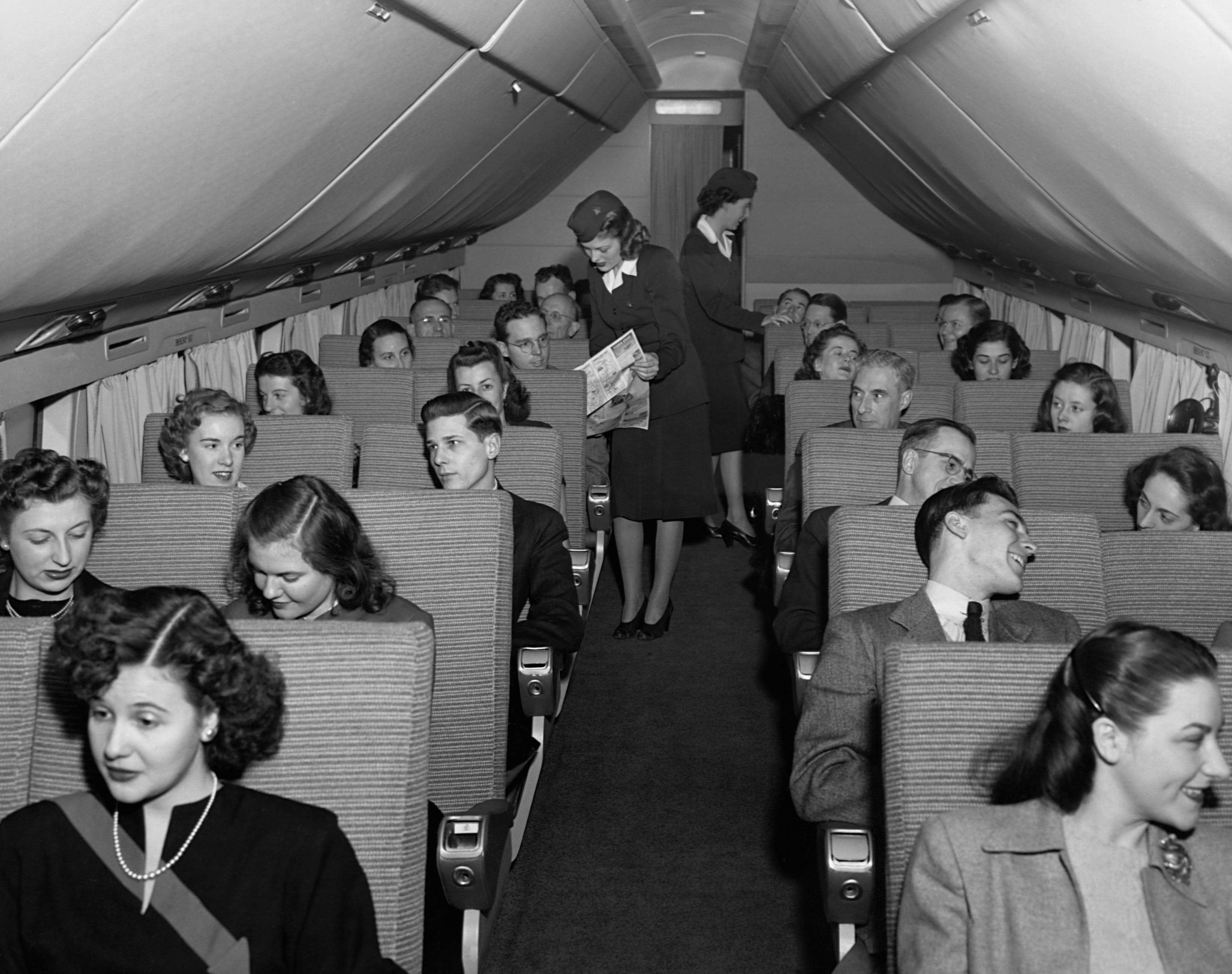
This America-inspired deregulation worked amazingly, for a time. More than two dozen private carriers popped up over the ensuing two decades—Wardair, Worldways, Nationair, Odyssey International, Canada 3000 and more—forcing legacy carriers like Air Canada and Canadian Airlines to compete on more than just price. In the case of Wardair, hot meals were served on real china. And, suddenly, passengers weren’t just choosing between red and white wine, but pinot noir and merlot or chardonnay and chablis.
As we know, those customer-service glory days didn’t last. Canada’s larger carriers (buoyed by large cash reserves) eventually slashed fares and sent many of their small but mighty competitors into bankruptcy, creating an Air Canada–WestJet duopoly that fundamentally changed the industry’s incentives. Airlines began to compete on load factor, or the percentage of seats filled on every flight. Every empty chair represented lost revenue, and every dollar spent on the passenger’s experience became a potential cost to cut: wine selection, legroom and even space for suitcases. CEOs increasingly viewed the reserve aircraft stored at major hubs as “idle assets,” flying more of them and tightening turnarounds, leaving less time to clean and maintain planes before they were sent back into the sky. All the while, Canadian passengers were conditioned to lower and lower and lower their standards—then lower them some more.
Many thought COVID was rock bottom for air travel in Canada. (In 2022, Pearson briefly ranked as the most delayed major airport in the world.) But, without meaningful intervention, the same issues persist. The Canadian Transportation Agency received more than 46,000 air travel complaints between 2024 and 2025 and now faces a backlog of nearly 100,000 unresolved cases. At the top of 2026, airlines forecasted a gangbusters summer season: Air Canada planned to boost its seat capacity and restored routes across Europe and Asia.
Then, the war in Iran sent jet fuel prices soaring. Air Transat increased fuel surcharges on flights to Europe and raised fares on peak travel dates, while WestJet warned passengers to expect higher ticket prices if fuel costs remained high. Concerned that yet another one of the country’s carriers might disappear, the federal government offered airlines repayable loans of up to $150 million each. Enraged taxpayers responded with a valid question: why should we be expected to backstop an industry that continuously put our interests last?
To truly fix the state of air travel in this country, Canada needs to look beyond the airlines’ balance sheets. As much of the developed world has already done, we should create a dedicated civil aviation authority whose primary task is to advocate for passengers. Currently, Transport Canada regulates aircraft, licenses pilots and mechanics, oversees safety standards, manages infrastructure policy and administers passenger-protection rules. The workers responsible for ensuring airplanes don’t collide in mid-air—a big-enough job on its own—shouldn’t also be charged with policing service standards or worrying about new threats like dynamic pricing.
Related Posts
Canada Can Be a Refuge for America’s Grad Students

International Student Caps Are Decimating Canadian Colleges
Ideally, a new civil aviation authority would take over the customer-facing side of the industry, including passenger compensation, complaints and airline scheduling. Right now, when flights are delayed, everyone points fingers: airlines blame airports, airports blame air-traffic control and air-traffic control blames staffing shortages. Nobody asks whether airlines are simply selling more flights than the system can feasibly handle. A civil-aviation authority would be able to assess the actual capacity of airports, security screening and air-traffic control before airlines publish their schedules, then make sure those schedules reflect realistic capacity.
When airlines fail to meet those standards, there must be consequences. These businesses sell passengers on a specific promise: getting them from point A to point B at a specific time. If carriers face no meaningful penalties for a lack of punctuality, there’s no incentive to build resilience back into their schedules; delays simply become another aspect of doing business. A civil aviation authority could investigate systemic failures and dispense fines that airlines actually feel. Planes will still break down, storms will still roll through, and fuel prices—especially in a fraught geopolitical climate—will still fluctuate. But when something does go wrong, Canadians shouldn’t have to spend years arguing with chatbots to chase refunds.
While they’re at it, this new airline authority should tackle other customer-service snafus, like confusing variation in baggage allowances and frequent-flyer programs. In the U.S., up to one-fifth of air travel is paid for on points. It’s a valuable customer tool, but it also helps legacy carriers capture and retain market share. In Canada, where Aeroplan has an outsize presence, new carriers have a tough time enticing customers away. Instead, the aviation authority could make frequent-flyer programs non-proprietary, allowing customers to collect points that can be used interchangeably between airlines. This would allow smaller carriers to gain a foothold and thus encourage more variance in ticket prices industry-wide.
Many other countries have dedicated bodies to balance aviation efficiency with consumer protection, including France, Germany and the U.K. Since 1972, the U.K. Civil Aviation Authority, or CAA, has monitored airline performance, overseen dispute-resolution programs and had the power to enforce passenger-protection laws—with little to no political interference. If an airline develops a reputation for treating passengers poorly, they’re publicly shamed for it; the CAA publishes quarterly complaint statistics, airline by airline.
In a report released in June of 2025, for example, Heathrow (the U.K.’s busiest airport) was given a “needs improvement” for the level of assistance it provided to passengers with disabilities and reduced mobility. (In a statement, Heathrow’s chief operating officer Javier Echave said the airport had made “significant strides in enhancing our assistance service” since the reporting period.) When grades aren’t enough, the CAA can really bare its teeth. In 2024, following a wave of complaints, it ordered Wizz Air to review roughly 25,000 previously rejected refund claims and squeezed out more than £1.2 million in compensation for roughly 6,000 passengers.
Back in Canada, modernized air-passenger protection regulations have been collecting dust on the minister of transport’s desk since 2023, when they were rolled into the federal budget. Airline lobbying hasn’t helped matters. Canada’s aviation market may be working exactly as designed, but it certainly isn’t working for travellers. There is a world in which the experience of flying the skies is friendlier, roomier and includes robust wine lists once again. But that won’t happen unless the industry stops insisting that poor service is just the price of buying a ticket.
John Gradek is a faculty lecturer and academic programs coordinator at McGill University’s School of Continuing Studies, where he co-directs the supply chain management and global aviation leadership programs.
–As told to Angus MacCaull, with files from Cam Graham
What did you think of this story? Send a comment for publication to letters@macleans.ca, and supply your name and address. Comments should be fewer than 200 words, and may be edited for length and clarity.
Related Posts

Canada’s Aging Infrastructure Is a Ticking Time-Bomb

How to Stop the Gen Z Slowdown

Can Canada Survive Trump’s Attack on Science?
The Case for Lifelong Renting
Get the Best of Maclean’s straight to your inbox.
Sign up for news, commentary and analysis. Join 60,000+ Canadian readers.