How Trump is Endangering North American Birds
Bird banding is simple: you catch a bird, take measurements, fasten an aluminum band with a unique number around its leg and let it go free. Every year, many thousands of birds are banded this way by researchers and avian enthusiasts in Canada and the U.S. As the birds criss-cross the continent and western hemisphere, they’re recaptured by researchers and volunteers, and encountered by the public and hunters, who see the bands and report the numbers. Canadians report to the Bird Banding Office, a branch of the Canadian Wildlife Service, and Americans to the Bird Banding Lab, a branch of the United States Geological Survey, or USGS.
As the reports add up, a picture emerges of the birds’ journeys, both individually and as species. That picture is critical to understanding their movements and their habitats—and the threats they face. The data produced by bird banding has allowed scientists to bring species back from borderline extinction, prove some of the effects of climate change and even create sanctuaries to protect endangered birds. But now that’s all at risk thanks to Donald Trump, who has promised to radically slash funding to the USGS. The implications are huge on both sides of the border.
Most of the bands used in North America come from the USGS—without it, there’d be no way to distribute those bands across the continent. And because the USGS is the data hub for all the bird band reports collected in the U.S., the government’s cuts will mean that scientists in both the U.S. and Canada won’t have any way to track birds’ movements.
I’ve seen in my own life and career the impact bird banding has. I spent decades as a research scientist with the Canadian Wildlife Service. I banded my first bird in 1961 and I haven’t stopped since. In 1984, I co-founded what is now the second-oldest bird observatory in Canada, the Beaverhill Bird Observatory near Tofield, Alberta. At the BBO, we conduct four banding programs, including spring and autumn migration-monitoring programs, one monitoring owl migration and another monitoring local breeding birds. And we collaborate lots with the USGS, which has helped us preserve endangered bird species.
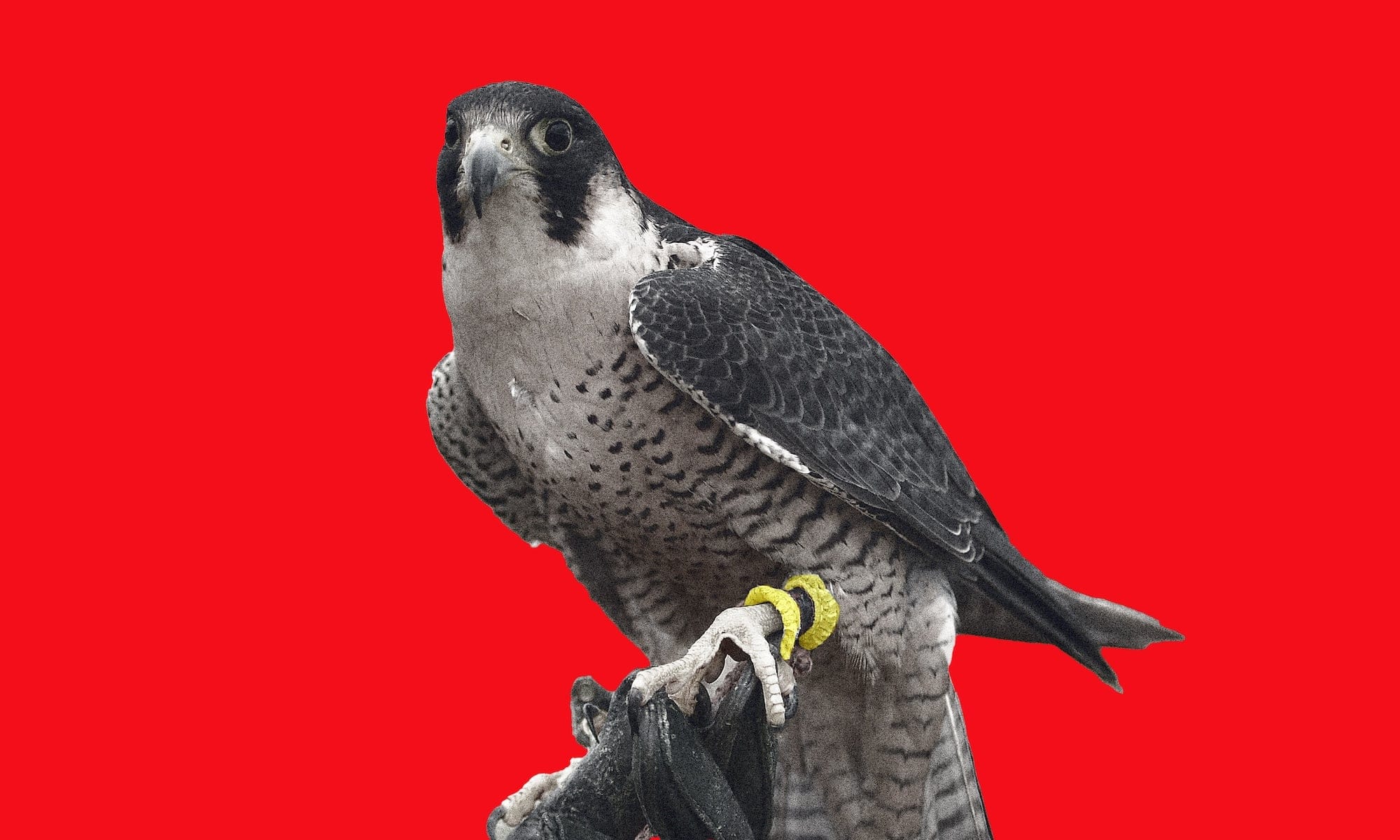
A great example is the peregrine falcon, the world’s fastest bird. It migrates between the Northwest Territories and the Yukon, down to the southern U.S and into Central and South America. But it became endangered due to the pesticide DDT, which thinned its eggshells. Between 1986 and 2012, I chaired the falcon’s Canadian recovery team, working with USGS researchers on recovery efforts in the U.S., and keeping them informed about Canadian work. Banding gave us insight into their life span, migration patterns and whether they returned or not. When the species was finally removed from the endangered species list in 2007, we collaborated on an approach to allow falconers to capture wild falcons for sport, while ensuring the security of populations in both countries. This wouldn’t have happened without the USGS—without it, the peregrine falcon may well still be endangered today.
Later on, in the 2010s, I chaired the Canadian Burrowing Owl Recovery Team. The burrowing owl is a tiny little bird that nests in holes in the ground in grasslands and prairies. It had been in rapid decline in Canada—it seemed that many owls banded in Canada weren’t making it back when the flew north in the spring. I organized conferences with USGS researchers to determine what was going on. They sent us tail feathers from birds caught in the U.S., and based on the feather chemistry, we found that the feathers had grown in Canada the previous year. It turned out that around 20 per cent of the Canadian population was simply staying in the U.S. because there was vacant habitat there. On the Canadian side, much of the grassland had been converted to agriculture and urban uses. Without the collaboration between our two countries, we’d still be struggling in Canada, having no idea what was happening to these endangered owls.
Related Posts

How to Stop the Gen Z Slowdown

The Case for Lifelong Renting
The impacts of a USGS shutdown will go beyond banding, too. The organization has been instrumental in creating sanctuaries for birds that migrate across North America. I headed a BBO team that went to Guatemala with members of the USGS for two years and helped their researchers with surveys on a mountain called Cerro San Gil. We were able to assist the research team from USGS that provided key environmental information, convincing the Guatemalan government to protect this rainforest mountain.
If the USGS is shut down, the BBO here in Tofield will still be able to study birds, but with far less data. When we capture a bird, we figure out their age, sex, weight and measurements, but we’ll only be able to compare that to Canadian data. This research is still valuable. For example, in the 40 years the BBO has been operating, our songbirds have grown longer wings. This is a response to climate change: when the air is warmer and thinner, birds need slightly bigger wings to compensate.
But birds don’t care about borders. Once we let them go, we’ll have no idea where they’re going, or what’s happening to them. Losing the USGS will leave Canadian researchers no recapture data and no central hub for bird band records, making bird banding less effective by miles. We would have no way to estimate population sizes, especially for endangered bird species. Thanks to the war on science being waged south of the border, we may not be able to pull endangered species away from extinction.
—As told to Liam Hodder
Related Posts
International Student Caps Are Decimating Canadian Colleges

Canada’s Aging Infrastructure Is a Ticking Time-Bomb

Can Canada Survive Trump’s Attack on Science?
Canada Can Be a Refuge for America’s Grad Students
Get the Best of Maclean’s straight to your inbox.
Sign up for news, commentary and analysis. Join 60,000+ Canadian readers.