How AI Gave Me My Voice Back
I was at a pizza-and-wine gathering in the fall of 2023 when my friends noticed that I was speaking strangely. Out of nowhere, I had trouble pronouncing my “r”s. It was like I had a British accent, saying “pahty” instead of “party.” At the time, I was 54 years old and working as a communications manager for an environmental non-profit in Toronto—a job that suited me perfectly. I’ve always been an inveterate talker.
At first, I blamed the wine. But the problem didn’t go away. Over the next several months, I sought medical help for the changes in my speech. I finally got a neurology referral, only to be forced to wait nine months for the appointment. Meanwhile, my symptoms worsened. I struggled to pronounce hard consonants like “k” and “g.” Swallowing became difficult: sometimes food got lodged in my throat and I had to cough it out. But none of it stopped me from talking. I’d tell people that I had an impediment, then launch into whatever I had to say.
As the months ticked by, I grew more concerned and frustrated. In February of 2025, I finally saw the neurologist. He immediately suspected ALS and urgently referred me to a specialized clinic. At last, after a year and a half of waiting, I was diagnosed with bulbar-onset ALS, a less common form of the disease that first degrades the muscles used for speaking and swallowing, then spreads to the rest of the body. I was devastated. The condition was progressive and incurable, and bulbar-onset patients have shorter lifespans than the more common limb-onset form. The average survival rate is only 27 months from when symptoms start.
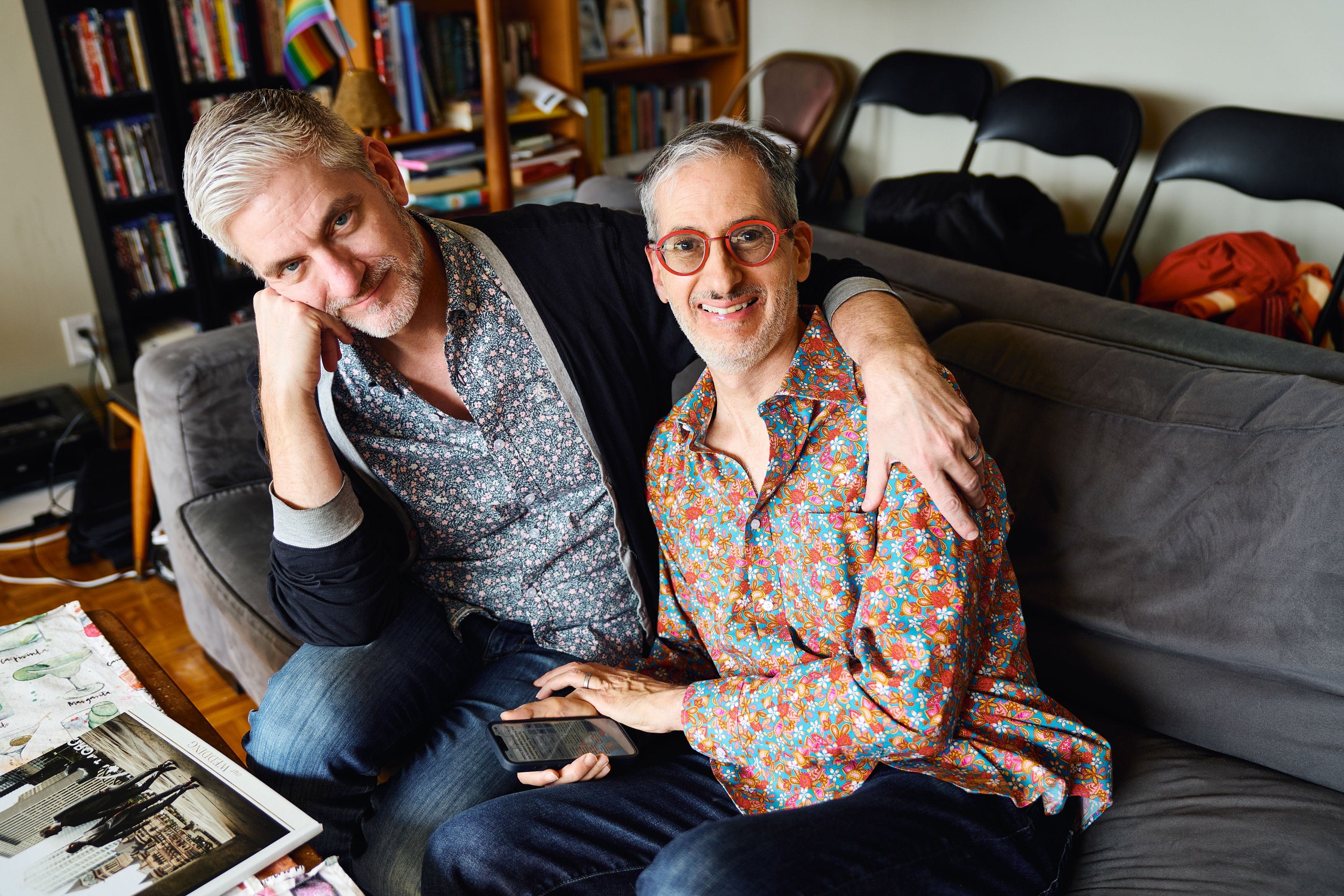
I was depressed, but knew I had to pull myself out of that rut. First, I told friends and family what I was going through. People wanted to help, and I let them. I needed to eat softer and easier-to-swallow foods—and I never liked cooking—so I asked friends to make meals for me, like quiche. My partner of 10 years, Ken, took a leave from his job as an English professor in Pittsburgh to care for me. He comes with me to hospital appointments, helps me with my medications and handles most of the household chores. Everyone showed me so much kindness. It went a long way toward helping me feel better.
At that point, people could only understand me if I spoke very slowly. Then, in April of last year, I was at a consultation at Massachusetts General Hospital, where staff told me about an American AI company called ElevenLabs that specialized in audio tech. Using recordings of my voice from before my speech changed, it could create an AI clone of how I used to sound. I could, potentially, talk like my old self again.
That option wouldn’t have been available to me a few years earlier. Until recently, AI voice cloning was mostly used for commercial work like voiceovers, dubbing, audiobooks and podcasts. But over the past two years, the technology has been integrated into speech-assistive devices, giving people with speech loss higher-quality voice clones that sound far more natural and require far less source material.
I was on board immediately. This clone could help me preserve my identity and autonomy. Right away, I gathered old recordings of my voice. I work in communications, so fortunately I had samples, like a long presentation I’d given and several online Q&As for a film festival. Friends and family also shared recordings of my voice from before my symptoms began. It took 10 days to gather everything, then a friend edited the footage and isolated my voice into a 48-minute audio file. I uploaded this to ElevenLabs. Forty-eight hours later, my professional AI voice clone was ready.
Related: AI Could Save Canada’s Health-Care System
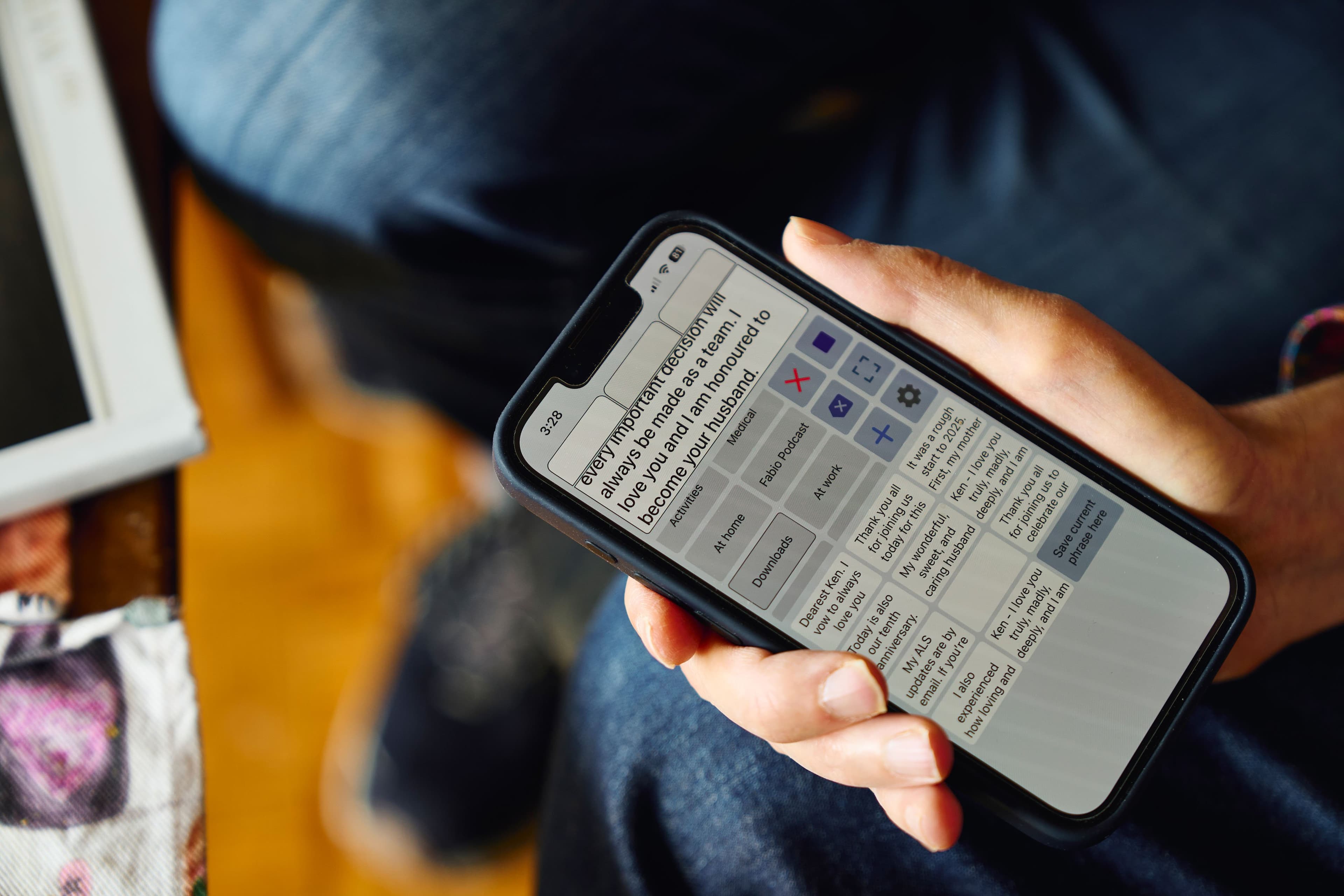
I thought hearing my old voice again would be painful, knowing it would never sound that way again. But the first time I typed a sentence into my phone and heard it spoken back to me in my own voice, I loved it. It genuinely sounded like me. I went wild on day one, typing all sorts of things—everyday phrases, movie quotes and swear words—into the app.
From there, I used the voice clone every day to talk with family and friends. People no longer had to guess at words I struggled to pronounce—unless I made a typo, which usually led to laughs. One time, I accidentally typed, “I enjoy eating mouse” instead of mousse. I work from home and usually communicate through the chat function in online meetings, but for presentations I use the app because I can prepare what I want to say in advance. When I interact with strangers—at a store, for instance—they often assume I’m deaf. So I keep a pre-programmed message on my app explaining that I have trouble speaking because of ALS and asking them to speak normally.
The voice clone works like a mimic. It learned my cadence, my pronunciation and the distinctive way I formed certain sounds. Because I was upbeat in the recordings, my voice clone often reflects that tone. It even reproduces some of my verbal quirks: it automatically peppers my speech with “um,” especially if I’m explaining something. I feel lucky that I can connect with my old self again in this way.
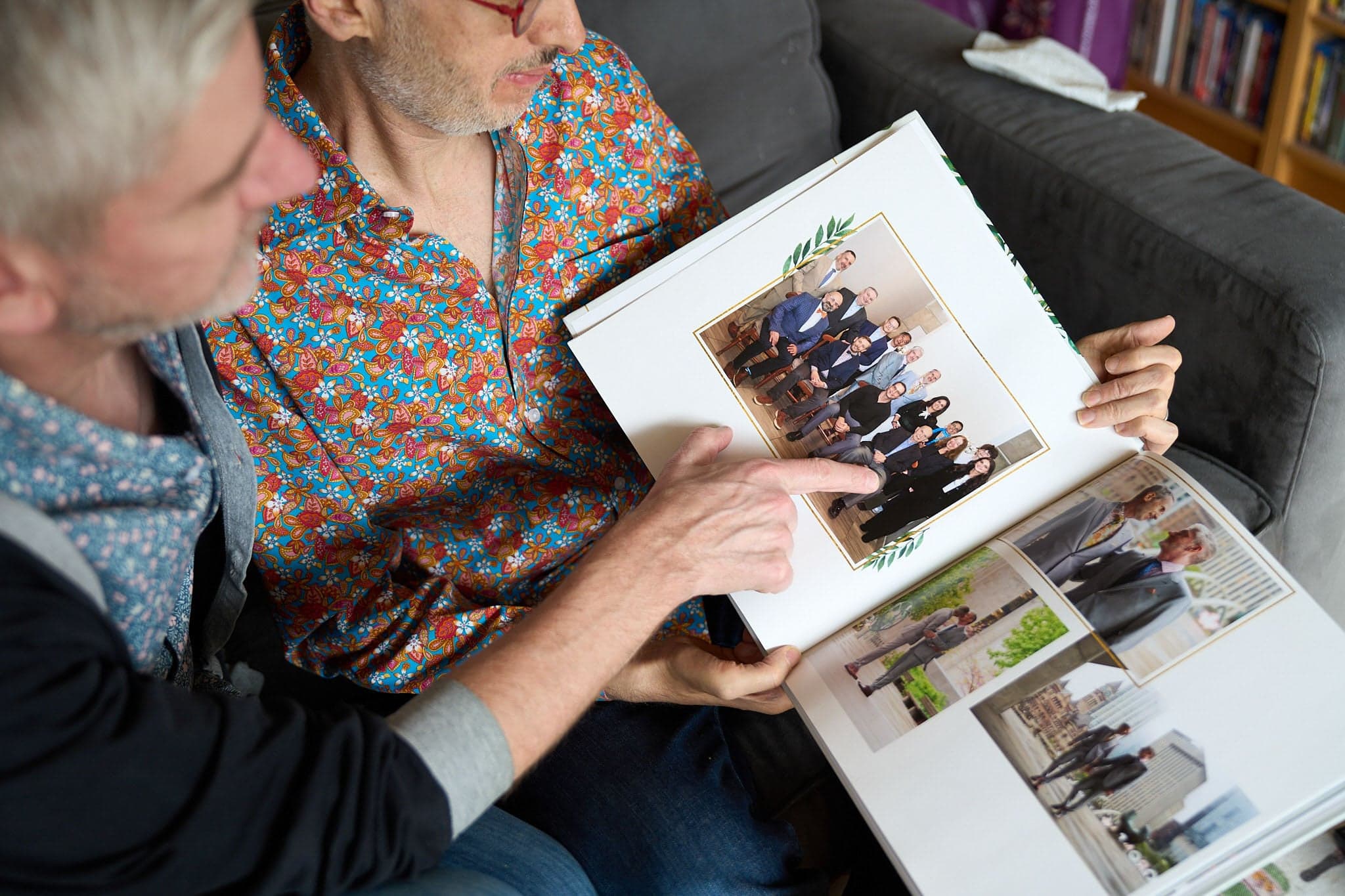
Last May, Ken and I got married at Toronto city hall, followed by dinner with 55 guests. I pre-programmed both my vows and my wedding speech into the app. It was the first time most people had heard the voice clone. The guests were blown away. A friend’s seven-year-old kept saying, “It’s so cool!”
But there’s a catch: I still have to type everything I want to say. Conversations progress quickly; by the time I’ve typed out my thoughts, the discussion has often moved on. As someone who used to talk constantly, I find this especially annoying. Every day, there are things I would’ve said if I could still speak, but now I have to let them go. Parties are especially hard. In noisy, crowded spaces, communicating becomes impossible and I often end up just nodding or giving a thumbs up or down. I’ve become much quieter as a result. And the quieter I am, the more room there is for me to dwell on what I’ve lost instead of what I still have.
Still, the voice clone has become more important to me than ever. A little over a year since my diagnosis, the ALS has continued to advance. My right side is noticeably weaker. I can no longer drink, so I use a feeding tube for liquids. I can still eat puréed foods, but swallowing is harder, and I will likely soon rely on the tube for all of my nutrition. My speech has deteriorated so much that no one can understand the sounds I make. I rely completely on my voice app to communicate.
One day, my muscles will weaken to the point where I can no longer type, but I’ll still be able to use the AI voice clone through an eye-gaze tablet, which tracks eye movements to type messages and links to my voice app. I’ve already begun practising with one for when the day comes.
For now, being able to talk again feels extraordinary. As ALS gradually takes away my ability to move everything but my eyes, AI has helped me maintain my sense of self.
Related Posts

In Defence of Screentime
Canada Needs Homegrown AI Infrastructure
Can AI Save Us From Misinformation?

Why iPad Babies Have More Tantrums
Get the Best of Maclean’s straight to your inbox.
Sign up for news, commentary and analysis. Join 60,000+ Canadian readers.