
The Wealthy Barber Is Back
decades before David Chilton turned Canadians’ inventions into fortunes on Dragons’ Den, he was teaching them how to save. In 1989, Chilton, then a 27-year-old entrepreneur, self-published The Wealthy Barber. Its funny, fictional conceit departed from the dry-as-hell delivery of typical personal-finance tomes: three naive twenty- and thirty-somethings walk into a barbershop and leave loaded up with money advice. It eventually sold more than two million copies in Canada on the strength of its radically simple central premise: pay yourself first.
But in 2026, we say, “Buy now, pay later.” Hip new alt-banks have disrupted the market. Finfluencers and ChatGPT are spouting crypto tips. And, for the first time in recent history, many young Canadians have worse financial prospects than their parents—no matter how hard they budget. Seeing the risks, Chilton recently released an updated version of his bestseller, now with material on tax-free savings accounts, or TFSAs, and a chunky chapter on homeownership. His realism, however, hasn’t changed. You can still survive and save, Chilton says. It’ll be hard, but not impossible.
Let’s start by clearing up a common misconception. You are not the “wealthy barber,” right?
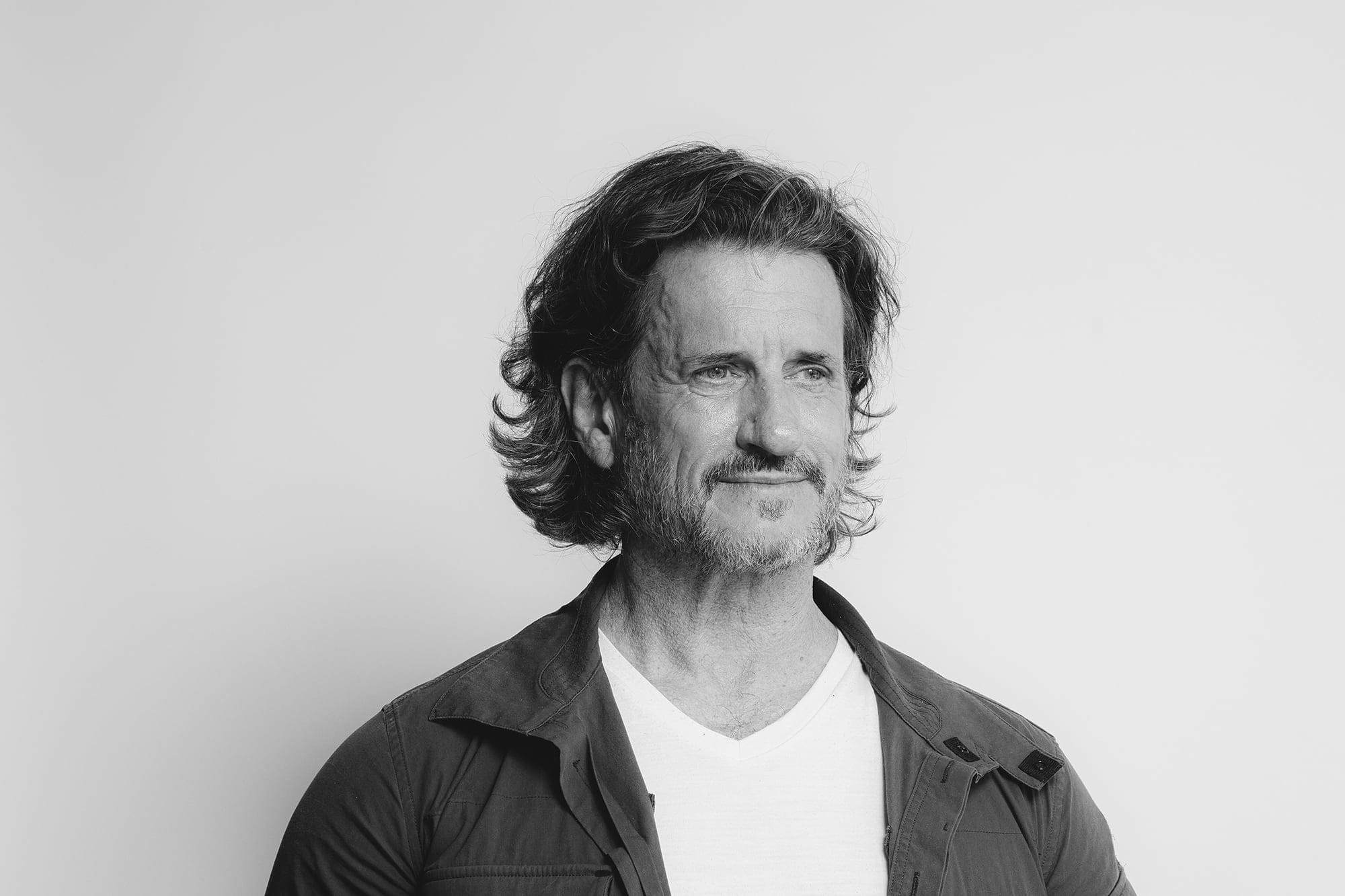
No, but a lot of the views expressed by Roy Miller, the fictional barber from the book, are obviously mine. I’m probably the only author ever to be known by the title of their book. When I’m in the airport, people yell, “Hey, barber!” Nobody called Herman Melville “Moby Dick.”
You recently revamped your bestseller to speak to a more modern audience. What societal shifts in the ways we manage money made you say, “This thing needs an update?”
Related Posts

Jeremy Hansen’s Job Is Moon

Beverley McLachlin is Watching the World’s Legal Drama
There were many. Canada had introduced new savings accounts, like the TFSA and the first home savings account. But my motivation was more about the new challenges younger generations are up against, like housing prices and the cost of living in general. It’s frightening how much it’s all going up. What really tipped me over was how many of my kids’ friends and friends’ kids were asking me questions like, “What do you think about me buying stocks on my own versus ETFs?” I thought, Okay, this is a good opportunity to go back to it.
Any original nuggets of advice that you want to revisit or recant?
Spending summaries are probably one of the best things people can do: chronicle everything you spend money on for three months. They’re boring and annoying, but I didn’t give the practice enough attention in the original Wealthy Barber and, oh my gosh, every single person who does them benefits dramatically. They go, “I can’t believe how much I spend on dinners out. I don’t get enough joy based on that spending. I’m going to reallocate the money to something that gives me more joy units.”
“Joy units” is making me laugh. I know you’re not a hyper-materialistic guy…
You can see my clothes. Definitely not.
But what purchase has given you the most joy units recently?
I have season tickets to the Detroit Lions.
Hmm. Detroit, eh?
Yes, I grew up in Sarnia. I’ve often said that I care more about the Lions than I do about my family—but my family cares more about the Lions than they do about me, so it’s all balanced. In general, I’m not a “stuff” guy. I live outside of Waterloo in a not-very-well-built small house that, to be perfectly honest, has a leak right now. I’ve only had two really nice cars in my life, and they both broke down. Then, one got stolen and I thought, I’m not doing that again. Now I drive a scratched Jeep with 130,000 kilometres on it. I don’t even like when people give me gifts.

Do you think it’s still possible for younger Canadians—I’m including millennials in that, for my own sake—to make smart enough financial decisions that they can override macro factors, like wage stagnation and housing prices? Problems you can’t just budget away?
This isn’t a positive answer, but it’s an accurate one: it’s difficult for the bottom 50 per cent of income earners to afford a normal life while setting aside 10 to 15 per cent of their income in savings. Not even a glamorous life, but one with a modest, detached home, a reasonable car and maybe an annual vacation. The top 50 per cent are doing fairly well. They’ve been able to fund RRSPs and TFSAs and invest in stocks and real estate—and the value of those assets has gone up. So we have a K-shaped economy, where wealth is diverging. It’s not as extreme in Canada, but in the States, the wealthiest 10 per cent are now doing 50 per cent of the consumer spending. When I first heard that, I didn’t believe it.
Sad and true.
People are always lashing out at those in their twenties, like, “Oh, they’re travelling too much! They’re using DoorDash!” There is some truth to that. But as they settle down, get married and have a child or two, they’re not being careless—at least not the ones I’m meeting. It’s just expensive out there. So I tell that bottom 50 per cent: keep your costs down. Figure out whether you can do an RRSP or TFSA, because most can’t do both. And make sure you have a will and that you’re properly insured in case disaster strikes. A lot of the people who are doing well, not surprisingly, have parents who did relatively well.
You’ve been pretty clear that, if you have parents who can help you buy a home, let them.
Take the money. Take it. I’ll take the money from your parents.
Did you help out your own kids?
My daughter was able to buy a home with her partner, and my son is about to buy one with his. But I certainly would’ve if they’d asked—if it was important to them. Canadians love homeownership, more than Europeans by a dramatic margin. We want to own a home—a detached one, if possible. But renting is not the worst thing ever. A lot of the people who say it is don’t have the math right.
Are you fretting about the number of people out there consulting ChatGPT or Claude about their finances?
ChatGPT and Claude are reasonably good—and they’re getting better—but they seem to struggle with some math. My assistant, Maureen, got a wrong answer when testing out a tax question and phoned me about it on the weekend. I was rattled by an error recently, too: I was producing some videos and used ChatGPT to answer RESP questions. It gave me three incorrect results in a row, and you’d have to be an expert to recognize that in the first place. In the next few years, bots will fill a void for people who don’t have enough money to get better advice. But right now, Canadians still have to be careful.
Related: Evan Solomon is the Opposite of an AI Doomer
What about the rise of the finfluencer?
Have they truly seen thousands of people’s financial plans? And what are their educational backgrounds? In many cases, not too strong. We’re lucky in Canada to have some of the best personal-finance educators. We have Ben Felix, we have The Plain Bagel—both YouTubers! But every day, I see other finfluencers on there, and I go, “What are they talking about?” Even with more basic finances, there are subtleties that need to be communicated. That’s difficult to do in a two-minute reel. It’s amazing how aggressive a lot of them are about, for example, advising which options strategies people should take on and trade. Well, I can tell you: don’t take on an options strategy. You lose money 95 per cent of the time. Just walk away!
What about “buy now, pay later” culture—your Klarnas and AfterPays. Is that your worst nightmare?
I hate it. Credit is already strangling so many Canadians. Look at our debts relative to our GDP relative to our disposable income. Real estate costs have made things worse, for sure, but we’re among the highest debtholders in the world. I don’t mean to sound dramatic; it’s just that bad. When you look at all the tech that’s come into our lives in the last 10 to 20 years, many people in the finance industry brag about how it’s taken friction out of transactions. That’s not a good thing. It was better back when you had to reach into your wallet and grab cash. You felt some pain.
A lot of people would sooner chew their own arm off than look at their bank balance. Was there something intrinsic to your personality or upbringing that made you comfortable with money from the beginning?
My parents wouldn’t buy something if they didn’t have the money for it, like a lot of people of their generation. Outside of that, they didn’t really teach me anything about personal finance. My grandmother, on the other hand, loved investing—bank stocks, penny stocks. She bought physical gold. Once, she gave me $1,000 to invest, which was a lot of money in those days. I lost 80 per cent of it quite quickly, but that got me hooked. I read every personal-finance book that came out—50 to 100 of them a year. When I went to study for the Canadian Securities Course, I didn’t even open the textbook because I’d read so much of that stuff already. I loved it.
Most Canadians know you as a former Dragon. During your three seasons in the den, you invested in a kelp-caviar company, a curling-broom business and—this one I love—a woman who made greeting cards from paper shredded by her lovebird.
Luigi!
How, especially in that last case, do you know a business is going to be viable? What grabs you about a pitch?
That last deal I did because I loved her, and I didn’t care if it went well. It turned out it did go well. We ended up partnering with Hallmark. At the time, I said to her, “The bird is the key here. If he dies, don’t tell anybody. Just carry him around.” Instead of Weekend at Bernie’s, it would be Weekend at Birdy’s.
Thank you for saving me from making that pun.
The first day I sat down on the Dragons’ set, I said, “How do you do this?” And Jim Treliving goes, “I’ll give you the best tip: ask yourself, ‘Can they get the meeting?’ ” I knew exactly what he meant: can they make stuff happen? Will they be resilient when things go poorly? I was looking at the person more than the pitch.
You were also a sucker for a deal that had to do with dogs.
I was always in on the dog deals. I have a dog now: Jasper. He’s part Malinois.
Big.
That was a huge mistake—he basically destroyed my life. Even bringing him back from the rescue place, he ate the seatbelts out of the back of my car. That should have been a sign to turn around, but no.

Has the trade war affected your investments at all?
I pay a lot of attention to the news, but I don’t roll it into the way I handle my investments. What I preached to people after last April’s “Liberation Day,” when the markets collapsed, was: don’t get too caught up in this. You’ll sell at the exact wrong time. Just focus on the long term.
Do you think the Buy Canadian boom will outlast the tariff drama? Has there been a permanent nationalistic shift in our collective spending?
It’ll wane but remain part of our thinking. Look at my business: we printed the updated Wealthy Barber in Canada. We didn’t distribute it with Walmart and Amazon. Those are two of our three biggest accounts, but I said, “All-Canadian project.” Mark Carney isn’t wrong when he says the world order is undergoing a massive change. We have to open up to new alliances, but the bottom line is—whether people are upset with the U.S. or not—it still accounts for a huge percentage of our exports. And remember, it’s right next door. When you start saying, “We’re going to trade more with Asia,” shipping costs alone alter the math dramatically. Reconciling with the States is preferable to just walking away and building nothing but other alliances.
Have you ever considered doing TV again?
Not really. I’m old, and I don’t want to drive to Toronto and back all the time. I also do far fewer speeches now than I did throughout my career. Even though I love speaking, I don’t like getting there anymore. Recently, I got an invitation to go out to Fort McMurray. I said no, and I love Fort McMurray!
Your fellow Dragon Kevin O’Leary just made his acting debut in Marty Supreme. Have you seen it?
I haven’t, but I’m going to. I heard he was excellent. Of course he was excellent! He’s been an actor all his life, for heaven’s sakes.
A few years ago, you said you wanted to write a play. How much progress have you made toward that goal?
Not much, because I went back to writing the book. I actually wrote a play when I was around 18. It’s set in a confession booth, and it focuses on a priest and a young woman and the conversations they have from the time she’s 14 to 25 years old. I might go back and look at it, but I’m more likely to start something from scratch.
Is it true that you write your books by hand?
All of them. I wrote the updated Wealthy Barber on the same card table where I wrote the original, except this time it had a broken leg—and a crazy dog that constantly walked by and knocked it down.
Here’s the big question: have your kids ever asked you for business advice?
For sure. Both of them are entrepreneurs. In fact, my son is working on a new idea, and he’s coming down next week to talk about it. They’ve asked me nothing on the personal-advice front, though. Absolutely zero.
This interview has been edited for length and clarity.
This story appears in the April 2026 issue of Maclean’s. You can subscribe to the magazine here or send a gift subscription here.
Related Posts

Ana Bailão vs. the Housing Crisis
The Man Who Wants to Mine the Ocean

Timothy Snyder Has Seen Tyrants Like Trump Before

Is Canada’s Military Ready for Trump?
Get the Best of Maclean’s straight to your inbox.
Sign up for news, commentary and analysis. Join 60,000+ Canadian readers.