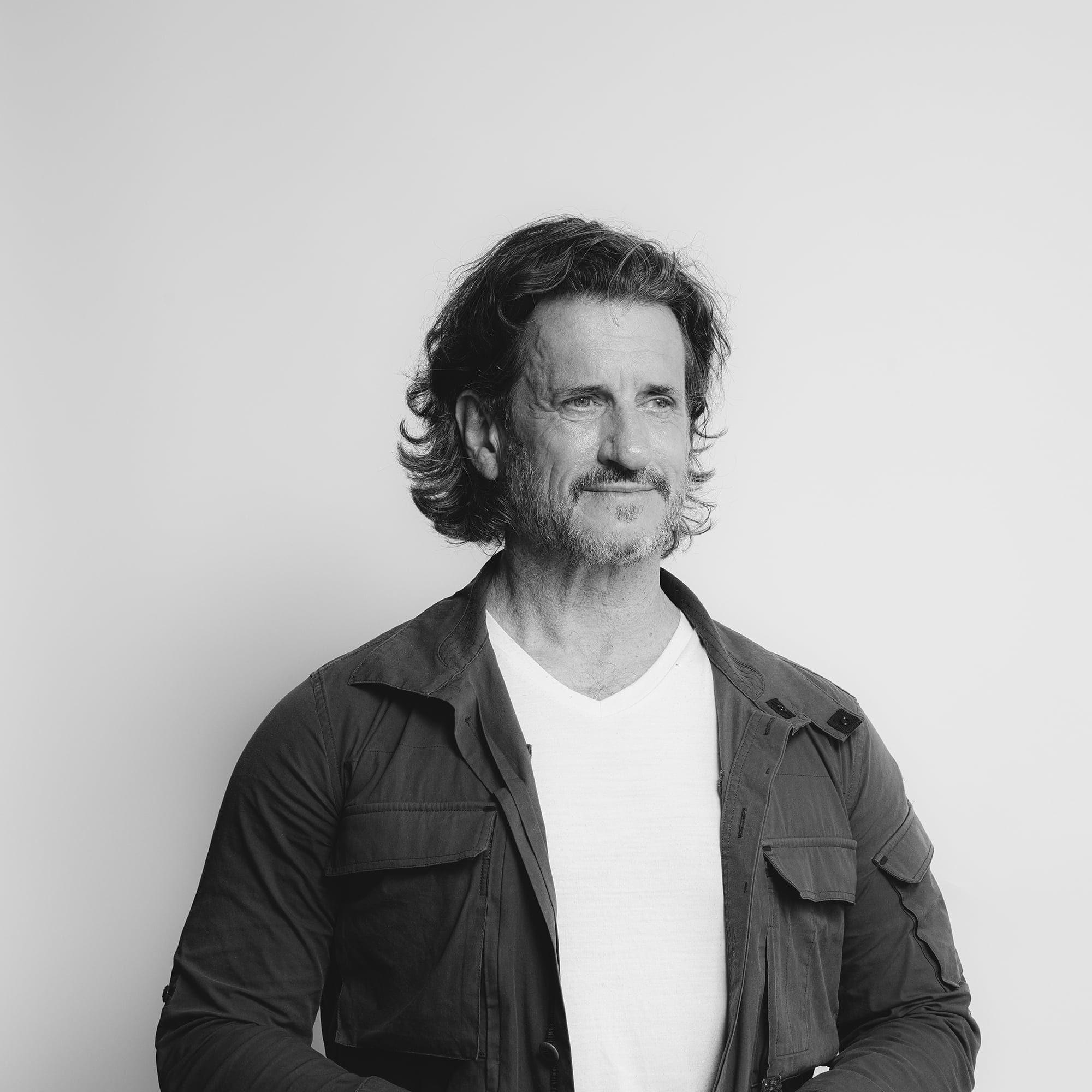
The Man Who Wants to Mine the Ocean
What Donald Trump wants, Donald Trump must get. This past April, perhaps noticing his 51st-state critical-mineral grab was failing, he loudly issued an executive order expediting permits for companies to commercially mine far-flung seabeds rich in nickel, cobalt and other metals—demand for which is set to quadruple by 2040 to power the clean-tech boom. There’s just one problem: those seabeds belong to everyone, sir.
That didn’t seem to bother Gerard Barron, CEO of the Metals Company, a Vancouver-based sea-mining firm. Its American subsidiary seized on Trump’s mining zeal to stake out the Clarion-Clipperton Zone, a four-and-a-half-million-square-kilometre oceanic expanse between Hawaii and Mexico. Barron’s billion-dollar goal for the coming years? Step one: slurp millions of metal-heavy nodules off the Zone’s floor using underwater vessels (picture remotely controlled Dysons). Step two: refine and sell the nuggets to metal-hungry industries. Step three: recycle the castoffs. Step four: stop extraction altogether. Barron, a self-described environmentalist, calls the plan “progress.” Scientists and NGOs, worried about disrupting little-understood ecosystems 6,000 metres below deck, call it a potential climate cataclysm. Trump calls it business as usual.
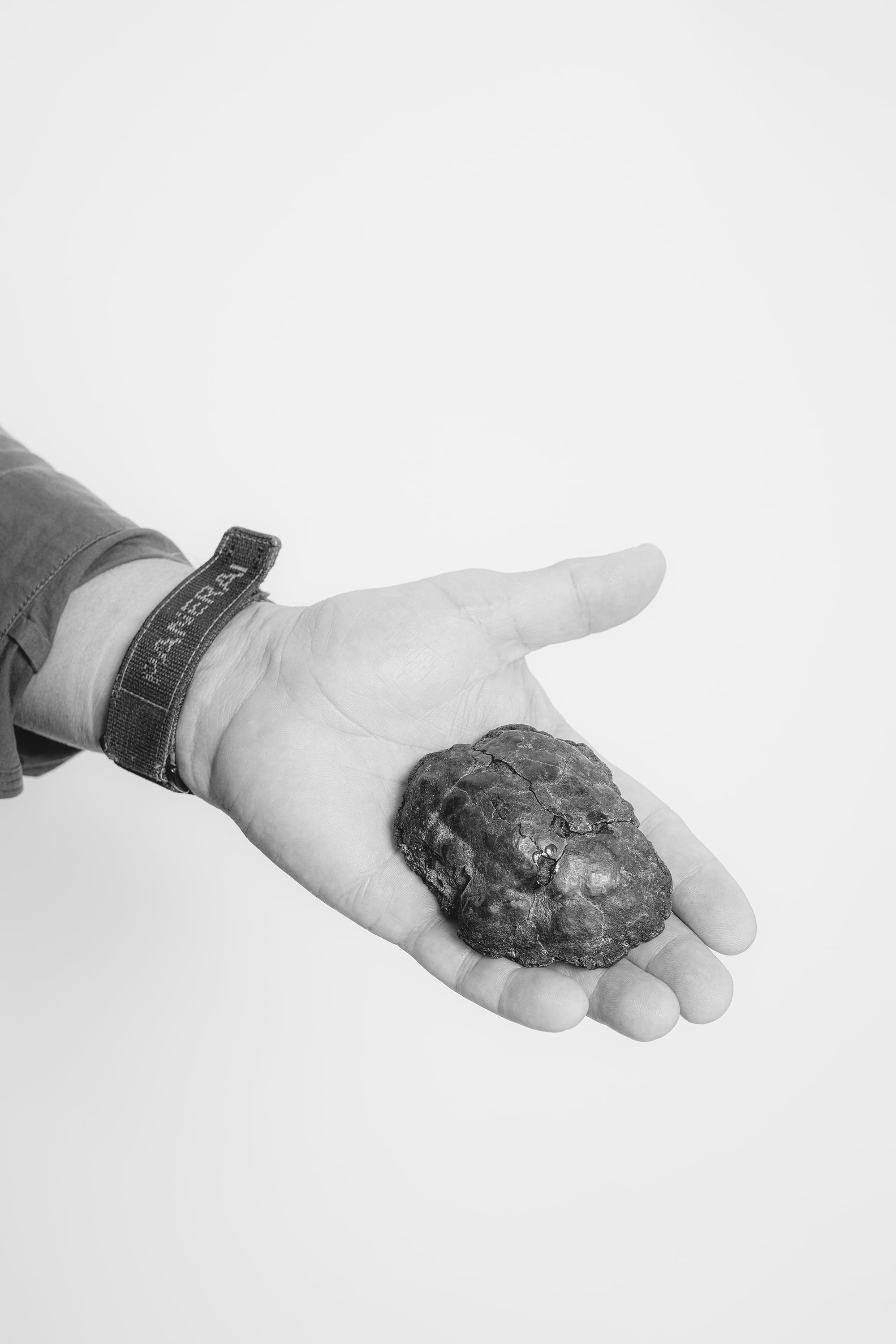
The “big game,” as you’ve called them in the past, are polymetallic nodules. They kind of resemble uglier truffles.
I think they’re beautiful. They’re about the size of potatoes, and they literally just rest on the ocean floor, like this one sitting on the palm of my hand; it’s probably four to five million years old. Actually, if you go into most of my jacket pockets, you’ll find some nodule dust. I always keep one with me—and I do have favourites.
What’s so special about these spuds?
They contain high grades of the metals we need, like nickel, copper, cobalt and manganese. Cutlery, computers, the buildings we’re in—if it ain’t grown, it’s mined. You can’t make steel without manganese. Nickel is used in batteries. Your iPhone has a cobalt-rich battery.
Ah, this old thing.
If we look at history, battles have been fought around energy, mainly oil and gas. Now the same can be said for critical minerals. Today, I’m doing meetings in San Francisco, and the theme in America at the moment is: bring back jobs, bring back industry. Depending on who you listen to—the World Bank, the International Energy Agency, pretty well any authority but Greenpeace—they’ll say, “That’s going to require a lot of metals.” Canada is rich in them but America is not, and now other countries are realizing they’ve got to have more control over that supply chain. So the question is: where are they going to get the metals? These nodules just so happen to grow in the ocean through the accretion of sea water and sediment, a bit like pearls.
Related: Why Canada’s Oil Sands Aren’t Coming Back
The International Seabed Authority, or ISA, has a pretty strict “look but don’t touch” policy for the Clarion-Clipperton Zone, a nodule-packed area in the Pacific. Earlier this year, your company applied for clearance to mine there with the U.S., which is not an ISA member state. Those nodules took millions of years to form—why not just wait for proper commercial regulations and avoid a diplomatic melee with the ISA’s actual member states? What’s the rush?
No single nation has sovereignty over the oceans. In 1994, 157 of them agreed to an ISA treaty that said, “When it comes to sea-floor minerals, these are the exploration rules.” I think the U.S. was clever not to ratify; today, it’s free to do what it’s doing. Here we are in 2025, and still no commercial guidelines from the ISA. I don’t think its members are ever going to agree on them. The lunatics got ahold of the asylum—in this case, the NGOs. Governments have been heavily influenced by the World Wildlife Funds of the world, whose deliberate plan has been to derail the Metals Company so we run out of money. If we sat around for another couple years, we’d have to say goodbye to our team. There’s no way our shareholders would support us.
Maybe so, but you could argue pumping the brakes is good from an environmental perspective. Every day, Instagram shows me reels of new translucent octopuses and bioluminescent shrimp I didn’t know existed. Some researchers say we have a better idea of what’d happen if we mined the moon than the deepest depths of the sea.
That moon thing is a throwaway line that keeps being repeated. When it comes to the Clarion-Clipperton Zone, we know a lot.
Do we, though?
In terms of the possible disturbance to the deep-sea environment, everyone was concerned about the sediment plumes mining kicks up travelling long distances and blanketing other ecosystems. We found that they only rise about two to three metres above the ocean floor; up to 98 per cent settles in the area. It’s quite magic to watch! The biggest battle we’ve faced in the sea-mining industry is misinformation. For the last 14 years, the Metals Company has been a prolific spender of environmental-research dollars—and we’re for-profit. We’re not a research institute. James Cameron, one of the great explorers, has opined on the topic of deep-sea mining. I was a bit nervous to hear his stance—he’s completed more than 75 deep-sea dives. But he just said, “What you mostly have is miles and miles and miles of nothing but clay.”
Some scientists might quibble with that.
Don’t fall victim to the nonsense. We’re going to pick up some rocks.
Related: Canada in the Year 2060
A big part of Donald Trump’s 51st-state plan had to do with critical minerals, or at least that’s what our outgoing prime minister thought. Did you have any misgivings about cozying up to a guy who just floated absorbing the country where your company is headquartered—for treasure?
As an Australian, I found that whole thing pretty funny. It would be like us saying, “New Zealand, come on over.” They would hate it. But misgivings? None. None. Donald Trump—he’s an entertainer. He’s also a world-class negotiator. What I see is a president doing what’s in the best interest of his people. I think Canada has better leadership now too. (That’s a delicate way of saying I don’t think the previous leadership did a very good job.) I hope Mark Carney can continue the good path he’s heading down. He realizes you’ve got to have industry to have taxes and jobs. And, I don’t know if “bending the knee” is the right term, but he’s making an effort to have a better relationship with the U.S. administration. That’s important.
Have you met Trump?
Not him specifically.
Who in his cabinet have you worked with on the mining file?
Many people. Secretary of State Marco Rubio. Mike Waltz was one of them, but he had a bit of a Signalgate problem. We’ve had a lot of Republican support in the last five years. I don’t know why it was more Republicans—
maybe they’re more business-focused. Critical minerals are a bipartisan issue, though. I’m convinced that priority will survive any administration.
Do you think taking the isolationist path is going to work out for America?
I do. It’s such a big, prosperous market—everyone wants to do business with the United States.
Do you live in Vancouver full-time?
No. I’m constantly on a plane: next week, I’m in Dubai, where I have a residence, then I’m off to Seoul to meet a partner who wants to help us build on-shore processing, then London for investor meetings. I’ll be in New York in October for a UN General Assembly meeting. I spent seven straight weeks in Vancouver once, and it rained every day. I have a love-hate relationship with that place.
Canada has been floated as a potential site for refining these nodules, once they’re dug up. We have a moratorium on sea-bed mining in our own waters. Do you see that putting a wrench in your plans?
Totally. Canada’s moratorium was guided by a squeaky-wheel community of green activists. It’s a ridiculous position, and I encourage Carney to reverse it immediately. For those bureaucrats who weren’t clever enough to see through the noise: shame on them.
Google, Renault and BMW Group—big metals customers—are also refusing to buy ocean-sourced metals for the time being. Have the “lunatics” gotten to them too?
In many of those cases, the companies were heavily influenced by NGOs. If they genuinely cared about the environment, they would have reached out to us to say, “We’re thinking of joining this moratorium. What have you got to say? What’s your story?” But they didn’t. Virtue signalling 101.
You’ve been a serial entrepreneur, bouncing between business ideas for most of your life—in finance, in manufacturing, in tech. Why was mining the thing that hooked you?
I grew up on a dairy farm in Queensland, Australia, in the middle of nowhere. I remember thinking mining jobs were so cool because of the big machinery. Later in life, a tennis buddy of mine went to work for a company called Nautilus Minerals, which mined copper in the ocean. As he told me about it, I got more and more enthusiastic. He said, “By the way, we’ve got no money—can you invest some?” So I did. Nautilus ended up catching a commodities-cycle wave. We raised a lot more money and listed the company, then both of us left around 2008. As time went on, the geopolitics of critical minerals became a red-hot topic. You know when you see the truth—when you know something is right—even when everyone else is telling you it’s wrong? I’m not doing this to make more money. I just had an absolute determination that sea mining needed to be established. It’s like electrification. The EV market’s hit a bit of a speed bump now, but it’ll get back on track.
You don’t seem to mind the climate-villain persona that’s starting to stick to you. Pelenatita Kara, a prominent environmentalist in Tonga, called you “a dark cloud over the Pacific.” Why doesn’t that bother you?
Because I know it’s wrong. I’m not saying I’m not a sensitive soul—it just doesn’t touch the sides, honestly. Maybe it motivates me. I don’t know.
So you do get a bit of a rise out of pissing off Greenpeace, then?
I don’t try to. But I think they should be ashamed of themselves. They should be ashamed of protesting aboard Coco, one of our boats, in 2023! We were on a $25-million campaign—American dollars—to study the recovery rates of an area we’d collected nodules from a year earlier. They tried to derail it. Well, that’s not very reasonable or progressive! I’m impatient with people who just want to slow or stop things without presenting alternatives. If not this, then what? The only argument I’ve heard from some of those environmental groups is in favour of degrowth—or shrinking production and consumption worldwide to conserve resources. That’s a pathway to catastrophe. They want fewer people on the planet; they just can’t decide which ones should go first.
People have called you “Australia’s Elon Musk.” Is that a flattering comparison in your mind?
I’m a massive fan of his. He’s a once-in-a-multi-generational genius. I don’t deserve that comparison. I’m just doing my best. He’s pretty weird, but I don’t mind that. People probably say I am too.
Life on the dairy farm—did you enjoy that? Living off the land?
Hell yeah. I milked the cows every day. My dad was also the local windmill repairman, which is kind of funny. If you look at how our vertical-transport system pumps nodules up from the sea floor, it’s a similar mechanism to a windmill, just on a much bigger scale. I’m a farm boy through and through. You just know how to do shit when you grow up on a farm.
Related: The Age of Wildfires
Is there any place on Earth you’d want to see left untouched?
Queensland, for sure. But I’m a fan of progress. It’s exciting, and it’s frightening too—for example, will artificial general intelligence be the end or the beginning of us? Who knows?
“Who knows?” is right.
It’s gonna be one or the other! The thought of compressing 100 years of medical and scientific research into five or 10—that’s good! I’d love to live to a thousand, to be honest. I know that horrifies some people, but I have so much to do.
Are you into biohacking—cryotherapy, fasting, nootropics, all that jazz?
Not at the moment, but I’m open to it. I follow a lot of people in that community online. Last week in the States, I did one of those new whole-body scans. I get checks done regularly because I want to see my kids grow older and make sure this industry gets going. I’m 58 years old, but I’m so full of energy and life, it’s like I’m 25 again. It must be disappointing to my critics.
Related Posts
Timothy Snyder Has Seen Tyrants Like Trump Before
Is Canada’s Military Ready for Trump?
Ana Bailão vs. the Housing Crisis
Jeremy Hansen’s Job Is Moon
Get the Best of Maclean’s straight to your inbox.
Sign up for news, commentary and analysis. Join 60,000+ Canadian readers.