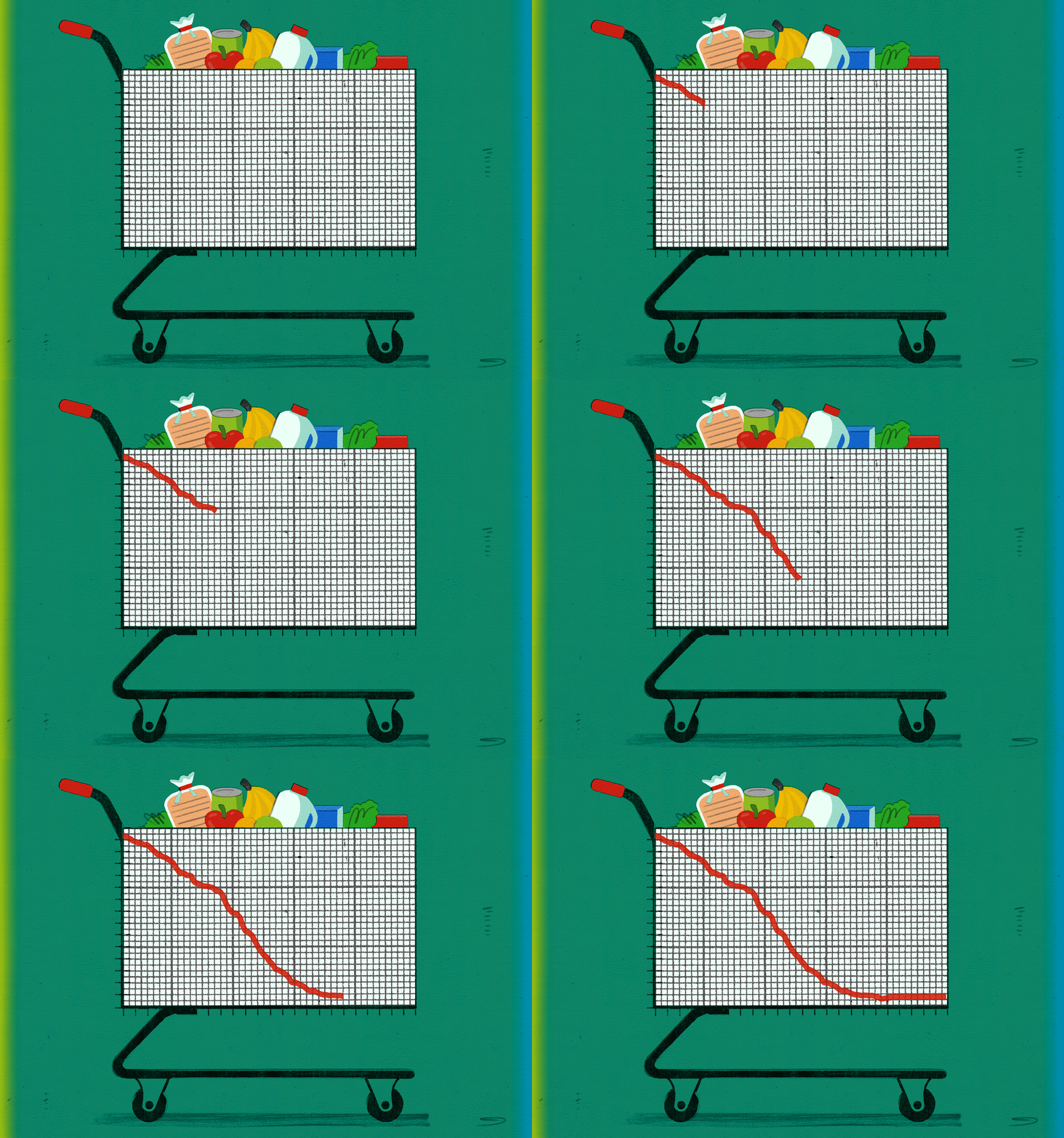
What if Cities Ran Grocery Stores?
In 2026, it’s nearly impossible to stay afloat, let alone get ahead. In Toronto’s Weston and Finch area, where I live and serve as a city councillor, I speak to young workers forced to take second and third jobs to pay rent, middle-aged newcomers who can’t meet their basic needs and seniors whose pensions no longer keep pace with their monthly bills. In my own neighbourhood, the food bank lineup at Elspeth Heyworth Centre for Women regularly circles the block.
In December of 2024, Toronto City Council declared a food-insecurity emergency after discovering that one-quarter of residents couldn’t afford nutritious and culturally relevant food. According to Food Banks Canada, roughly 18 per cent of the Canadians currently accessing food banks list employment as their main source of income. These aren’t unhoused folks without jobs; these are people living well above the poverty line. They might even be people you work with.
The cost of essentials like cooking oil, eggs and onions never quite recovered after COVID’s supply-chain disruptions. And the pandemic wasn’t the only driver of today’s out-of-control foodflation. Since January of 2025, two separate CBC News investigations have reported that some stores owned by and affiliated with several major grocery chains were overcharging for meat, likely factoring packaging into price-by-weight calculations, which goes against regulations set by the Canadian Food Inspection Agency. It’s bad enough that we live in the golden age of phone scams; we don’t need consumers getting hoodwinked by chicken breasts as well.
Between the extremes of food banks and high-priced mega-chains, there’s another option: city-run grocery stores. When the idea first came to me a few years ago, I imagined the service could be federally or provincially run. But after Zohran Mamdani, New York’s new mayor, launched his own buzzed-about city-grocery-store campaign last year, I realized Canada’s version could benefit from the kind of experimentation and quick execution we can pull off at the municipal level.
Related: Air Travel Sucks. It Doesn’t Have To.
And so, this past March, I introduced a motion at city hall to pilot four non-profit, city-run stores. Their big sells? Pantry staples, household items, and fresh produce, fish and meat at the lowest possible prices. Where, in the past, some of my more progressive proposals have been met with pushback—including accusations of socialism—this one passed with overwhelming support from council.
Initially, our team plans to launch stores in Toronto’s four corners: Scarborough, North York, East York and Etobicoke. The goal is to collect feedback and, eventually, set one up in every neighbourhood within the next few decades, prioritizing food deserts and areas with limited transit access. Low-income residents would benefit from these stores the most, of course. But food insecurity doesn’t discriminate, so all customers will be welcome. They won’t need to show ID or even be a Canadian citizen to make purchases—just like at Metro or Sobeys.
One key difference is in how city-run grocery stores source products; Torontonians will have a say in what they stock. Good things grow in Ontario, as the jingle says, so if the public requests it, we could devote more shelf space to homegrown, seasonal produce. This might mean our stores carry fewer juicy, jumbo strawberries in the middle of winter, for example. But the flipside is they’ll have plenty of other hardy local options from community farmers to choose from.
For a few reasons, city-run grocery stores can sell affordable goods without downloading expenses onto shoppers and taxpayers. Canada’s Big Five—Loblaws, Metro, Costco, Walmart and Empire, which owns Sobeys—claim slim profit margins, partly due to the high development, storage and rental fees they pay to operate stores with such large footprints. (Two per cent profit on tens of billions of dollars in revenue is still an astonishing number, but I digress.) In the case of municipally run stores, however, the city can waive property taxes and reduce development costs by repurposing the empty and underutilized warehouses and civic centres we already own.
Related: The Secret Weapon in Canada’s Sewers
We’ll also be able negotiate discounts on bulk orders with food suppliers, passing cheaper wholesale rates down to shoppers. Some constituents worry that the city lacks experience in creating supply chains; in reality, we have existing relationships with the suppliers of our food banks, school-nutrition initiatives and seniors’ homes. Right now, each of those programs manages its own food flow. But once our grocery stores are up and running, we’re considering centralizing them under one food-procurement department with bulk-purchasing and distribution capacity. It could even redirect any last-day goods to other city programs to reduce waste.
The inexpensive offerings at city-run stores would ideally pressure private chains to sell certain items at a loss or lower their prices more broadly, creating more competition that benefits customers. In Canadian politics, there are few bigger champions of an unfettered marketplace than Ontario Premier Doug Ford. And yet, he recently criticized our proposal, calling it “the craziest idea” he’s ever heard. (Again, the socialism set him off.) To politicians in the rest of the world—including Mamdani—government-run grocery stores aren’t a crazy idea at all.
For inspiration, we’re looking to Finland, where the retail co-op S Group accounts for 47 per cent of the grocery market and delivers dividends to its members. We’re also eyeing the U.S. military’s commissary system, a grocery network whose stores serve active-duty service members, retirees and certain veterans on American bases. Its model is ludicrously simple: sell food as close to cost as possible, with a five per cent surcharge to cover operating and labour expenses. In 2024, the commissary’s total revenue hit US$5 billion. It’s proof that a public body can be successful while keeping food accessible.
Our team in Toronto now has a year to assemble a meaty report (pun intended) that tackles the specifics of how our stores will come to be—the sites we’ll build on, who will handle hiring, our best bulk-purchasing options and how we’ll measure success. We’re still determining the exact cost to launch, but I expect it to be far less than the other city projects we sink enormous funds into without batting an eye.
In the meantime, it’s heartening to see the idea gaining traction elsewhere in Canada. Out in Vancouver, the city is weighing taking over Sunrise Market, a long-time discount chain on the Downtown Eastside that’s going out of business. And, just recently, I was invited to speak at a conference for the Federation of Canadian Municipalities about how the idea could take shape in urban centres like Calgary, along with smaller suburbs. In a well-resourced country like Canada, everyone agrees, no one should go hungry.
Anthony Perruzza is city councillor for Ward 7 (Humber River–Black Creek) in Toronto.
What did you think of this story? Send a comment for publication to letters@macleans.ca, and supply your name and address. Comments should be fewer than 200 words, and may be edited for length and clarity.
Related Posts

American Carmakers Are Leaving. Bring on the Chinese EVs.

Canada is Funding its Own Economic Decline

The Case for Tourist Taxes

How Do We Keep Canada Insurable?
Get the Best of Maclean’s straight to your inbox.
Sign up for news, commentary and analysis. Join 60,000+ Canadian readers.