Confessions of an Ex-Anti-Vaxxer
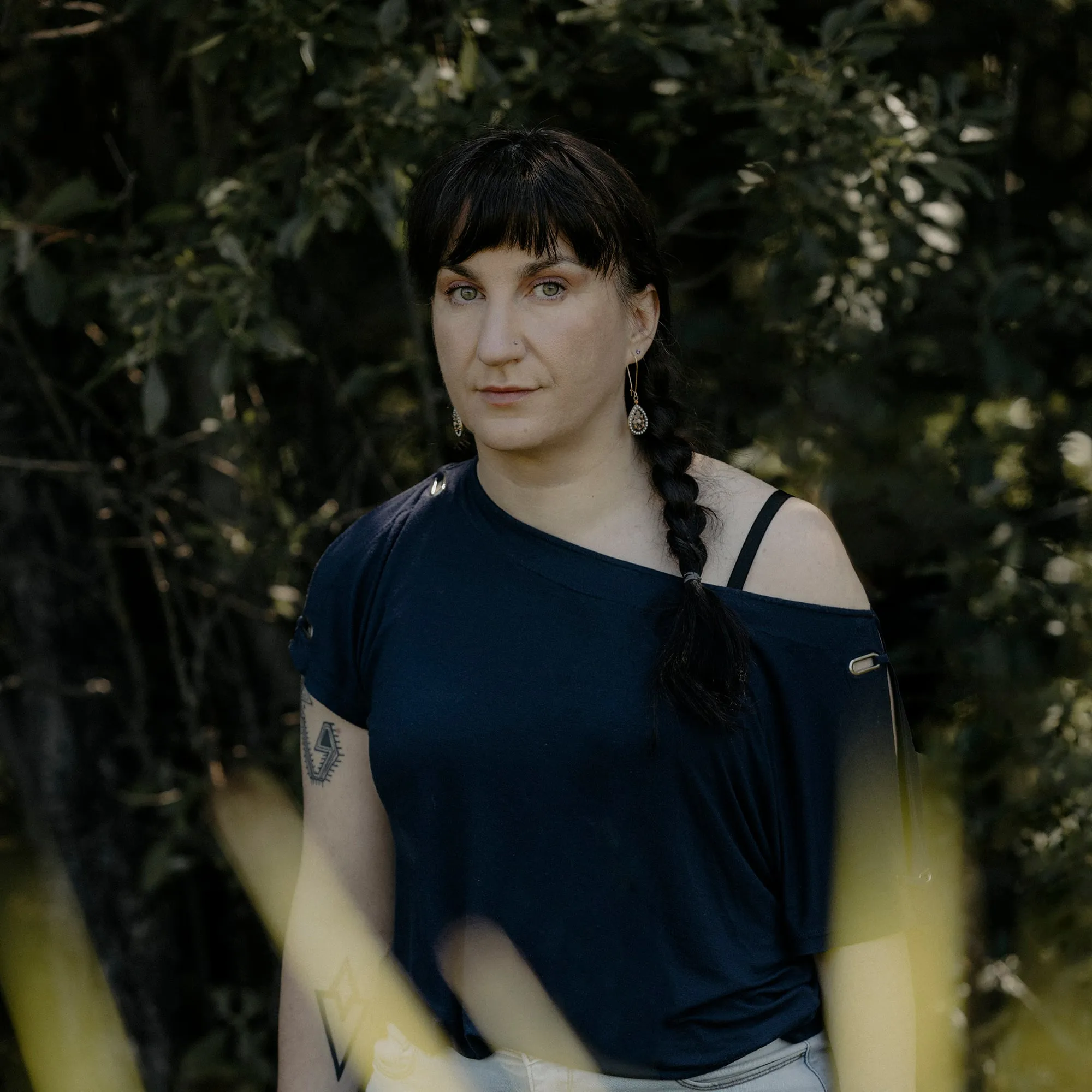
I’m a nurse in a small northern Alberta town, not far from the Canadian Rockies. I love living in Alberta and raising my kids here—I have three, ages 17, 10 and seven. I work at the town’s community health complex, which serves as an ER, acute-care clinic and outpatient centre. I suffer from Crohn’s disease, and I’m happy I can give people the care that I would want. It’s cathartic for me to be there for patients on the worst days of their lives.
Right now, health-care workers in Alberta are witnessing something we haven’t seen in generations: the return of measles. As of this writing, some 1,400 people in my province have been infected so far—more cases than in the entire United States. It’s surreal to watch the return of an illness we had all but eradicated.
At every opportunity, I try to convince parents and patients to abandon their anti-vax beliefs and protect their kids and the community. I’ve already had a few successes. I managed to persuade my 30-year-old niece and a family friend by telling them about the damage that measles can cause, how it weakens children’s immune systems and exposes them to other infections. Some of my patients are swayed when they hear about outbreaks in other hospitals putting the most vulnerable patients at risk.
But I regularly come up against people who refuse to immunize. The anti-vaxxers that I meet generally fall into two groups. The first are members of nearby Indigenous communities, where trust in the Canadian health-care system has, understandably, been broken. Recently, I spoke to an Indigenous patient who did not want the vaccine, telling them: “I don’t blame you for not trusting me, but I really hope that you do.” Indigenous communities can also lack access to health care, creating holes in herd immunity.
The second group are the people emboldened by the pandemic-induced war on vaccines. The anti-vax movement has grown stronger in the last few years and has aggressively aligned itself with far-right pundits, conspiracy theorists and fringe doctors who peddle lies. It’s getting harder for parents to sift through fact and fiction. In a throwback to the ’90s, people like Robert F. Kennedy Jr. have revived the idea that vaccines cause autism. On his show, Joe Rogan hosts anti-vaxxers like Suzanne Humphries, who claims that polio isn’t caused by a virus but by toxins. It’s hard to unscare people once the seed has been planted. They confuse stoicism for safety and correlation for causation. Some don’t worry about measles because it was once a fact of life—they assume it’s harmless because the Brady Bunch once got it.
Related Posts
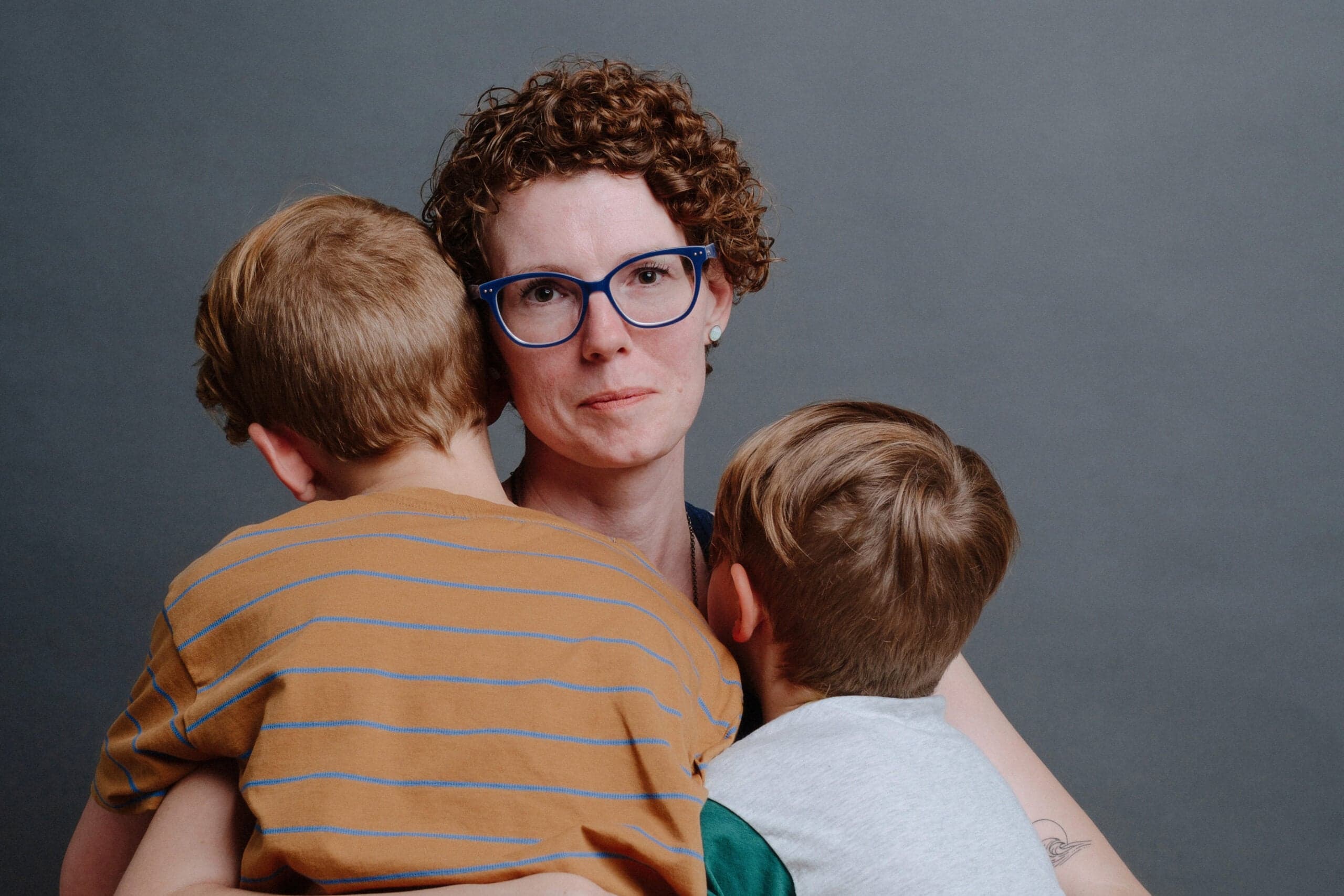
My Misadventures in Gentle Parenting

The Rich List
As an advocate and a nurse, I’ve noticed that more often it’s red-pilled, radicalized men who are making the decision to not vaccinate their children. It’s strange: in the past, moms mostly made the health-care choices for their families. Husbands went along with whatever the wives decided. But lately, I argue more with men who tell me they’ve read stuff online about how vaccines are useless or dangerous. They tell me I’m part of the conspiracy and call me a pharma shill.
I understand where they’re coming from: not long ago, I was an anti-vaxxer, too. I thought vaccines were dangerous and I didn’t want my kids immunized. I truly believed my kids—and society—would be safer without them. In this moment, as fatal diseases are surging and health-care professionals are fighting a losing battle against misinformation, I’ve made it my mission to prevent people from falling for the same lies that ensnared me.
I didn’t join the anti-vaccine movement with a megaphone or a picket sign in my hand. I came to it online, quietly and gradually. In the beginning, it didn’t feel like I was joining anything. It felt like mothering. I grew up the daughter of two immigrants from the former Yugoslavia. After watching their own government fall, they were skeptical of authority. My mom vaccinated me as a kid—we didn’t have internet or podcasts telling us not to. But for my parents, it was second nature to question the government, especially when their kid’s well-being was involved.
I graduated from the Northern Alberta Institute of Technology and started a career—in STEM, no less. I was a quality-control chemist at a pharmaceutical manufacturing company in Edmonton. My job was to monitor chemical reactions, inspect raw materials and make sure that products met safety standards. I believed in science. I followed the procedures.
I married my husband, Thomas, in 2008, and his career eventually took us from Edmonton to rural Alberta. It was beautiful and quiet, and we thought it would be a good place to raise a family. So I quit my job and planned to be a stay-at-home mom.
Back then, I had no strong feelings about vaccines either way; they just were something you got to avoid diseases. When I got pregnant, I did everything I was supposed to: attended prenatal appointments, ate a balanced diet, even got my flu shot.
Things changed when I gave birth to my daughter in 2008. My Crohn’s was in remission at the time. Even so, my doctor and nurses told me I was high-risk, and that complications could arise during pregnancy. I agreed to have a C-section, though I felt pressured into it. I learned later that the complications they warned me about were only likely during a Crohn’s flare-up, but no one told me that at the time. I remember thinking, I didn’t need that surgery. I lost trust in my doctors: I felt like they didn’t tell me the full story.
In the first few months of my daughter’s life, I struggled to breastfeed. When I asked my doctor for help, he brushed it off and told me not to be so heartbroken about it. “If it doesn’t work, just use formula,” he said. “It’s no big deal.” No follow-up. No number to call. No support. But I wanted to breastfeed—I just didn’t know how to fix what wasn’t working. So I went online.
This was before everyone had Facebook. People found community on forums. I ended up on a site called Mothering.com—a defunct natural-parenting magazine that had made itself over as a busy message board. I posted about my breastfeeding issues. Other moms responded quickly and compassionately with advice about latch technique, giving me tricks to manage pain and change my positioning. Their advice worked, and I was able to nurse my baby. I was amazed that an internet forum gave me the kind of information I couldn’t get from my doctor.
It wasn’t just about breastfeeding; it was the connection, the trust. I was isolated in a new town, far from my extended family, unsure of my role as a mother. The forum gave me a community. We checked in with each other. We shared stories. Suddenly I wasn’t lonely anymore. These message boards became my go-to for advice: we talked about diet, cloth diapering, discipline techniques.
I noticed, even then, that some of the moms were against vaccines. I remember thinking, That’s crazy. I’m pro-science. I booked my daughter’s first vaccine appointment when I brought her home from the hospital. Of course I was going to protect her. But the germ of fear was already there. I remember sitting in the clinic with my husband one time when my kid was getting three vaccines covering seven diseases. I had this thought: I can’t undo this. If something goes wrong, I can’t take it back. I couldn’t shake the feeling that the doctors weren’t always right.
My daughter cried when she got her shots. By suppertime, she was screaming—not fussing but shrieking, as if she were in pain. She wouldn’t nurse. She was inconsolable. I stayed up all night with her, terrified.
In the morning, I called the local public health line to see if my daughter’s reaction to the vaccines was common and if I should be concerned. The nurse on the phone laughed at my question. “Calm down,” she said. “You’re just being a first-time mom.”
I felt dismissed and humiliated—I was worried and I wanted answers. The nurse said, “If you really thought it was an emergency, you’d go to the ER, but this sounds normal to me.”
Instead of going to the ER, I logged back onto my mom forum. The women there responded quickly. They wrote about possible side effects of vaccines, sent me links to a list of websites and shared personal stories. They mentioned something called cry encephalitis—an outdated but scary-sounding term for neurological inflammation. They told me my daughter’s brain was likely inflamed from the shot. They said if I kept vaccinating her, it would only get worse. And I believed them.
They cited studies to shore up their arguments. At the time, I didn’t understand how to evaluate evidence. Despite my science background, I wasn’t trained to separate peer-reviewed, well-designed studies from low-quality, agenda-driven ones that were almost uncited and cherry-picked to fit a narrative. To scare people off from getting vaccines containing aluminum adjuvants, the moms would flag a study about the dangers of aluminum—without acknowledging that the study referenced environmental aluminum and not the aluminum compounds in adjuvants.
I fell deeper into the hole of vaccine misinformation. Vaccines cause autism. They cause autoimmune disease. They overwhelm the immune system. Every time I doubted, I went back to the group. And every time, they reinforced what I already feared.
There were moments when I questioned this worldview. When we wanted to travel, I considered getting my daughter vaccinated. But the forum moms talked me out of it. “Do you want your child to die?” they asked. I was terrified—of vaccines, of making the wrong decision, of being judged. My husband had my back during those years, but he generally avoided conversations about vaccines and the message boards. My mother-in-law, however, was a vaccine nurse. You can imagine how well that went. We had one argument, and then we just stopped talking about it. It stayed awkward for years. I’m sure she was keeping the peace for the sake of her grandkids, while knowing that we were putting them in danger.
Years went by. I had two sons, and my beliefs became more entrenched. I stopped engaging in conversation with people on the other side of the debate—they treated me like I was a danger to society. No one listened. No one sat down with me and said, “I hear you, I understand your fears, but here’s what we know.” And you can’t have a productive conversation if one side is talking down and the other is emotionally cornered. There was never space for me to explain the root of my fear.
So, I pulled closer to the people who treated me like I mattered. That’s how it starts. Not with a rejection of science, but with a crack in the trust. And, inevitably, someone else is there to fill the gap.
In the forums, we shared stories and tactics for dodging questions from health-care workers or friends. I didn’t meet any of them in person—forum members were scattered across North America—but we talked so much that it felt like a sisterhood. We checked in with each other. We validated each other’s fears. At the time, these friendships felt real and lasting.
I joke now about how anti-vaxxers put out feelers, little social cues that help us recognize each other at playgroups and baby yoga. If you saw a kid wearing an amber teething necklace—a legitimate choking hazard, by the way—you were 90 per cent sure that baby wasn’t vaccinated. That was your window. You’d notice things: hand-knit sweaters, homemade baby food in glass jars, tiny wool booties. These weren’t just parenting choices. They were signals. If you picked up on enough of them, you knew you’d found someone “crunchy” like you.
Our unvaccinated kids would all play together. Which, of course, is part of the danger—a disease like measles can spread rapidly through these clusters. But back then, that was the appeal. It was a lifestyle, a look, an identity. We weren’t just buying jars of baby food; we were soaking veggies and puréeing them ourselves. It all felt virtuous. And for someone like me, who grew up in poverty, there was an extra layer. Being part of this middle-class, wellness-obsessed world felt like shedding that old identity. I could afford to make these “better” choices. I could opt out of the system. I’m ashamed to admit that now.
Of course, I was being totally naive. The anti-vax movement isn’t simply a grassroots network of concerned parents. It’s an industry. It’s lucrative, selling supplements, e-books, courses and products. It operates on a simple premise: if you’re not vaccinating your kids, you need to protect them somehow, and here’s a bunch of things you can buy to do that. The biggest voices in the space publish books, make public appearances, manage huge social media platforms or run Substacks with paying subscribers. They earn big money.
Parents who feel abandoned by the health-care system gravitate toward anyone who says, “I believe you.” If that someone has a degree and a book for sale, all the better. There’s an entire confirmation-bias economy. Children’s Health Defense, for instance, was chaired by Robert F. Kennedy Jr. He started as an environmental lawyer concerned about mercury and, even though mercury was removed from most vaccines in the ’90s, he kept going. During COVID, Robert Malone came onto the scene. A doctor, chemist and vaccine skeptic, he launched a Substack and quickly amassed a huge audience. Thousands of people pay seven dollars a month to read about the impact and dangers of vaccines. That adds up fast.
Inside the movement, there are a handful of public figures who each appeal to slightly different crowds. There are the “scientific” types who reject wild claims—like vaccines making a person magnetic—while still insisting the shots are bad. And then there are the full-blown crackpots who believe vaccines are a mark of the devil. They take all comers. Many of them don’t care if you’re a conspiracy theorist or a parent just trying to do your best. They will tailor their message to you—because it’s all about the money.
There’s this assumption that anti-vaxxers are uneducated, conspiracy-minded types. And, sure, some are. But there’s also a large, quieter group of parents who are just confused, overwhelmed and desperate to make good choices. That’s the part that got me: I didn’t want my kids to get hurt. I thought I could protect them from everything if I just tried hard enough, if I kept them and their food perfectly clean. By the time I had my third child, I had full-blown orthorexia: an obsession with eating healthy food. I was so consumed by the fear of toxins and processed food and Big Pharma that I stopped seeing food as food; it became poison. I dabbled in every health trend: veganism, paleo, glass containers, gut protocols, you name it. I knew a bit about everything—just enough to be terrified of all of it.
My anxiety was off the charts. It was probably the most miserable I’ve ever been in my life. I truly believed something was wrong with my brain. I kept trying to “fix” myself through naturopaths and expensive dietary regimes. I spent tens of thousands of dollars chasing answers. But when things got bad—when my Crohn’s flared up and I looked visibly unwell—a couple of these professionals just stopped responding. They ghosted me.
Being anti-vax isn’t just about vaccines—it metastasizes. You question everything: food, lotions, cleaning products. I once panicked about taking my kids to a friend’s house for dinner because I didn’t know what kind of cooking oil they used. I remember pre-making cupcakes for my daughter to bring to a party because I didn’t want her eating the regular ones. Anti-vax thinking takes up so much real estate in your mind that it becomes your entire identity. It nearly broke me.
Many people became anti-vaxxers during the pandemic. I went the other way. During COVID, I noticed that the same people who praised hygiene as key to all health suddenly refused to wear masks or use hand sanitizer. I thought, Wait, isn’t this what we said worked? I started noticing other cracks, too. The excessive hoarding and the rationing of meat and milk at the store made me realize that we were living through something serious. I had heard from my parents what it looked like when society broke down back in Yugoslavia. In Venezuela, diseases like diphtheria and measles came roaring back when their infrastructure collapsed. That scared me.
By then, my youngest son was two. I heard about children developing long COVID—it sounded like a nightmare. I thought, What if I can’t access health care? What if he gets sick and I can’t get him medicine? I considered getting him vaccines, at least the most important ones.
But I believed another myth: that the blood-brain barrier wasn’t fully formed until age two or three, and that vaccines could still damage my son’s brain. I started looking for answers in academic studies. And what I found shocked me. Every source—every legitimate source—said the same thing: the blood-brain barrier is functionally developed at birth.
I was completely wrong. Not a little bit wrong; just flat-out, undeniably wrong. It was a punch in the gut. Soon, I was challenging other beliefs I had adopted from the echo chamber. I even emailed my questions to experts. It was COVID, so people were home, and to my surprise, they were willing to answer me. Scientists. Doctors. Immunologists. People who knew what they were talking about. They were kind and patient. They answered my questions without judgment.
I began dismantling each myth, one at a time. And that’s how you get out. I tell people now that they don’t have to argue every point. Just pick one myth. Take it apart. Follow it. And if it falls apart under scrutiny, follow that thread a little further. Then, the floodgates open: it’s all a lie.
In 2021, I made an appointment to vaccinate my kids for tetanus, diphtheria and pertussis. It was terrifying. The fear was still there—that voice in my head fortified by years of emotional stories, posts and warnings. But I knew better. I couldn’t go back to pretending I didn’t. The nurse was lovely and non-judgmental. Since I’d vaccinated my oldest child in 2008, hospitals had changed some of their practices to better support hesitant parents. There’s more room to work at your own pace and vaccinate slowly. Gradually vaccinating a child is better than not vaccinating them at all. We started with a few shots—and my kids were totally okay. The stress began to lift. So I started accelerating their catch-up schedule. And before long, we were through it.
Vaccinating them was lonely. It marked my exit from a community I had clung to. I also had to sit with the shame that I had been wrong and apologize to people for alienating them. I couldn’t just quietly let it go; I had to own it.
My husband was relieved. He later admitted he’d grown tired of explaining my views to people, of trying to smooth things over. I apologized to my mother-in-law. That helped, too. Our relationship is stronger now.
My experience—and COVID in general—inspired me to become a licensed practical nurse, so I went back to school and got certified. I now vaccinate people as part of my job, and that helps me spread the word. I write and speak publicly and produce content for a website called Back to the Vax, aimed at helping people who were in my situation. I try to advocate for science and evidence and compassion, and I’m working to launch a nonprofit to help parents who feel like I did. I know how many of them are still out there, confused, scared, uncertain, wanting to do right by their kids.
I also help vaccine-hesitant people in my life make the jump. My niece and my daughter’s best friend’s mom were firmly against vaccinating their kids. But after hearing me talk about my change of heart, they reconsidered and eventually chose to vaccinate. The night before her son’s appointment, my niece called me, anxious, asking me to calm her down, and I reminded her of the low risks of an adverse reaction to vaccines. I told her that as a nurse in the ER I have never once witnessed a serious adverse reaction to a vaccine. The next day, her son was vaccinated with the MMR.
I’ve started a support group for vaccine-hesitant parents. We meet online, we talk through their fears, we support each other through appointments. We don’t share misinformation. We don’t shame people for taking it slow. We know what it’s like to be scared, but we also know what it’s like to move through that fear and come out stronger. One of my group members was raised in a cult that didn’t believe in vaccines. She wanted to get immunized but froze before making the phone call, so she asked me to do it. Then she went to the appointment and got the jab.
I know now that what made me so vulnerable to the anti-vax movement in 2008 was how lost I felt as a new mom. Our culture isn’t kind to mothers. You’re judged for letting your kid use an iPad. You’re judged if your baby cries in a restaurant. You’re judged if your kid gets sick, and you’re judged if they don’t. It’s relentless. Feminism excludes mothers—people will treat us with pity if we choose to be a stay-at-home mom and with disdain if we go back to work.
Here’s what’s ironic. In 2015, I gave birth to my first son after what I thought was a perfect pregnancy—no vaccines, no processed food, all the right vitamins in all the right forms. But a few years later, he was diagnosed with autism. He hadn’t received any vaccines at that point. I remember thinking, That’s impossible. The anti-vaxxers claimed that vaccines cause autism and insist they’ve never seen an unvaccinated child with autism. Well, here’s one.
I’ve found a lot of meaning by helping others who are curious about exiting the movement. I have travelled through Canada and the U.S. to share my story in the hopes that it helps others make good decisions. I see my part in the fight as sharing what I’ve learned. I’ve had a lot of negative experiences in hospitals. I’ve felt unheard and unseen. I find it cathartic to instead be a nurse who makes people feel safe and heard, instead of silly and stupid. I don’t want others to go down the path I did.
It’s not easy to do. I’ve seen what happens when you leave the movement. They come after you. They call your employer. They file complaints. They harass pediatricians and nurses and flood review sites with fake horror stories. They harass. They threaten. They make up new conspiracies to discredit you—that’s why I’ve written this article under a pseudonym. Because at the end of the day, it’s not about belief. It’s about money. And if you threaten them, they come for you. They’re organized. Ruthless. Strategic. They build their platforms on lies. Sometimes they’ll take pictures outside of government buildings and post them with captions like “boots on the ground” to fuel fundraising—but few try to make a real difference. And desperate, scared parents hand over cash because they think someone is finally fighting for them. But those people aren’t fighting. They’re taking selfies.
Many of the so-called doctors in these movements know better. The claims they make go against basic physiology. They know what they’re saying is false. But their audience doesn’t. These influencers are who we need to be angry at. Not the scared parents. Not the moms who got sucked in. Not the people like me. The ones who manipulate fear for profit. They’re who we need to hold accountable.
This was an entirely preventable crisis. The spread of measles can be stopped if 95 per cent of the population is vaccinated. For a while, we’d met that goal. Now, the uptake for toddlers in Alberta hovers around 61 per cent. The pandemic, and the political polarization it wrought, caused vaccine hesitancy to skyrocket, and now we’re dealing with its consequences. I fear that we need to go through an awful measles outbreak to understand, as a society, the damage vaccine hesitancy can cause. I used to think I was protecting people. Now my purpose is to stay on the right side of the fight.
This story appears in the September 2025 issue of Maclean’s. You can buy the issue here, subscribe to the magazine here or send a gift subscription here.
Related Posts
Big Tech v. Me
My Secret Addiction
The Doom Spenders
The Battle for the Soul of the University
Get the Best of Maclean’s straight to your inbox.
Sign up for news, commentary and analysis. Join 60,000+ Canadian readers.