Are We Ready for an Arctic War?
The Carney government’s first budget promises $81.8 billion in new defence funding over the next five years, with much of it earmarked for Canada’s Arctic. This will be one of the most consequential defence efforts from the Canadian government in decades, and the timing couldn’t be more urgent. A new geopolitical reality is emerging. Canada faces threats from Russia and China, who are armed with new weapons that challenge the ability of the West to defend itself. Making matters worse, we can no longer rely on the U.S. to protect us. But Carney’s spending boost might be too little, too late.
For decades, the federal government assured Canadians that our Arctic sovereignty was protected and the region was at peace. This dates back to the end of the Cold War, when the world declared a new beginning for Arctic co-operation, and the West and Russia created new multinational bodies devoted to protecting Arctic waters. This was an era of Arctic exceptionalism, when the North was governed by general frameworks of peace rather than specific geopolitical tensions. During that era, Russia worked closely with all seven states that border the region, Canada, the United States, Denmark (with Greenland), Norway, Iceland, Finland and Sweden. But, when Vladimir Putin was elected in March of 2000, the Russian military began a difficult but determined process to modernize its key weapon-delivery systems, breaking with decades of Arctic accord and fighting for Russian dominance in the area.
Related: Canada’s Military Can’t Defend Us
In the early 2000s, Russia began to develop hypersonic missiles—specifically nuclear-powered Burevestnik cruise missiles and long range nuclear-powered Poseidon torpedoes. These systems were designed to speedily and stealthily overcome the American defensive systems, like the Patriot anti-missile that proved so efficient in the wars in Iraq and Afghanistan. In the late-2000s, the Russians also resumed long-range Arctic bomber patrols, long-range nuclear powered and armed submarine patrols, and large-scale Arctic military exercises. They either modernized or expanded their many military bases along their northern coastline and on the Kola Peninsula to the east of Finland. This was a determined effort by Russia to rebuild the Arctic military capabilities it had lost at the end of the Cold War throughout the 2000s—but it took place incrementally over many years and attracted little outside attention.
It wasn’t until 2022 that Western states finally recognized this Arctic activity as a direct threat and began fortifying their own positions. The Trudeau government declared that the world had changed in February 2022, when Russia renewed its attack on Ukraine and Putin began to openly threaten nuclear-weapon use for the first time since the Cold War. This was a strategic announcement by the Canadian government: by suggesting the threat had emerged suddenly and out of nowhere, the Liberals would absolve themselves from falling behind on Arctic defence. But the signs had been there for a long time. By delaying our own Arctic modernization, we’ve allowed Russia to outstrip us. We’re finally beginning to build up the Canadian military, but these efforts might not be complete before Canada finds itself at war.
The geopolitical environment is darkening. Along with Russia, China and the United States are modernizing and expanding their nuclear arsenals. The United States is replacing its nuclear ballistic missiles and bombers. China has doubled its stock of nuclear weapons from 300 to 600, with more on the way. Not to be outdone, Russia is deploying a new, faster and stealthier weapon-delivery system. Canada, in contrast, has allowed almost all of our defence capabilities to wither since the end of the Cold War. Even after recommitting to Arctic security in 2022, Ottawa has dithered over replacing our 1980s-era F-18 fighters: it’s still trying to decide whether to buy the American F-35 or the Swedish Gripen fighter (most of our northern allies have already committed to the F-35). The only new asset we’ve acquired are the six new Arctic offshore-patrol ships for the navy. But these are designed for constabulary duties, not war.
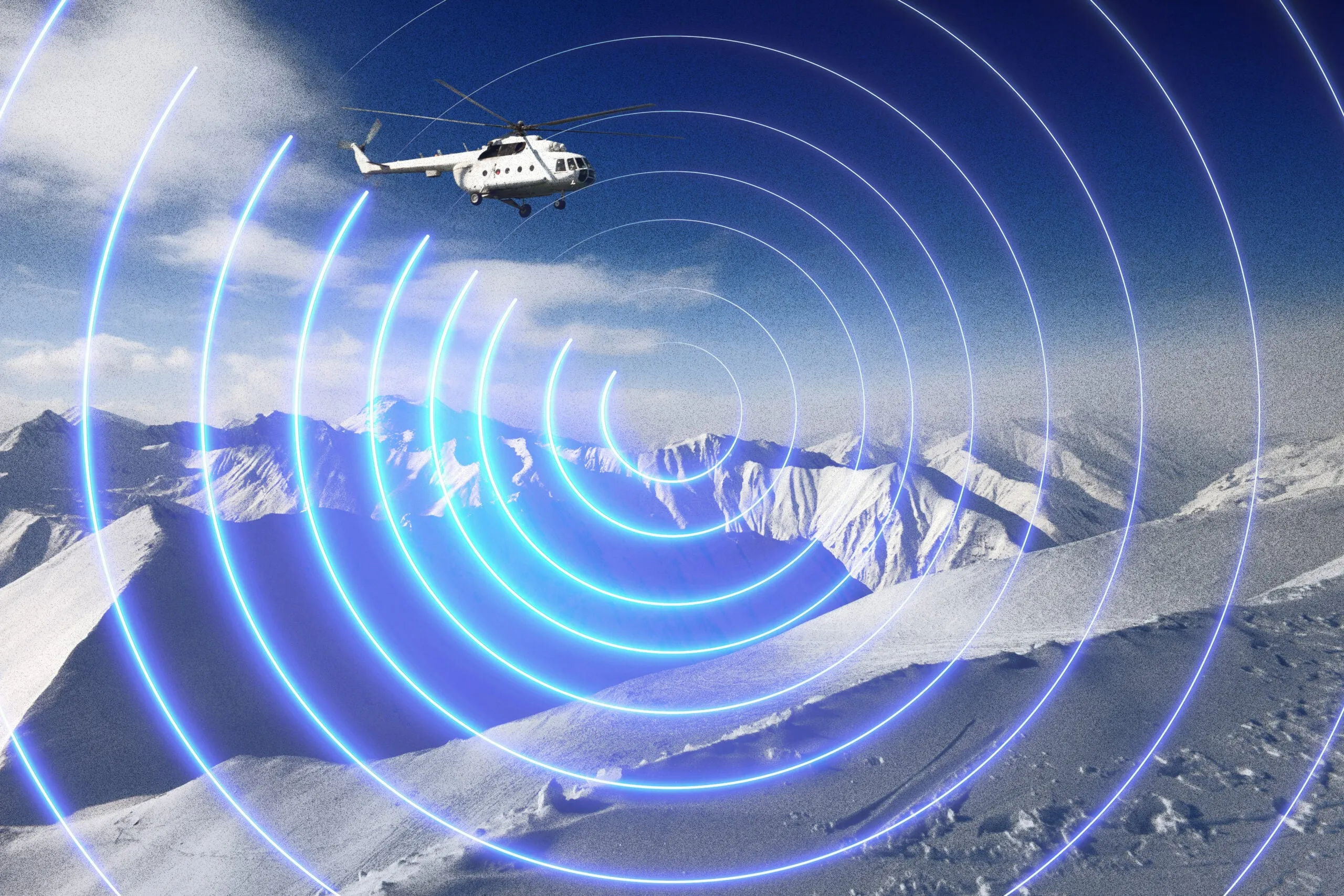
Canada has always navigated this environment by monitoring for threats against the U.S. The North American Aerospace Defence Command, or NORAD, oversees a system of Arctic radar sites shared between our two countries. Any weapon targeting the U.S. would have to take a route over the Arctic, making Canada’s role essential: NORAD’s radars are designed to give the Americans early warning of an Arctic incursion, not to defend against the attack but to allow the U.S. to launch its own missiles before being hit themselves. NORAD guarantees that both sides would perish if an attack was launched. This policy, known as mutual assured destruction, or MAD, is designed to deter a launch from either power.
But NORAD’s radar system was last modernized in 1985. General Glen VanHerck, NORAD’s former American commander, has publicly expressed doubt that the system could detect the new hypersonic missiles—they’re too fast and too stealthy. If Russia was to attack any European NATO countries, it would first attack and disable the U.S.’s monitoring and response systems. And if Russia’s new missile delivery systems can bypass NORAD, they could break down the deterrence system that has acted to prevent nuclear war—Russia could come to believe that it could launch a successful surprise attack.
Any attack on North America would be launched either from the air, the submarines that Russia has deployed in its northern regions or possibly both. To avoid American retaliation, a Russian assault would have to first blindside North America. It would target communication satellites, which are used by both the military and the public. All commerce, communications and any other system tied to the internet would stop. But even more terrifying than an attack on North American communications is the possibility of an attack on a Canadian city. This might happen if an aggressor wanted to show the Americans that their weapons can evade detection, as VanHerck fears. This could subject Canada to the sort of devastation Russia is unleashing on Ukrainian cities.
The most horrifying possibility is if MAD truly fails and a nuclear weapon is launched. This is the kind of damage we’ve only seen in Hollywood disaster movies. Even the two nuclear bombs that have been used in global conflict so far are small compared to many warheads today.
It is essential that Canada maintains its ability to warn and respond; if we don’t, any aggressor may see an opportunity to strike. The Trudeau Liberals recognized the need to improve NORAD capabilities in its 2017 Defence Policy, but only invested in NORAD in 2022. The current government, meanwhile, is working with the Americans to build the new Golden Dome deterrence system. This is a layered system of detection and defence that is designed to seek and destroy any missile threats to the North American continent. But the rocky relationship between Carney and Trump has complicated the trust between our two countries, and any further integration with the Americans right now will be a tough sell.
To combat these threats, we need new surveillance systems, fighter aircraft and submarines. But the Carney government has stated that it plans to have new submarines by the mid-2030s and the first set of replacements for our outdated fighter jets between 2026 and 2030. It is wildly optimistic to assume that Canada will have any new systems deployed by 2030. We need to hope we won’t need them until then.
Rob Huebert is a professor of political science at the University of Calgary
Related Posts
Carney Is the Crisis Manager Canada Needs
Alberta Treaty Law Could Decide the Arctic
My Adventures in Greenland

Carney’s Biggest National Project is Mythmaking
Get the Best of Maclean’s straight to your inbox.
Sign up for news, commentary and analysis. Join 60,000+ Canadian readers.