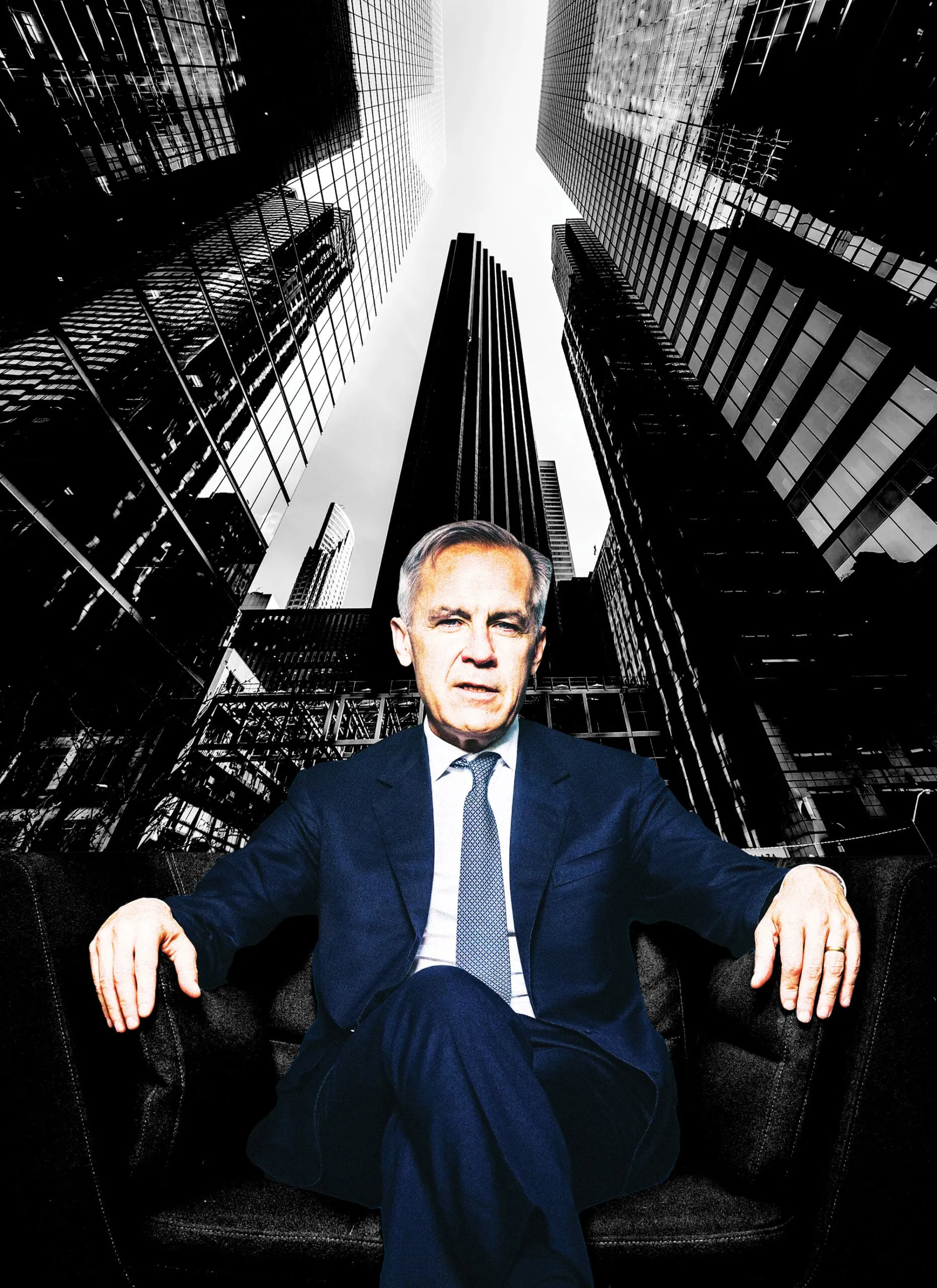
Mark Carney Is a Very Demanding Boss
Mark Carney talks a lot about staying humble. In his 2021 book, Values, he wrote that humility is one of the “five essential and universal attributes of leadership.” In March of this year, after he became leader of the Liberal Party, he stood on stage in an Ottawa convention centre and described the principles he’d learned from his childhood hockey coaches: ambition, teamwork and, “because it’s Canada,” humility.
Carney, a one-time Goldman Sachs executive and former governor for both the Bank of England and the Bank of Canada, had won the race in a landslide, despite having zero political experience. The evening of his victory, he gathered with jubilant advisers for a victory party in a backroom. There, they got a text from a staffer for Karina Gould, the 38-year-old MP from Burlington, Ontario, who’d run against Carney for the party leadership. Gould had made a few mild pokes at Carney during the campaign. In one debate, she took a jab at his reputation as a fiscally focused technocrat: “You can’t bring a calculator to a knife fight,” she said, referring to the trade war with the U.S.
The attacks were genteel compared to most political mud-slinging, and Liberals warmed to her during the campaign. They embraced her as both a cherished member of the Liberal family and, increasingly, the standard bearer for its left flank. But her needling got under Carney’s skin, even though he was the front-runner (she ultimately received only three per cent of the vote). He and his staff made their irritation plain; one member of Gould’s team told me that many of them were aggressive in their vitriol toward her.
When someone from Gould’s team texted to ask if she could stop by and congratulate the winner, Carney said no. In fact, according to one source I spoke with, he said he didn’t ever want to see her again. Carney’s staff sent Gould a non-committal answer, trying not to offend her, but she showed up anyway. That led to a brief, awkward meeting with Carney.
The incident rattled some of the people around the newly elected leader. Many had worked under Justin Trudeau, who, after a lifetime in politics, had skin like a crocodile. Carney, after years of being celebrated, venerated and treated with the deference accorded to a titan of the financial world, seems to have a skin like a peach.
A week later, Carney lost his temper again, at a press conference in London that marked one of the lowlights of his campaign for prime minister. When reporters pressed him about potential conflicts of interest stemming from his massive investment portfolio, he sounded exasperated, pointing out that he’d already put the assets into a blind trust. When CBC’s Rosemary Barton followed up, he blinked in annoyance. “Look inside yourself, Rosemary,” he said. “I have left my roles in the private sector at a time of crisis for our country.”
Carney reacted like someone accustomed to ending disputes in boardrooms and corner offices with a quick “case closed.” But that isn’t how news conferences work. His emotional response drew attention to an issue he’d hoped to pass over quickly, and it exposed his short fuse.
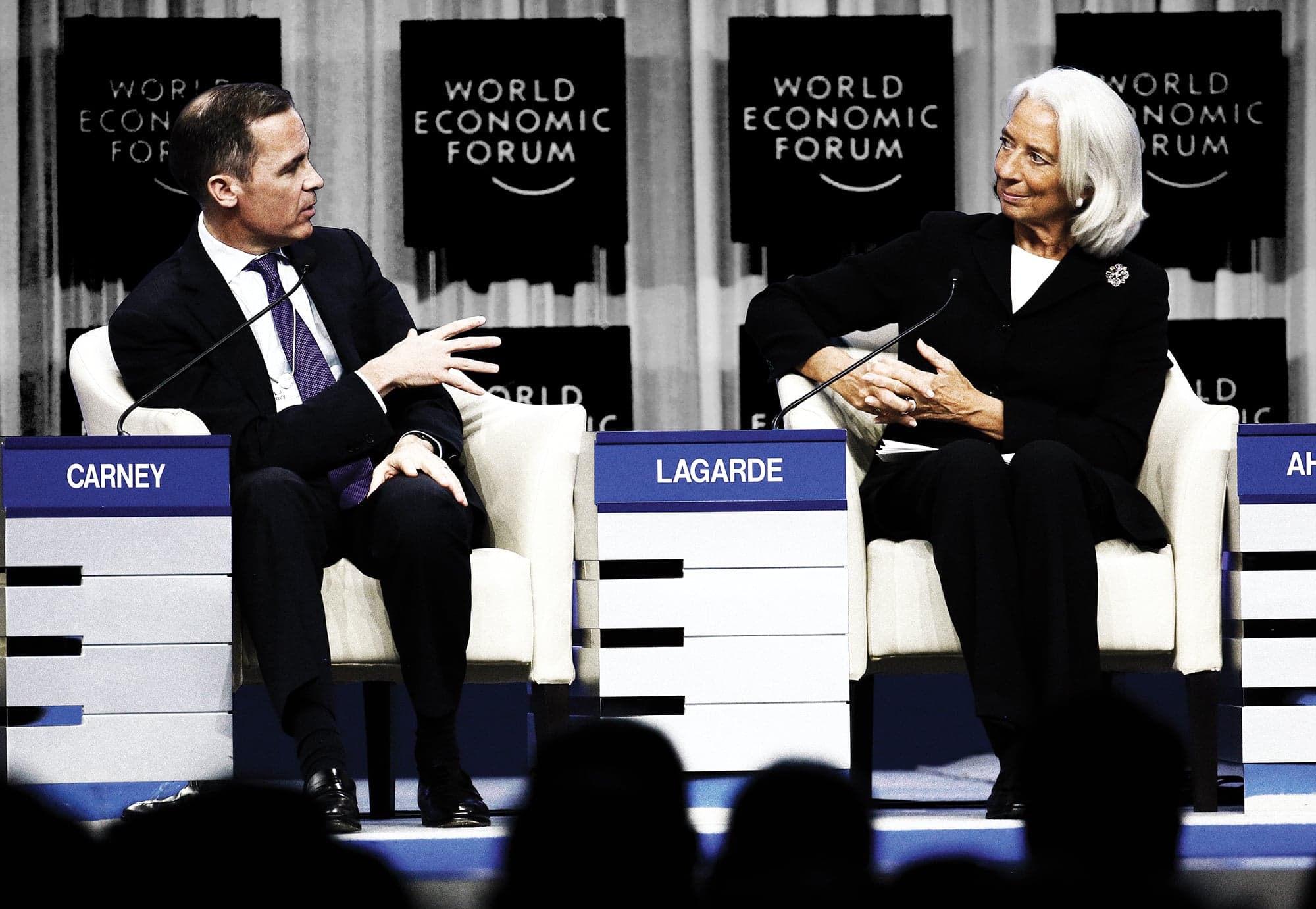
Carney said repeatedly during this year’s election campaign that he’s not a politician, and in such moments it showed. But Canadians looked past his gaffes, electing him instead on the strength of his extraordinary resumé. For years, he strode the corridors of power, taking on progressively more powerful jobs that brought him to the very top of the financial world. Carney has often been called Canada’s “Davos Man,” in reference to the Swiss town that hosts annual meetings of the World Economic Forum, where powerful business leaders, politicians and other members of the international elite gather to discuss the global economy. It seems like a natural setting for the most famous banker on Earth. Professionally, he is the smoothest of smooth operators, one of the cosmopolitan gold-collar workers who make sure your bank card functions, your savings are safely invested and that globalization continues apace. He rises early, drinks a litre of water upon waking and runs every day. He eats carefully and wears Savile Row suits without belt loops—a style available only to those who are rich, trim and expensively tailored. He’s a skilled communicator, too: charming, self-deprecating and always ready to boil complex questions down to three punchy points, if he may.
But all along, say friends, colleagues and acquaintances, he’s had one eye on an office in sleepy Ottawa and the comparatively paltry prime minister’s salary of $400,000. Until this spring, the capital was full of people confidently predicting that when he finally sought public office, he would be undone by his own inability to exhibit the humility he often espouses. I thought he might be brittle and smug, more an overbearing CEO than a national leader.
Related: Canada’s Richest People
As it turned out, that’s what Canadians wanted. He successfully sold himself as the man we needed to face down Donald Trump and get the economy moving. He appeared to have sophisticated plans for expanding trade beyond the U.S. and revving up Canada’s sluggish economy. If his soliloquies on productivity went over the heads of some voters, he at least sounded like he knew what he was talking about—an experienced master of the interplay between markets and government, ready at last to take on the job he had been working toward since his youth. He seemed decisive and smart, with a capacity for ruthlessness a little bit chilling but also comforting, given the hard choices Canada faces.
But Canada is facing ominous economic headwinds. The national GDP shrank 0.4 per cent in the second quarter of this year. Unemployment is rising, up to 7.1 per cent as of August—the highest number since 2021. The country may be headed for a long-predicted recession, courtesy of the trade war with the U.S. And when voters can’t make ends meet, the government takes the blame. Already, Carney’s honeymoon with voters is flagging a little—some recent polls have put Pierre Poilievre’s Conservatives a hair ahead of the federal Liberals. (Carney’s personal polling numbers still far surpass his rivals’.)
Carney’s volatile temper and brusque demeanour also worries some of those in his orbit. For a politician, he is impolitic and officious, even with the most senior ministers and public servants. If you’re running a commodities desk or a central bank, arrogance may not be a career killer. But politicians have to make nice, smile when they don’t feel like it and command the confidence of colleagues and voters. Becoming a politician at age 59 is like becoming a concert violinist late in life—most people who are great at it have been doing it for decades. Political history is littered with blustery businessmen, like Carney’s friend and former New York mayor Mike Bloomberg, who learned the hard way that succeeding in politics requires a different skill set from bossing around employees or generating wealth for shareholders.
Today, Carney faces an economy on the rocks, a housing crisis Ottawa can’t possibly fix quickly and an authoritarian in the White House who is making a mockery of Canadians’ raised elbows. It is enough to rattle even the most confident character.
Carney spoke yet again about humility in April, during his victory speech after winning the federal election. Maybe he talks about being humble so much because, in fact, he is proud. He’s a serious Catholic, and prayer is an important part of how he keeps grounded. It’s not a stretch to imagine that he prays for humility. Whether God grants it is another question.
Carney’s climb to the prime minister’s office has been so impressive in part because of where it began: in the middle of nowhere. He was born in 1965, in Fort Smith, a town of about 2,000 people on the Slave River in the Northwest Territories. His father, Robert, was principal of the local Catholic school; his mother, Verlie, stayed home and looked after Carney, his two brothers and his sister. When Mark was six, the family moved to Edmonton, where his father later joined the faculty at the University of Alberta and his mother became a teacher.
The family’s association with Liberal politics goes back decades. Robert Carney ran unsuccessfully for the Liberals in the 1980 federal election, when Mark was only 15. That same year, Carney had a letter published in the Edmonton Journal, complaining about the paper’s one-sided coverage of the Pierre Trudeau government. “Even your television critic couldn’t review the Grey Cup without taking a shot at PM Trudeau,” he wrote. “I reiterate my displeasure and disgust at your lack of professionalism.”
Carney attended Saint Francis Xavier, a Catholic high school, where he played hockey, cheered for the Oilers, joined the trivia team and, for the first time, set his sights on greater ambitions. His older brother, Sean, was at Harvard, and Carney decided to follow him. He had the grades, and he had a skill: he was a pretty good goalie, which won him a scholarship.
At Harvard he lived in Straus Hall, a four-storey brick dorm next to Harvard Yard. A few doors down lived another Canadian, Peter Chiarelli, who’d also skated his way to the university on a hockey scholarship. The pair became close, hanging out in the dorm, listening to records by the Clash, U2 and the English Beat and knocking back Meister Bräu, the cheapest beer they could find. (Another Harvard friend, Seth Goldman, says Carney and Chiarelli “maintained a healthy Canadian level of beer drinking.”)
Carney planned to study English and math, but a lecture by John Kenneth Galbraith inspired him to switch his major. A progressive economist who served both FDR and JFK, Galbraith was famous for his book The Affluent Society, which argued that the American economy generated “artificial affluence” in the private sector while starving the public sector, exacerbating inequality while creating an illusion of societal abundance. He had long been an inspiration to liberal-minded Harvard students. Carney was also impressed by political philosophy professor Michael Sandel. Years later, in his book Values, Carney cited Sandel’s observations about how the values of the market, and its unrepentant profit seeking, had infiltrated so many spheres of life.
Related: Why America Can’t Conquer Canada
Of everyone in their circles, Carney was the most intensely serious. One day in the dorm, Chiarelli told Carney that he thought he’d become prime minister one day. Even then, he was making plans for public service—by succeeding first as an economist. At the time, this all looked like a long shot. Carney was a third-string goalie from Edmonton, washing trays in the Harvard cafeteria for extra money. But with his intelligence and self-deprecating wit, he ingratiated himself with the Ivy League’s bluebloods. Eventually he joined the A.D. Club, an elite, male-only “final club,” Harvard’s version of a fraternity.
He graduated magna cum laude in 1988 and followed his brother Sean again, this time to Goldman Sachs, the world’s second-largest investment bank. Carney started as an analyst in the credit risk department in London. He did a year in Tokyo, then enrolled at Oxford University, studying for a doctorate in economics.
There he met Diana Fox, a 29-year-old student and fellow hockey player who caught his eye on the ice. Unlike Carney, Fox did not come from nowhere: she grew up in a 55-room manor in Gloucestershire called Quarwood that her parents managed for Margaret Thatcher’s chief of staff. (It was later owned by John Entwistle, bassist for the Who, another one of Carney’s dorm-room favourites.) On their first date, he told her that his ultimate aim was to return to Canada and work in public service. Friends of Carney told me that, even then, he’d declared his intention to become prime minister.
In less than two years at Oxford, Carney produced a brick of a thesis, which his adviser, economics professor Margaret Meyer, still keeps in her office and periodically shows to students. It’s a dense, 300-page, two-volume treatise on how domestic competition makes a country more globally competitive, full of econometric modelling and illustrated with algebraic formulae. (A minor scandal broke out during this year’s federal election, in which Carney was accused of plagiarizing parts of the thesis. Meyer rallied to his defence. What sets the work apart, she said, is its size and ambition.)
After Oxford, Carney returned to Goldman Sachs. He lived in London, then New York, then Toronto, handling important files at the intersection of business and politics, including South Africa’s first bond issue after apartheid and the 1998 Russian debt default crisis. And it was in crises that he most excelled. On 9/11, James Kiernan, president of Goldman Sachs Canada, called on Carney for help in the frantic hours during which the bank transferred its book—its electronic record of transactions—from New York to Toronto.
By this time, Carney was on track to make millions as a Goldman partner. But if he was to move into politics, he’d need public-sector experience. His chance came in 2003, when he saw an ad in The Economist soliciting applications for deputy governor at the Bank of Canada. David Dodge, the bank’s governor, had lunch with him in London, and Carney told him he wanted to work on issues from the public policy side. He got the job, moved to Ottawa and took a big pay cut, earning about $250,000. At the time, he expressed to the Globe and Mail his distaste for Bay Street’s materialism. “It was like, ‘I belong to this club, and it cost this much,’ ” he groused to a reporter. “Or ‘I drink this wine, and it cost this much.’ ”
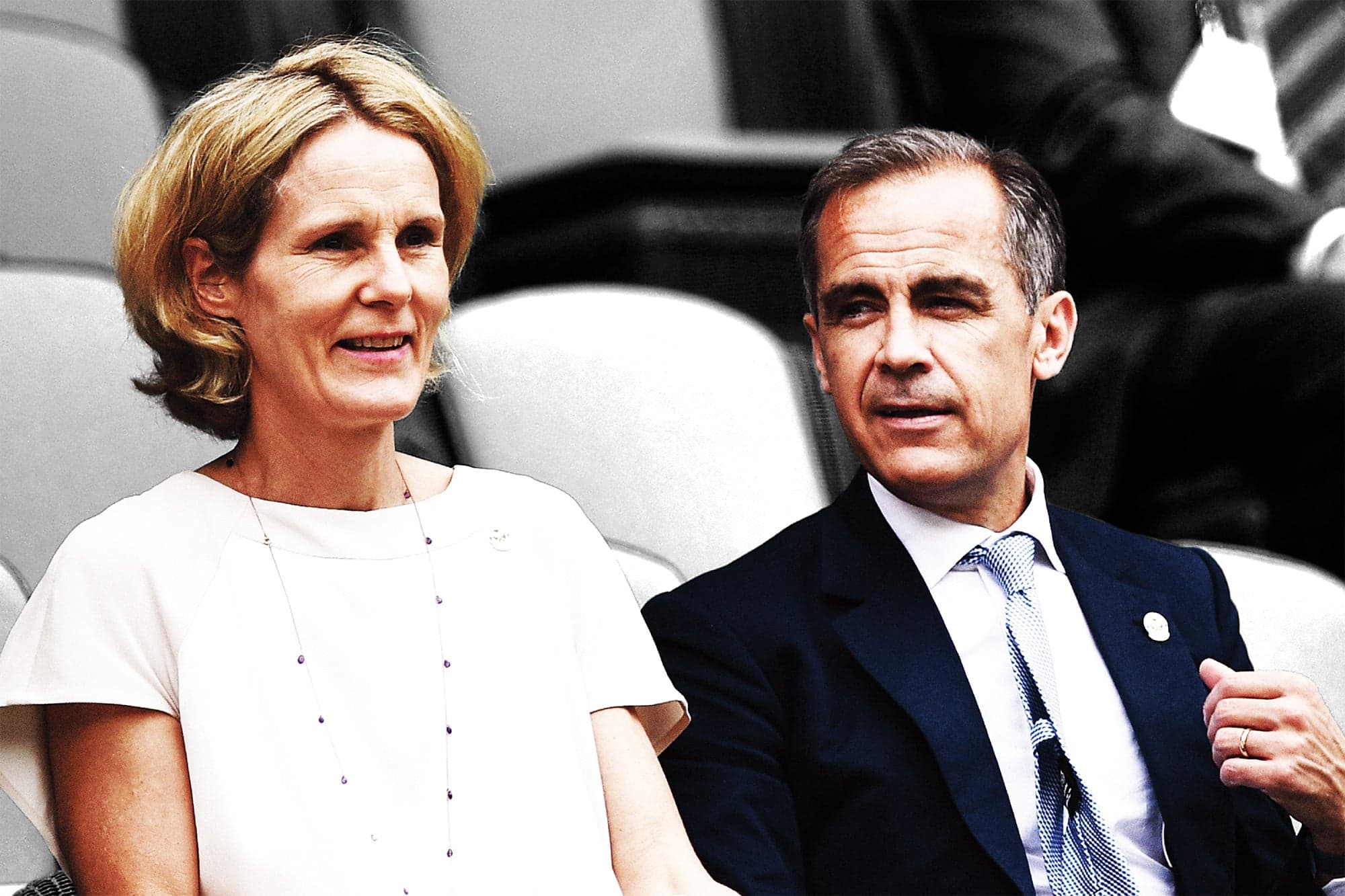
Carney’s own lifestyle was not exactly miserly. Besides his penchant for finely tailored clothing, he and Diana were amassing a growing, sophisticated collection of modern art, featuring big-name Canadian artists like Kim Dorland. After he accepted the job with the Bank of Canada, the couple bought a stately home in Ottawa’s leafy Rockcliffe neighbourhood.
Carney soon went on leave to fill a temporary role at the Department of Finance and eventually took a permanent job as associate deputy finance minister under Paul Martin. He continued to impress colleagues—but he also began attracting behind-the-scenes criticism. “He has a surfeit of confidence,” a senior public servant who worked with him told me. “If you’re ever feeling low, you could borrow some and he’d still have enough to carry on.”
Dodge says that if Carney seemed tough, it was because he was intolerant of “fuzzy thinking.” He has an inquisitive management style, and he needs to understand the reasoning behind advice he is given. If he doesn’t get the information he wants, he can be short-tempered with subordinates. “He can’t use his quick study,” says one senior adviser, “if people aren’t giving him the stuff to study.”
Carney is not always popular with people who work for him, but his bosses have always loved him. He’s a clutch player—someone who can size up a crisis and act decisively to end it. The Canadian political and business world saw that clearly in 2007. One weekend that August, Carney was in his backyard, playing with his kids—he and Diana had four daughters by this point—when he got a call from James Kiernan, his old boss at Goldman Sachs. He wrote in Values that he heard “palpable fear” on the line.
Kiernan had been meeting in New York with Canadian clients, who were talking about the money they were making by investing in mortgage-backed securities. Those investments were built on a shaky foundation: lots of the mortgages they included were high risk and prone to default—ticking time bombs in the American banking system. Many were sold by small firms or investment banks. If they collapsed, it could lead to a contagious financial breakdown.
Finance minister Jim Flaherty tasked Carney with leading efforts to pressure Canadian banks to put together a package to bail out the industry, using their own money to avoid a cascading series of defaults. After many tense meetings, the banks were persuaded and the crisis passed. A few weeks later, Flaherty gave Carney Dodge’s job. At age 42 he became the youngest-ever governor of the Bank of Canada, vaulting over candidates who’d served at the bank for decades.
In 2008, the global financial crisis struck—a scaled-up version of the calamity Carney had dealt with a year before. It cost the world economy US$2 trillion, but Canada escaped the worst of the carnage. This was largely because Canada’s tightly regulated banks were far less exposed to bad debt, and partly due to Carney’s efforts to stimulate the Canadian economy with interest rate cuts before many other central bankers did the same in other countries.
Flaherty and prime minister Stephen Harper basked in his reflected glow, and Canadians came to like the self-deprecating central banker with the boyish smile. He thrived in the limelight, a reassuring figure at a time of global tumult. He was starting to think about using that newfound fame to get himself the job he had long been coveting.
In June of 2012, Carney was in a private jet, returning to Canada from the Bilderberg Conference in Virginia, a gathering of global political and financial leaders. He was with Frank McKenna, the deputy chair of TD Bank and the former Liberal premier of New Brunswick. At the time, the federal Liberals were in shambles, after Michael Ignatieff had led the party to a disastrous third-place finish in the 2011 election.
Carney told McKenna on that plane ride that he was interested in the party’s top job, thinking he could rebuild from the wreckage. But the young, charismatic Justin Trudeau was also rumoured to be thinking about running. McKenna warned Carney he’d have a hard time beating Trudeau’s name recognition. In fact, he suggested Carney consider teaming up with Trudeau instead, angling to become his finance minister—a power duo like Jean Chretien and Paul Martin. Carney wasn’t interested.
He may have thought, as many Liberals then did, that Trudeau was a lightweight who lacked the experience a prime minister should have. Tim Murphy, former chief of staff to Paul Martin, also tried to convince Carney to run. “I always like Chretien’s line: ‘Before I jump in a pool, I want to make sure there’s water in it,’ ” Murphy says. “My job was to create the water.” He started making calls, trying to line up support for a Carney leadership bid.
But in early October, Trudeau confirmed he’d be running—the pool was full. At a news conference that month, reporters asked Carney if he was considering the Liberal leadership. He bristled as if he’d never even thought of it. “Why don’t I become a circus clown?” he said. The press didn’t know it, but he was already talking to the Brits about a job running the Bank of England. His appointment was announced in November.
The Carneys found an eight-bedroom house—formerly the home of T.S. Eliot—in London’s South Hampstead neighbourhood, which they rented for £3,500 per week. Emma Thompson and Stephen Fry were his neighbours. The commute to the bank’s offices was about 10 kilometres—just right for Carney’s morning run to work.
Carney was the first foreigner to head the world’s second-largest central bank, and he brought technocratic zeal and energy to the job. He also communicated more effectively than his predecessors. In 2016, when U.K. voters chose to leave the European Union—against Carney’s advice—he was up early reassuring the public that the bank would keep the pound strong, pumping money into the markets to avoid a financial meltdown. He cut a comforting figure, and a charming one: he was compared to George Clooney and named Britain’s most influential non-clerical Catholic. In 2015, he ran the London Marathon in three hours and 31 minutes (fast for a 50-year-old).
Carney also guided the British economy through the travails of Brexit with poise. But behind the scenes, he was sometimes a different character. British papers reported he could be “shouty,” and that he had a “volcanic temper.” He was not a politician, though, so any flashes of temper were a footnote.
Carney was at the pinnacle of the financial world. In October of 2018, the International Monetary Fund and World Bank held their annual meetings in Bali. Early one morning, Ben Chin, then chief of staff for finance minister Bill Morneau, stepped into the blistering heat for a cigarette, outside a hotel next to the city’s Nusa Dua convention centre. “I’m overweight, I’m sweating, I’m chain-smoking and I’m on my phone,” recalls Chin. Out of nowhere, Carney ran right past, fresh off his morning 10k. “You know, Ben, that’s going to kill you,” he said, before he winked and disappeared into the convention centre.
When Carney attended the Bali conference, he was probably already at work on his Values. The book is sprawling and ambitious, full of prescriptions and measures that organizations and leaders should take to make sure banks are sound, companies properly run, health systems appropriately funded and the planet protected for the benefit of future generations. It’s earnest and often repetitive, with more detail about bank regulation than anyone but a bank regulator needs, but it contains insightful lessons from a lifetime of work and study at the highest level. It’s grounded in an admirable commitment to the common good, and reflections on the importance of—that word again—humility.
It can also be read as a persuasive application for Justin Trudeau’s job, the only next step that seemed fitting. Before her family’s sojourn in England, Diana tweeted that they would be back in Canada within five years. They even kept their house in Ottawa, renting it out while they were away. In March of 2020, journalist Leah McLaren interviewed Carney in his London office for Maclean’s, as his tenure with the Bank of England wrapped up and he prepared to head home. She asked if he had designs on the PMO. He answered with a long, silent smile that convinced her he did.
Trudeau’s people got the message and checked in—they wanted to know, again, if he was interested in the finance minister job. Carney ultimately declined to join, and his old friend Chrystia Freeland took the job. Carney agreed to be an informal adviser.
Over the next few years, he took on a smorgasbord of roles. He volunteered as a UN special envoy on climate action and finance. He was a member of the Foundation Board of the World Economic Forum. The big payday was his job as chair of Canadian multinational Brookfield Asset Management, where his climate bona fides and connections helped him raise money toward a $15-billion energy transition fund. In 2022, he became chairman of Brookfield Corporation and, the following year, chairman of Bloomberg LP, the media company co-founded by his old friend Mike Bloomberg. He was making millions and moving into yet another echelon of wealth. But still he had one eye on Ottawa.
Carney’s relationship with Justin Trudeau is best described as cordial. After Carney spoke at a Liberal convention in 2021, people close to Trudeau said the boss was hurt that Carney didn’t even thank him. Carney, I was told, was hurt that Trudeau didn’t thank him. Both men have big egos; one government was always going to be too small to contain both of them. Yet at the end of last year, Trudeau tried one final time to lure Carney in, hoping it might give his beleaguered government a reset with voters.
Somehow, Trudeau got the mistaken impression that Carney was enthusiastic about joining his team. In December, he privately told finance minister Chrystia Freeland that he would replace her with Carney. Freeland had finally had enough. On the Monday morning she was supposed to deliver the government’s fall fiscal update, she resigned instead. In January, under enormous pressure from his party and finally grappling with the Liberals’ apocalyptically bad polling, Trudeau followed suit. After more than a decade, Trudeau had climbed out of the pool.
McKenna still thought the election was unwinnable. He believes Carney’s decision to join the leadership race betrayed “almost hubris,” given both the intense competition for the job and what appeared at the time to be Pierre Poilievre’s invulnerability. Many commentators agreed, confidently predicting that Carney’s political career would be a short-lived, Ignatieff-level disaster. The Conservatives swore that they could not wait to run against such an out-of-touch elitist.
Carney began the campaign, unofficially, with a triumphant appearance on The Daily Show. In short order, he won control of the party, the government and the country, reversing Poilievre’s double-digit polling lead in the process.
In May, Carney moved into Rideau Cottage and swore in his cabinet. From the start, he made it plain that things would be different, beginning with the dress code. He wanted people to be punctual and dress as they would in a bank, with black shoes for the men. He told even the most senior public servants that their days of coming to the office in open-necked shirts and blazers were over.
Carney is said to be demanding and short-tempered with those who brief him, creating a much tenser atmosphere than existed under Trudeau, who ran the office like an encouraging teacher. On May 26, the day of his first speech in the House of Commons, Industry Minister Mélanie Joly, whose support was crucial to Carney’s leadership victory, approached him to speak in the House of Commons while he was going over notes. A video shows him casually waving her off, dismissing her as an irritant without even raising his head.
This kind of imperious behaviour is the norm in Carney’s PMO. “I know of countless staff, including myself, to whom he has done that,” says one veteran staffer, who is worried about the way he is running the office. It’s taking them a long time to staff up. There is uncertainty about roles, and normal consultative processes are being short-circuited.
Carney is also casually contemptuous of the Trudeau government, which is awkward, since he is now presiding over the machine Trudeau built. And he is not humble. “I can say with confidence that he believes that he is always the smartest person in the room,” said the same staffer, “and that he feels that there’s little value to derive from any voices around him.”
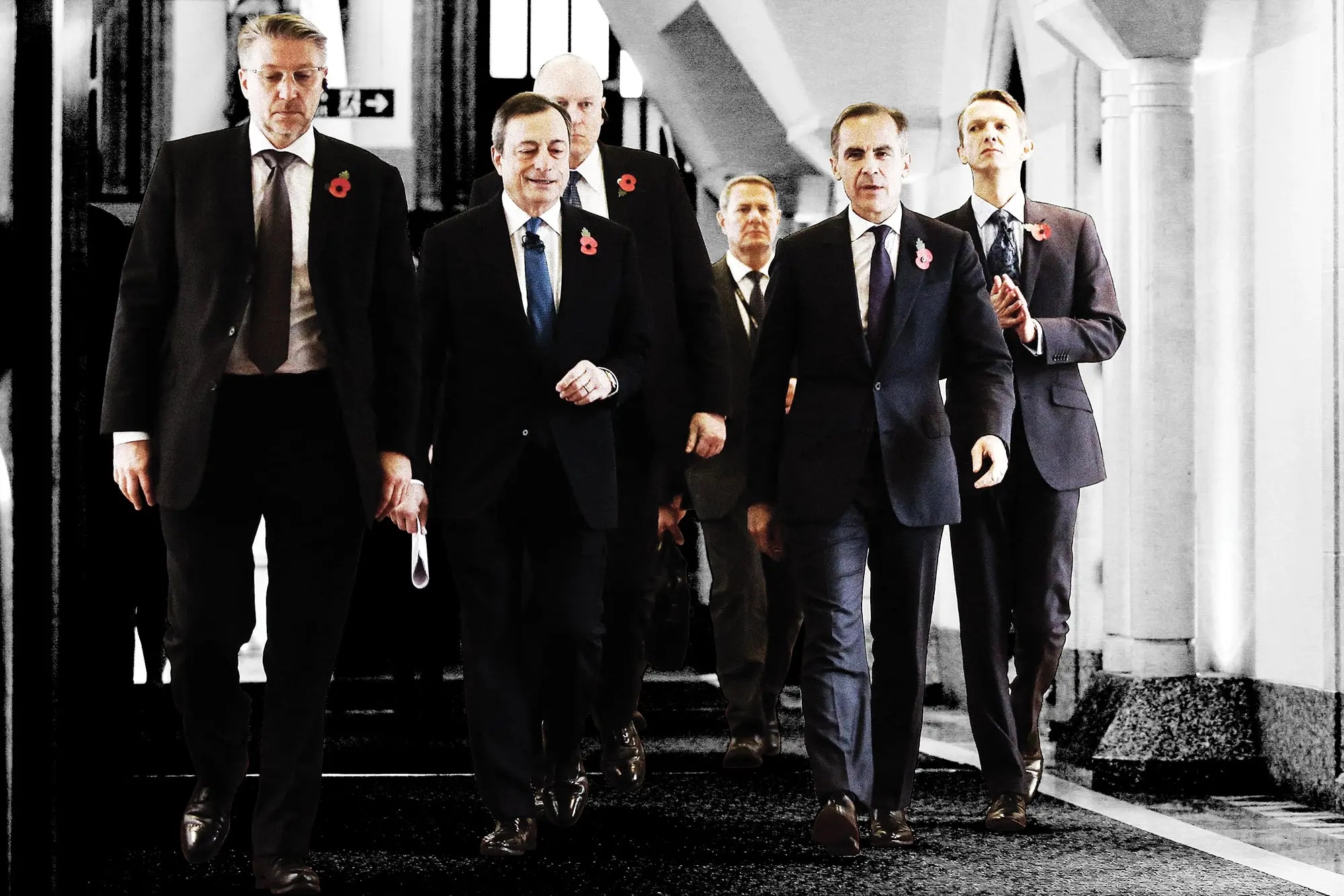
During the campaign, senior advisers Gerald Butts and Tom Pitfield regularly discussed candidate management, because Carney could be so prickly. The worst crisis of Justin Trudeau’s government came about because his relationship with justice minister Jody Wilson-Raybould broke down. Carney can’t afford to alienate the people around him similarly.
And he has little time to master the kind of political skills that other occupants of his office developed over decades. Jean Chrétien, the most electorally successful prime minister in recent decades, had 11 portfolios before becoming prime minister. Carney had none. His inexperience is showing: for example, some caucus members believe that he made unsolicited promises of cabinet posts to several MPs and then failed to deliver. This includes former housing minister Nathaniel Erskine-Smith, a Trudeau appointee Carney retained in his pre-election cabinet but ousted in May after the federal election. Veteran politicians do not make that kind of mistake.
Many of his decisions are also making progressive MPs miserable. He has reconciled with Indian prime minister Narendra Modi, mending a relationship that was strained after Justin Trudeau accused India of killing a Canadian involved in the Indian Sikh separatist movement. He scrapped the carbon tax, which had become politically untenable, and is reviewing federal rules that mandate all new vehicle sales must be zero-emission vehicles by 2035. Carmakers have argued that slow uptake of EVs and the continuing trade war will make the target impossible. And he is openly supportive of fossil fuel projects, speaking positively about a potential new pipeline to the West Coast. This September, his government’s Major Projects Office announced its first tranche of nation-building projects, including an expansion of LNG production in B.C.
The man who admiringly quoted Greta Thunberg in his book is now rolling back climate plans and approving pipelines and mines. Politically, this is risky business: the NDP is likely to make a comeback eventually and secure some of those voters alienated by these moves. Some MPs have formed a “climate caucus” to make sure their issues are heard—though, for now, they are not openly criticizing Carney himself. “At some point there’s going to be the straw that broke the camel’s back,” says Supriya Dwivedi, a former senior adviser to Trudeau. “You’re just going to have a lot of the discontent gushing out at once.”
Pierre Poilievre will also be working hard to reconnect with voters who abandoned him in the campaign, reminding them that Carney’s campaign rhetoric on Trump is different from the managerial approach he is taking to the relationship. He has acceded to some demands from Trump, such as eliminating Canada’s digital services tax. He appears to be trying to tamp down rhetoric and handle the relationship delicately, reducing the heat as both countries prepare for a review of the free trade agreement between them next year.
Carney has the opportunity to build a constituency that looks different, and much bluer, than Trudeau’s. He has given the most important jobs in his office to hard-nosed men with business backgrounds. He is vulnerable to looking like an elitist, out of touch with the concerns of people struggling to make ends meet. The man who’s known to be brittle under pressure is, right now, under tremendous pressure. Most Canadians will not care if he is tough on his staff, but if Carney leads without humility—if he runs the government like a one-man-show—they will notice.
“Good leaders combine personal humility, self-knowledge and the ability to learn,” he wrote in Values. “That means admitting mistakes, seeking and accepting feedback and sharing the lessons. When leaders become overconfident (or turn to writing books) they stop learning.”
From his lips to God’s ears.
Related Posts
My Adventures in Greenland
Carney Is the Crisis Manager Canada Needs
Alberta Treaty Law Could Decide the Arctic
Carney’s Biggest National Project is Mythmaking
Get the Best of Maclean’s straight to your inbox.
Sign up for news, commentary and analysis. Join 60,000+ Canadian readers.