Canada’s Defence Firms Are Ready to Boom
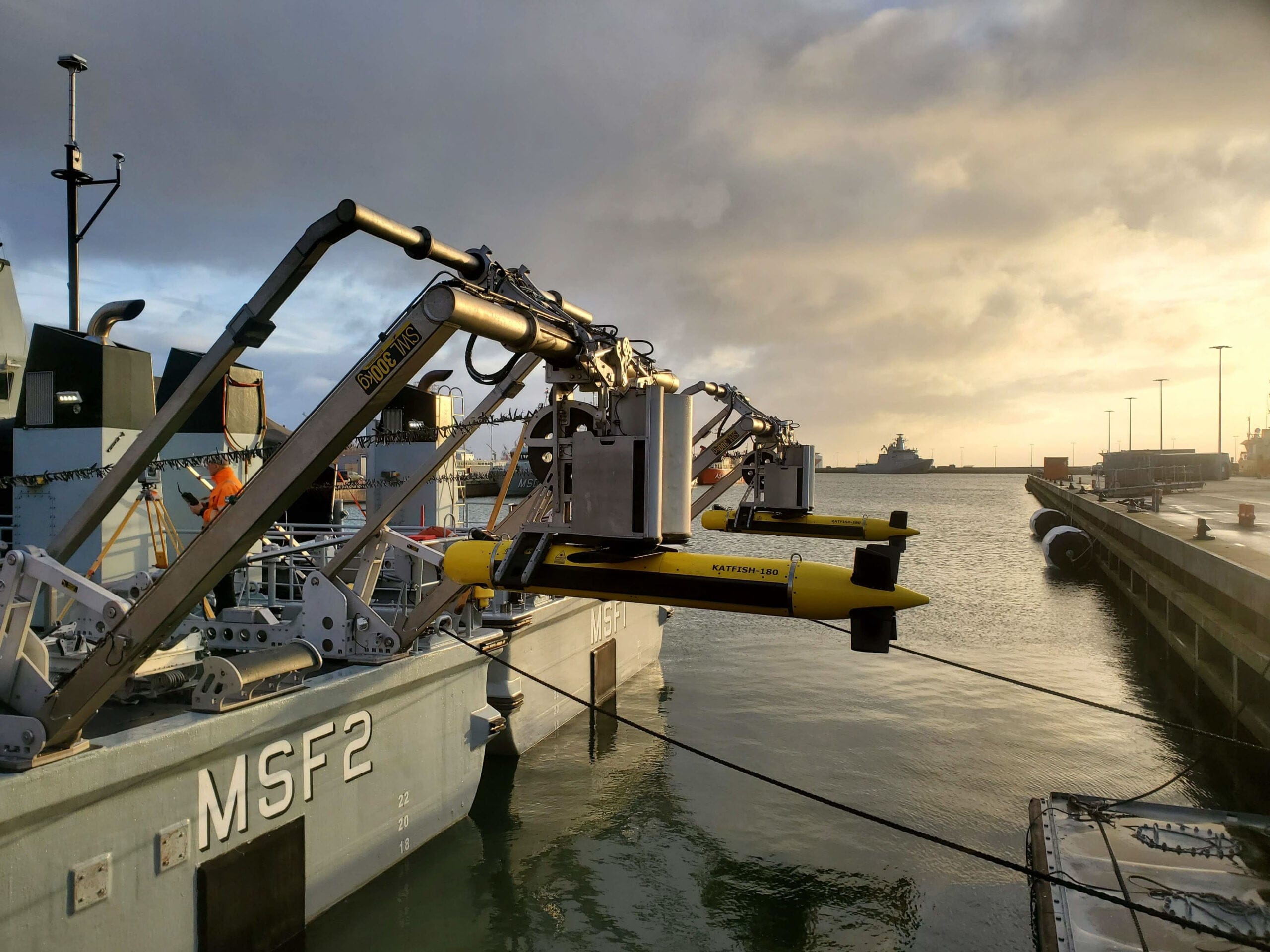
When the federal government announced $81.1 billion in new military spending this past November, I was cautiously optimistic. I’m the CEO of Kraken Robotics, an underwater technology company founded in Newfoundland and Labrador in 2012. We’ve since grown to more than 400 staff members in North and South America and Europe. Today, we design and manufacture advanced sonar, optical sensors and power solutions for unmanned underwater drones that can map the seafloor, inspect critical infrastructure, patrol coastlines and protect ports and sea-lanes.
For decades, no matter which party was in power, Canada’s defence funding has lagged behind our allies. In 2006, NATO members committed to spending at least two per cent of their GDP on defence, but Canada has consistently fallen below that benchmark. In 2024, our expenditure was 1.37 per cent, placing us 27th out of 31 NATO countries. (Sweden has since joined, making it 32.) Our GDP is almost triple the size of Poland’s but we have a comparable defence budget of approximately $40 billion. It’s a challenge for anyone working in this industry: we’ve rarely had the kind of stable, long-term investment required to modernize our domestic capabilities. And although governments have supported innovation, they haven’t consistently followed through with procurement that would actually bring homegrown technologies into service.
Take underwater drones. Canada bought a few in 2002 to test their potential and, years later, procured larger systems for research and development. But we didn’t acquire any systems as a specific mine-countermeasure tool for the Royal Canadian Navy until 2022. In that same 20-year period, our NATO allies adopted underwater drones as standard naval equipment. This gap has left Canada decades behind in an area that is now fundamental to maritime security.
Canada has the longest coastline in the world, stretching across the Pacific, the Atlantic and the Arctic. Up there, melting ice is opening new shipping routes and making valuable resources like oil, gas and minerals more accessible and more contested. In recent years, Russia and China have been active in regions like the Baltic Sea, the North Sea and the offshore of Taiwan. They’re observing—and in some cases tampering with—subsea pipelines, offshore wind power cables and fibre-optic cables, the invisible infrastructure that enables global communication and energy supply.
Tampering incidents like these haven’t occurred in Canadian waters yet, but Russia and China both have a presence in the Arctic region, which leaves us vulnerable. These countries use commercial and so-called “research” vessels to conduct surveillance. As recently as July, a Chinese research vessel was spotted off the coast of Alaska, capable of gathering detailed data on seabed characteristics and ice conditions—the kinds of information any navy would require to operate in the region. The simple truth is that you can’t protect what you can’t see, and Canada needs advanced tools to properly monitor its underwater domain.
Related Posts

Carney’s Biggest National Project is Mythmaking

Alberta Treaty Law Could Decide the Arctic
Beyond security risks, underinvestment in defence technology has economic implications. Canada has historically invested in sectors like aerospace in Quebec and automotive manufacturing in Ontario. These industries became globally competitive and lucrative through decades of development. Defence technology hasn’t benefited from the same level of co-ordinated support. As a result, much of the Canadian defence industry consists largely of foreign companies operating Canadian branches, keeping intellectual property and high-value jobs in other countries. Canada may get the assembly and servicing work, but not the long-term capacity building or the export benefits that come with owning the underlying technologies.
Kraken is an exception: we’re a Canadian-founded and headquartered company with significant Canadian IP. Yet we’ve historically done far more business with other countries than with our own government. International sales account for about 90 per cent of our business; we deliver our solutions to navies, defence manufacturers and commercial companies in more than 30 countries. For instance, we’ve sold more than $40 million in underwater technology to Denmark since 2020 to help them patrol and monitor the Baltic Sea. Canada, meanwhile, lacks comparable ability to patrol its own waters. This discrepancy illustrates the magnitude of the missed opportunity: Canadian innovation often serves foreign navies more than our own.
With this new government funding, we have a chance to correct course. As the U.S. appears to pull back from NATO, Canada and other NATO countries have a responsibility to step up and safeguard their own waters and coastlines. That’s where this investment can make a real difference, especially with technologies like ours.
Traditional naval vessels such as frigates and submarines are essential, but they cost billions to build and operate, require large crews, and can only cover so much territory. With a coastline as vast as ours, it’s neither financially nor operationally feasible to rely solely on these ships. Unmanned underwater systems can fill the gaps. Kraken manufactures advanced towed robots and sensors and batteries for underwater drones, which can patrol more areas and deeper waters, gather high-resolution data to identify threats, monitor traffic, inspect subsea infrastructure and deter threats—all at a fraction of the cost.
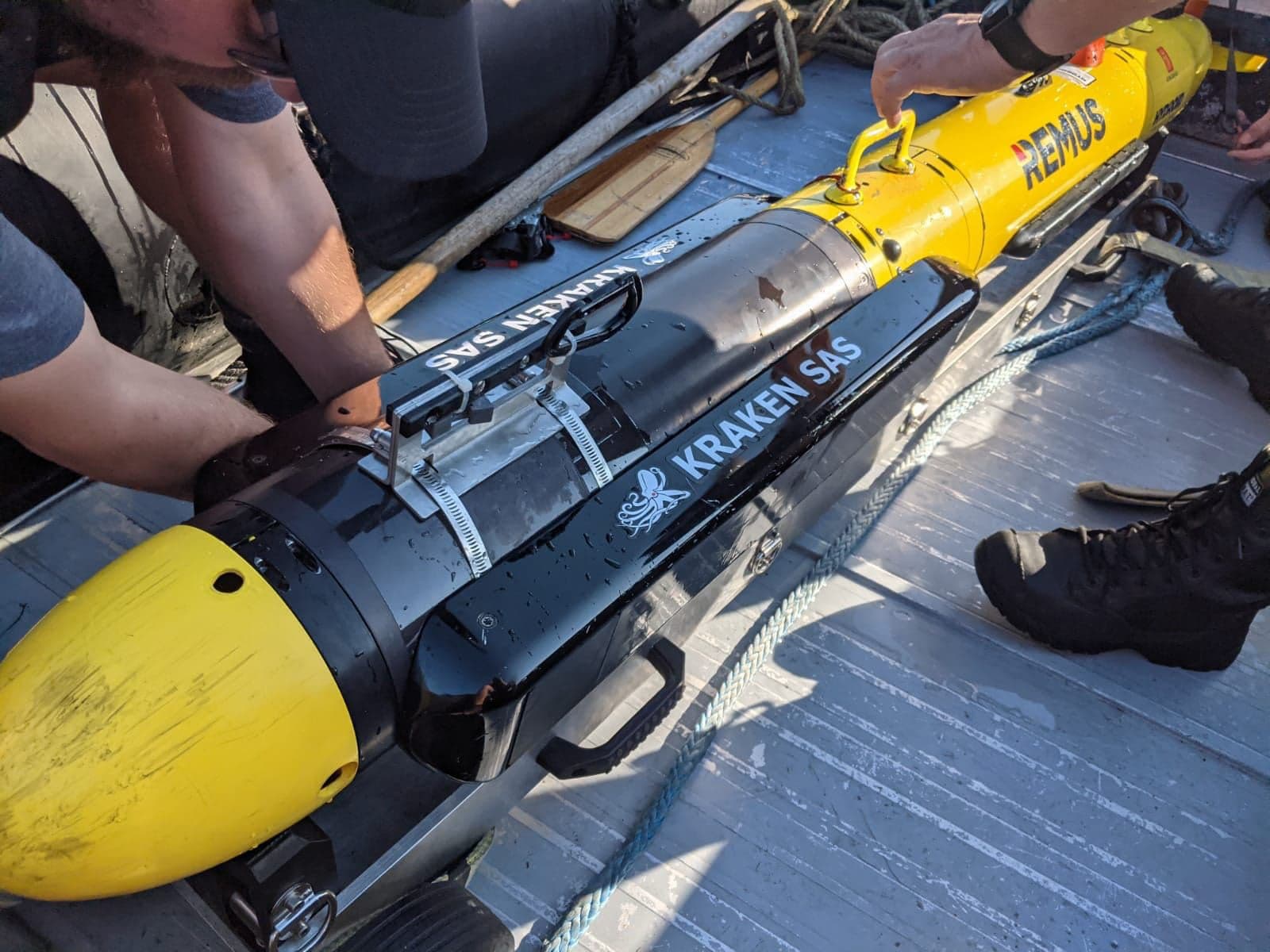
You can also deploy them far more rapidly: Kraken can deliver systems in under a year and design, prototype and test new ones for our sailors in as little as three years. By contrast, it could take the navy up to 25 years to bring a complete fleet of next-generation vessels into service. Unmanned systems don’t replace frigates or submarines—they act as force multipliers, giving the navy the ability to do far more with fewer resources.
Defence spending doesn’t just benefit one company. If deployed properly, the funding can create economic ripple effects far beyond the sector. It strengthens Canada’s export potential and elevates software firms, testing facilities, research institutions and manufacturers across the country. For Kraken, increased defence investment could give us more contracts at home and help us scale our business. We’re already positioned to expand quickly through our new manufacturing space in Nova Scotia. And when companies like Kraken grow, they hire engineers, scientists and technicians. Our suppliers bring in more staff and invest in equipment, and their employees spend more money in their communities. A rising tide lifts all ships.
For the investment to be effective, Canada needs to streamline the government procurement system. To prevent cost overruns, it has implemented multiple requirements, approval layers and reviews before awarding contracts. The process is slow and cumbersome; even small purchases carry heavy administrative burdens that create significant delays. Procurement teams don’t have the capacity to assess proposals and award contracts quickly. They conduct expensive and time-consuming open competitions even when one, or a few, companies are obviously the viable choice. By the time a contract receives approval and equipment is built and arrives, the technology is often outdated.
To fix this, Canada should direct some of the new funding toward hiring more staff, reducing red tape and upgrading tools used to evaluate bids. We’re excited to see the beginnings of change—the Defence Investment Agency was recently set up with the goal to modernize Canada’s defence procurement, and the government has expressed the desire to speed up the process and make it more accessible for emerging tech companies to bid on opportunities.
Too often, our approach has leaned heavily on funding research and development without following through on procuring and deploying the results. If Canada is serious about this $81 billion, it must also shift its focus from R&D to P&D: procure and deploy.
There’s also an opportunity to rethink how partnerships work. Companies often compete for every contract, when in many cases they should be collaborating. The large defence firms bring scale while small Canadian defence tech companies bring cutting-edge innovation. To build a resilient domestic sector, we need procurement pathways designed to support those partnerships.
Canada has already committed to spending five per cent of GDP on defence by 2035, and this is the moment to begin. The Arctic is opening, global tensions are rising and we can no longer always rely on our closest ally south of the border. This new funding is the first real chance in decades to build a sovereign defence capability that matches the sheer size and responsibilities of our country. For companies like Kraken, it’s an opportunity. For Canada, it’s a necessity.
Greg Reid is the President and CEO of Kraken Robotics
Related Posts

Carney Is the Crisis Manager Canada Needs

How to Win the Space Race

Are We Ready for an Arctic War?

My Adventures in Greenland
Get the Best of Maclean’s straight to your inbox.
Sign up for news, commentary and analysis. Join 60,000+ Canadian readers.