Canada’s Reconciliation Panic
Over the past few years, First Nations in British Columbia have been on a winning streak. In 2014, the Supreme Court of Canada granted Aboriginal title to the Tsilhqot’in Nation, in central B.C., requiring meaningful consultation before industrial and forestry activities could commence on their land. In 2019, the province adopted the Declaration on the Rights of Indigenous Peoples Act, aligning the province’s legislation with the UN Declaration on the Rights of Indigenous Peoples, or UNDRIP, which require Indigenous consent before proceeding with decisions that affect their rights. And, in 2025, the B.C. Supreme Court granted the Cowichan Tribes title to land in their territory. That land included private property in the city of Richmond, sparking fears among private property owners that the Cowichan might be out for their homes.
More recently, a backlash has been building—a wave of commentary arguing that British Columbia’s approach to Indigenous rights and reconciliation is veering off course. Critics of these changes rarely say they oppose reconciliation outright. Instead, they frame their concern as pragmatic: reconciliation, as implemented by the B.C. NDP, is said to create legal uncertainty, democratic distortion and economic instability by granting First Nations priority over land use in ways that override other interests.
This line of argument has appeared across think tanks, business associations, opinion pages and political campaigns. B.C. lawyer Geoffrey S. Moyse describes the province’s strategy as a “Trojan horse” for an ideological “land back” agenda, while The Atlantic’s David Frum argues that Canadian courts, in the name of generosity, are poised to dismantle the very systems that generate the country’s wealth.
Such critiques don’t reject Indigenous rights outright; instead, they reframe them as destabilizing because they are allegedly being pursued without democratic consent, institutional planning or transparency. The argument goes that shared decision-making agreements, in which First Nations and other orders of government share decision-making over lands, resources and services, are being advanced through opaque negotiations, rushed statutes and an overconfident bureaucracy that risks substituting ideology for due process.
Related: Inside the Fight for the Ring of Fire
This narrative has landed with such force because it tethers itself to a familiar Canadian instinct: that reconciliation is morally appealing in theory, but in practice should be slow, cautious and preferably symbolic rather than structural. Aboriginal title, consent-based decision-making and shared governance are often discussed as if they were mystical or existential concepts, and possibly a threat to Canada’s constitutional foundations. In reality, they operate through tools familiar to anyone in business or government: leverage, negotiation, litigation risk, timelines and capital budgets.
I spent years working as a legal and policy adviser with the Squamish Nation, and I often saw how this worked. I remember one occasion when a Crown corporation approached us to advance a major infrastructure project in our territory. At first, they assumed we would supply input, they would supply the project, and the whole thing would unfold on the Crown’s timeline. Our opinion would be accommodated, but it wasn’t binding.
But this was after the Tsilhqot’in decision, and the environment was shifting. That precedent afforded Indigenous governments a degree of jurisdiction the Crown could no longer simply override. We were no longer consultees to be managed, but governments to be negotiated with. Nations like the Squamish also had growing institutional capacity to conduct our own technical assessments, the authority to demand changes, and—if necessary—the ability to delay approvals in ways that imposed real financial costs.
And, if talks stalled, projects could simply be pushed to the bottom of an already congested referrals queue—the technical process through which First Nations review proposed activities that may affect their rights or title. That alone could add months, even years, to a Crown corporation or private developer’s schedule. If that wasn’t incentive enough, there was always the prospect of litigation. In the post-Tsilhqot’in era, a multi-year court fight was no longer a symbolic gesture but a credible business risk. The economic question that followed was not philosophical: was it cheaper to negotiate consent now or to absorb delay later? For most proponents, the arithmetic answered itself.
This dynamic is not theoretical. In the early 2010s, Squamish and Lil’wat successfully challenged the province’s approval of Whistler’s Official Community Plan, forcing the municipal and provincial governments back to the table to incorporate changes addressing First Nations concerns. More recently, the Trans Mountain Pipeline expansion revealed how Indigenous jurisdiction affects federal megaprojects. When Ottawa treated Indigenous consultation as a procedural nuisance rather than a source of lawful authority, courts sided with us. Construction timelines incurred major delays. Costs ballooned to $34 billion, a $28.5 billion increase from the original estimated amount. The lesson was not that Indigenous communities oppose economic development—it was that federal governments cannot behave as though consent is optional.
None of this constitutes chaos, veto power or democratic breakdown. It constitutes leverage—and, one might argue, an additional layer of democratic accountability, since development decisions now require the consent of communities whose lands and rights are directly at stake. For the first time in generations, Indigenous nations possess sufficient legal, political and administrative authority to shape the terms of development. In most cases, they cannot kill projects outright. But they can force proponents, whether companies or governments, to negotiate on the basis of recognition rather than charity.
If the backlash brewing in B.C. feels outsized, that’s because the real conflict is not legal but political. Opponents of the Declaration Act, the 2019 legislation aligning the province with UNDRIP, claimed falsely that the Act granted vetoes or ceded jurisdiction over public lands. It didn’t. What it did was signal that the long era of unilateral decision-making over Indigenous territories was ending. Many Canadians had assumed that era was settled long ago—constitutionally, economically and morally. It was not. It was merely deferred.
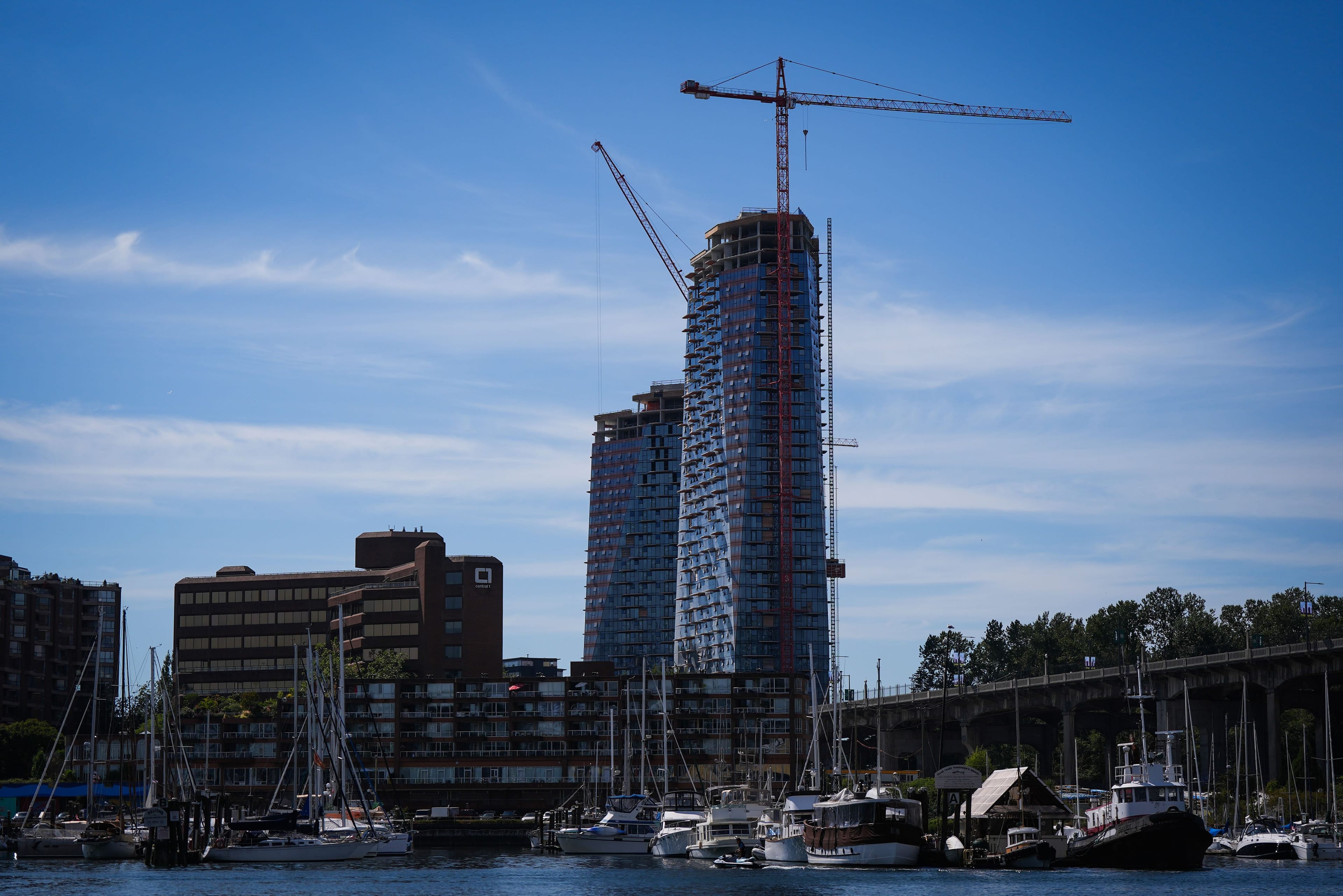
Related: Vancouver’s new mega-development is big, ambitious and undeniably Indigenous
Critics often couch their objections in economic language: “investor confidence,” “regulatory risk” and “capital flight.” But the most stable major projects in Canada today are structured with Indigenous equity, oversight and revenue sharing precisely because that model produces alignment rather than conflict. Industry has learned this faster than some governments have. The policy language that dominates corporate boardrooms—“certainty through consent”—did not originate in activist circles; it emerged from capital planning committees trying to de-risk multibillion-dollar assets.
The real economic objection to Indigenous jurisdiction is not that it drives investment away. It is that it alters who must be negotiated with. For decades, firms bargained solely with provincial and federal ministries. Now they must negotiate with Indigenous governments that have their own democratic mandates, legal interests and development priorities. Many commentators still struggle to absorb this reality because they continue to imagine Indigenous nations as consultees rather than governments, petitioners rather than regulators. Or, said another way: many still imagine Indigenous Nations as supplicants petitioning industry and government for favour, rather than as governments in their own right—a distinct and constitutionally recognized order of authority within Canada’s plural federation.
Related: A Sovereign Alberta Is a Treaty Violation
There is another objection, more atmospheric than explicit, concerning constitutional identity. Canadians are accustomed to believing that the constitution was set in stone in 1982—that patriation settled, once and for all, the question of who holds authority in this country. But Indigenous nations understand that patriation solved a jurisdictional conflict between Ottawa and the provinces, not between Canada and Indigenous peoples. The courts have been quietly reopening that question for decades. Incorporating the UN Declaration on the Rights of Indigenous Peoples into Canadian law forces legislatures to confront what the judiciary has already acknowledged: Indigenous sovereignty was never extinguished, only ignored.
This brings us back to the beginning. When critics warn of uncertainty, what they are describing is redistribution. For more than a century, the Canadian state enjoyed unilateral access to land, resources and regulatory authority. Indigenous nations did not. To shift decision-making authority toward Indigenous institutions is to redistribute power away from a single, Crown-controlled centre. Redistribution always produces backlash because those who benefited from the old equilibrium experience the new one as a loss.
The remarkable feature of the current moment is not that these changes are happening; it is that anyone imagined they could be avoided. The last 50 years of litigation, negotiation and political organizing have produced tangible power. Indigenous governments now sit at the table because they have reclaimed their seat. They negotiate equity stakes, void permits, delay megaprojects and craft co-governance arrangements across sectors. This does not produce instability. It produces legitimacy. Investors prefer predictable conflicts over arbitrary authority. They prefer agreements that hold because all parties have consented to them.
The panic now visible in British Columbia is not evidence that reconciliation has gone too far. It is evidence that reconciliation has begun to have material consequences. And for the first time in generations, those consequences involve a loss of unilateral authority for the Crown and the economic elite that has long benefited from it. The power dynamic is changing. The real question is not whether Canadians should fear that change. It is who benefited from the status quo, and for how long.
Khelsilem is a former head of the Squamish Nation Council based in Vancouver. A version of this article was originally published on his Substack.
Related Posts
My Adventures in Greenland
Carney Is the Crisis Manager Canada Needs

Alberta Treaty Law Could Decide the Arctic

Carney’s Biggest National Project is Mythmaking
Get the Best of Maclean’s straight to your inbox.
Sign up for news, commentary and analysis. Join 60,000+ Canadian readers.