How Tariff Tensions Spilled Into the Shaw Festival
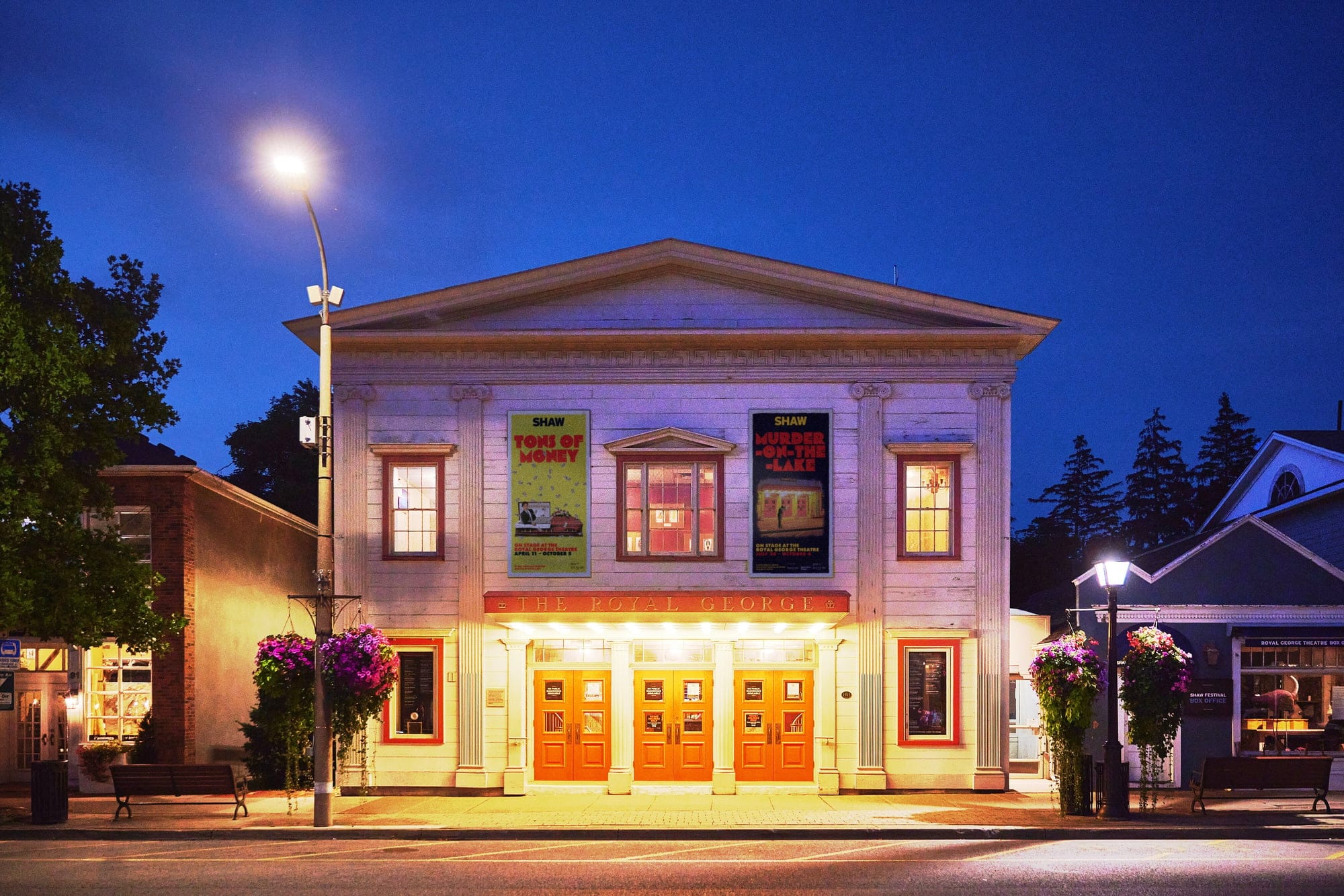
The live arts suffered terribly during the pandemic and, five years later, the sector is still reeling. The Shaw Festival, the theatre company I run in Ontario’s Niagara Region, is one of North America’s five largest theatres, with a $40-million annual budget (roughly equivalent to Lincoln Center Theater). Relatively speaking, we are recovering well. We have more than 600 employees, produce between 11 and 14 productions across four stages from April to October—plus two holiday shows—and host upwards of 325,000 attendees a year. This summer, however, the political tension in the air threatens to destabilize things again.
Shaw is located a stone’s throw from the U.S. border; if I look across the river from our theatre, I can see Lewiston, New York. Typically, about 30 to 35 per cent of our audience comes to us from the States, and not just from Buffalo or Rochester. Thousands of households arrive every year from places as far away as San Diego, Dallas, Manhattan, Chicago and Seattle. In fact, only about 14 per cent of our annual audience comes from within 100 kilometres. The rest are tourists.
Given the conflict between the U.S. and Canada this year, we opened our current season not sure what to expect. In the spring, we started hearing lots of stories about travel-related turmoil. News outlets in Buffalo reported that Ontario has experienced a significant reduction in summer bookings from Americans—by as much as 30 per cent. In May alone, American travel across Canadian border bridges was down by over one million entries compared to the same period in 2024. Major airlines like Air Canada, WestJet and Air Transat have reportedly cut back on U.S.-Canada flights by 10 per cent. That impacts U.S. tourists coming here as much as Canadians heading south.
So far, the trade dispute is impacting Niagara tourism in ways that are tricky to pinpoint, because there are no direct tariffs on tourists. Tickets are tariff-free. Local restaurants and hotels are still welcoming people with open arms. What we have noticed is a hesitation to firm up bookings. Plenty of Canadians have spoken about their intent to spend their vacation dollars here this summer, but statistics show a reluctance to finalize those plans, with many of us doing so much closer to the date of travel than ever before. As of early July, many national tourism providers have yet to see all of that staycation planning fully materialize.
That trepidation hasn’t stopped at the border, either. Roughly four per cent of Shaw’s U.S.-based audience has been reluctant to commit to bookings, even if those who do are staying an average of a day longer. Some of this can be attributed to American markets in chaos and the overall increase in the cost of living. But even with an extremely favourable exchange rate, visits from our neighbours have changed. I’ve noticed that every conversation with them includes apologies for their government or questions about how Canadians feel about them. Some ask if it’s true that cars bearing American licence plates are being keyed; others wonder aloud whether they’ll receive the same great service at nearby restaurants.
Related Posts

Carney’s Biggest National Project is Mythmaking

Canada’s Defence Firms Are Ready to Boom
This summer feels like an inflection point for trust. Just as “Buy Canadian” became a nation-building rallying cry in the wake of the tariffs, “arms open” should be the catchphrase of the coming months. We want our American neighbours to remember that the past 200 years of real friendship and support between us still continues today. The Shaw Festival is incorporated as a charity on both sides of the 49th parallel, and many members of our board and staff hail from the U.S. They’ve shared stories of border crossings delayed by increased scrutiny—in both directions—but we’ve still tried to underscore our commonality.
Many of Ontario’s tourism agencies have been working overtime to disseminate that same welcoming message: Tourism Niagara recently launched its “YEStination” campaign, which promotes the terrific exchange rate and specifically targets American tourists. And alongside our colleagues at the Stratford Festival, Shaw has been jointly promoting our musical-theatre offerings and festivals to all U.S. theatregoers, encouraging them to “enjoy Broadway level theatre at Canadian prices.” Theatres are often leading indicators of potential upset (or upswing) in the tourism sector. We are a fragile cultural ecosystem that, when damaged, has a significant impact on those around us. Shaw alone is directly responsible for upwards of $300 million in annual economic impact for our region and Ontario, and for every dollar spent with us, approximately $7 are spent in the area on hotels, food, wine and retail. Much like the recent political upheaval, what affects one of us eventually affects all of us.
There is still reason to hope: hoteliers in Niagara have told me that conference activity is actually up, as Canadian businesses move their U.S. bookings to more local locations. (Good news for our restaurants and wineries!) And at Shaw, I’m optimistic that our four per cent dip in attendance will resolve quickly. This season, we’ve still got 14 fantastic productions of shows like Anything Goes, The Lion, The Witch and The Wardrobe, Major Barbara and Tons of Money on stage until October, so those Americans staying that extra day will have lots worth seeing.
I still remember how my own journey with Shaw started, when I was 11. I saw Cyrano de Bergerac there in 1981, and I was totally captivated by the production’s beauty, wit, poetry and swordplay. I knew I needed to be involved in helping to recreate that kind of experience for others. It is hard to not be upset in upsetting, economically fraught times, but the great cure for anger is joy—and sharing it with others. A great place to do that is at the theatre.
Tim Jennings is the executive director and CEO of the Shaw Festival.
Related Posts

Alberta Treaty Law Could Decide the Arctic

My Adventures in Greenland

Carney Is the Crisis Manager Canada Needs

How to Win the Space Race
Get the Best of Maclean’s straight to your inbox.
Sign up for news, commentary and analysis. Join 60,000+ Canadian readers.