
Lower the Voting Age
I’m 17 now, but my political inclinations were obvious from the time I was a young kid—which, I realize, was not all that long ago. I always struggled with the idea that the number of years you’ve lived on the planet dictate your ability to influence it. I’d see news reports about runaway carbon emissions, rampant wildfires, record youth unemployment and insane housing prices and watch as the Canadian government responded with inconsistent or insufficient solutions. It often felt like being in a car with an alcoholic at the wheel—politicians steering recklessly, while Gen Zs like me sat powerless in the passenger seat.
Related: You’re Wrong About Gen Z
Two years ago, I grabbed the keys: I ran for and won a seat as the youngest-ever member of the Green Party of Canada Federal Council and, soon after, co-founded Young Politicians of Canada, a non-profit whose main goal is to get more youth invested and involved in politics. One way to do that is to lower the voting age, from 18 to 16.
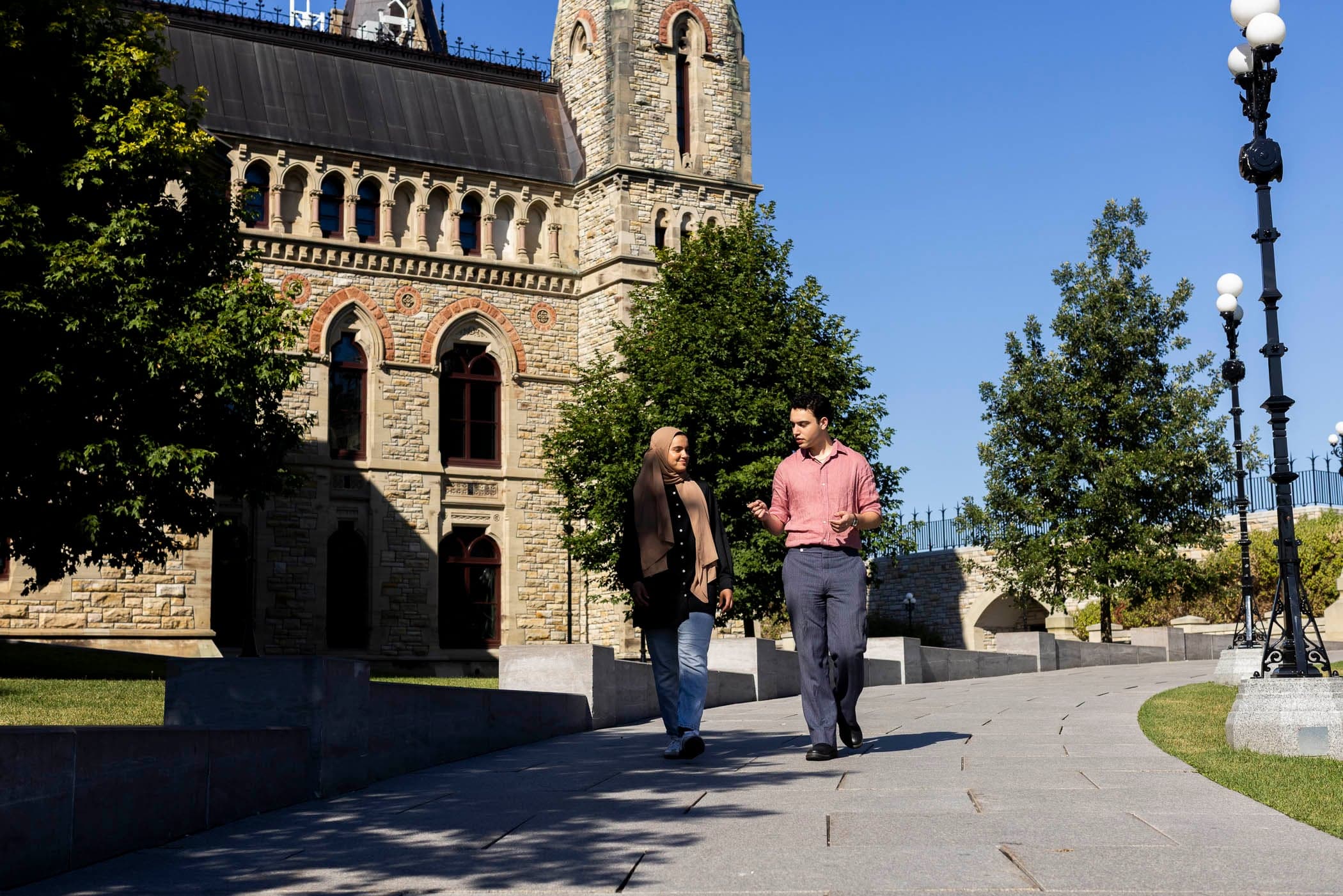
If you haven’t noticed, this country is sliding into gerontocracy, a political system in which power is concentrated in the hands of older folks. A 2022 study from Statistics Canada revealed that, in 2016, nearly one-third of legislators at all levels were 65 or older, even though seniors made up only one-fifth of Canada’s population. Meanwhile, just 5.6 per cent of legislators were between 18 and 34, an age cohort that represents more than a quarter of Canadians. In the 2021 federal election, 46.7 per cent of Canadians aged 18 to 24 voted, compared to 74.9 per cent of those aged 65 and up. When older Canadians consistently show up to vote in greater numbers, the interests of the young fall by the wayside. Then we shoulder the long-term ramifications of the government’s actions—or inaction.
Related: The Age of Wildfires
The most common questions I hear when I suggest lowering the voting age are, “Why 16?” and, “Why not 17, 15, or even younger?” The federal and provincial governments have already determined that 16 is old enough for youth to handle adult responsibilities aside from voting. At that age, we’re allowed to drive, become legally emancipated, make critical health decisions independently and enrol as officers in the Canadian Armed Forces. Around one-third of 16-year-olds hold down part-time jobs and pay taxes. We also use publicly funded services, like transit, every day, navigating the very systems shaped by politicians’ decisions. If we’re entrusted with all of that, why can’t we be trusted to cast a ballot? To those who reply “brain development,” many scientific studies have revealed no meaningful increase in cognitive maturity between the ages of 16 and 18. One study out of Austria, which lowered its voting age from 18 to 16 in 2007, also found that 16-year-olds had no less motivation or ability to vote intelligently than their older counterparts.
Sixteen is an ideal age to capture Canadian voters for another reason. In provinces like Nova Scotia, Ontario and New Brunswick, Grade 10 students complete a compulsory civics course, which provides them with fresh, foundational knowledge of how Canada’s political system functions. At my own high school in Toronto, I watched my classmates lose interest in the course material almost immediately after they learned it. The reason? It had little relevance to their lives. The feeling seemed to be, Why bother memorizing facts about how the government works when we won’t get to apply that knowledge for two or three more years?

Frighteningly, the main outlets for political engagement for many of my peers are social-media platforms like TikTok, which are flooded with misleading and sometimes even radicalizing content. Too many people my age thought Canada had a president because the only political discourse they saw online came from American sources. The best way to fight that ignorance is to give 16-year-olds a real stake in their own democracy. Doing so would also give Canadian politicians and educators an incentive to expand civic-literacy courses into the provinces and territories that currently lack them.
On paper, lowering the voting age involves a fairly straightforward legislative process: propose an amendment to the Canada Elections Act via MP sponsorship or private member’s bill, read and debate it in the House of Commons and vote it through. Senator Marilou McPhedran tabled her own attempt this past May; it’s now past its first reading. If it goes all the way, Elections Canada would then update the voter registry to include 16- and 17-year-olds, just as it does when Canadians reach the age of majority. In reality, however, pulling this off will likely be difficult. It’ll require sustained advocacy to convince legislators that younger voices are worth including. Conservatives, in particular, worry that lowering the voting age would boost support for the Liberals. (If Gen Z’s recent rightward swing is any indication, this is an exaggerated fear.)
The good news is that several prominent democracies have already enacted this exact reform. This past summer, the U.K. lowered its voting threshold from 18 to 16, partly as a response to declining youth-voter participation since the late ’90s. Prime Minister Keir Starmer framed the change as a matter of democratic inclusion and generational fairness. Within a decade of Austria enfranchising 16- and 17-year-olds, more than 90 per cent of them were showing up at the polls. This level of enthusiasm seems to stick in the long term: after Scotland lowered its voting age in 2014, researchers found that citizens who were enfranchised at 16 developed stronger, longer-lasting voting habits than those who got their first chance at 18. In other words, the earlier Scots were given the right to vote, the more likely they were to remain active voters for life.
In many of the rooms I’ve entered—whether in the House of Commons or at the Biden White House on a trade delegation—I’ve been met with a frosty reception from adults. Some have said outright that I’m “too young” to be there. If Canada is serious about strengthening its democracy, especially now, it needs to take younger voices more seriously too. This past spring, nearly 950,000 students across the country participated in Student Vote Canada, a mock election held alongside the federal election. They’re eager to shape the country’s future. Try telling them two years isn’t a long time to wait.
Jaden Braves is the founder and CEO of Young Politicians of Canada and the executive vice president of YATA–NATO Canada.
Related Posts

Alberta Treaty Law Could Decide the Arctic
Carney Is the Crisis Manager Canada Needs

My Adventures in Greenland

Carney’s Biggest National Project is Mythmaking
Get the Best of Maclean’s straight to your inbox.
Sign up for news, commentary and analysis. Join 60,000+ Canadian readers.