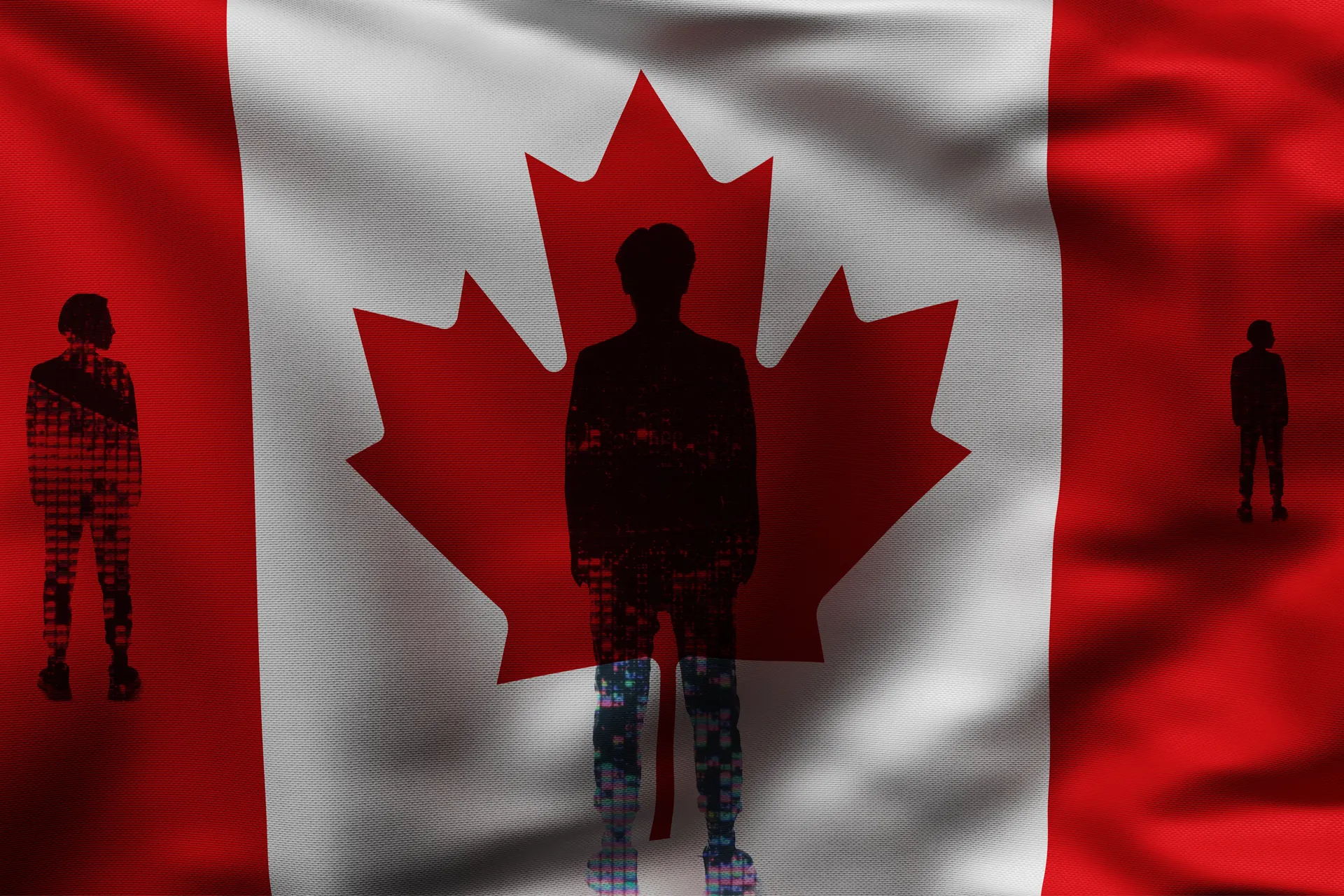
Are Canadians Ready for Their Own CIA?
In June of 2023, Hardeep Singh Nijjar, a Canadian citizen and prominent figure in the Sikh separatist movement, was killed in the parking lot of the Guru Nanak Sikh Gurdwara in Surrey, B.C. A year earlier, Punjab police had requested his extradition to India to stand trial on charges of financing terrorism and running a training camp for militants in B.C., allegations Canadian authorities found no evidence for.
Then, in September of 2023, Prime Minister Justin Trudeau accused the Indian government of involvement in Nijjar’s murder, based largely on communications intercepted by Britain—an allegation India vehemently denied. A diplomatic standoff ensued, resulting in jeopardized trade talks and each country expelling several of the other’s diplomats. A breakthrough came earlier this month, when U.S. authorities indicted Lawrence Bishnoi, the head of an Indian crime gang, for orchestrating Nijjar’s assassination from behind bars—vindicating Canada’s claim that the murder was targeted, but not directly implicating Indian officials.
Could Canada have done more to prevent Nijjar’s death? CSIS is responsible for monitoring and disrupting threats to Canada’s national security, so it’s reasonable to think it could have penetrated the organizations involved and discovered the plot. And what of the diplomatic fallout? A Canadian foreign intelligence agency, as distinct from a security intelligence service like CSIS, could have enlisted an Indian government employee to preemptively investigate how the country planned to push back, economically or otherwise. The problem is that, unlike every other G7 nation, Canada has no such agency.
For over a year, I’ve been developing The Service, a documentary series about what it’s like to work in Canadian intelligence. So far, I’ve spoken with more than 50 former CSIS officers and other experts within the community about their important, but often poorly understood, work. One thing I’ve repeatedly heard from them is how much this country needs a foreign intelligence service, especially now. Another major complaint is that Canadians don’t know enough about the function of the intelligence service we already have.
Although many conflate CSIS with agencies like the CIA or the U.K.’s Secret Intelligence Service (commonly known as MI6), its mandate is entirely defensive. A foreign intelligence agency, on the other hand, is offensive, engaging in covert operations abroad to advance its home country’s interests. One practical reason Canada doesn’t do this is simple: our intelligence officers are bound by Canadian laws, even when operating internationally, and covert action is virtually always illegal. Unless there’s a credible threat to national security—and it gets a Federal Court warrant—CSIS can’t simply break into a foreign diplomat’s house or stealthily attempt to influence foreign officials and sway public opinion.
Related Posts

International Student Caps Are Decimating Canadian Colleges
Canada Can Be a Refuge for America’s Grad Students
Another major reason is complacency; currently, Canada relies on its allies for almost all of its foreign intelligence. This isn’t a new issue. In the immediate aftermath of 9/11, the federal government tried to rectify this dependency by creating the Global Security Reporting Program, or GSRP, within the Department of Foreign Affairs and International Trade (now Global Affairs Canada). The GSRP’s mandate was to gather security-related information from “primarily non-traditional contacts” and disseminate that information in support of Canada’s intelligence priorities. In 2023, however, the National Security Intelligence Review Agency criticized the organization for lacking appropriate safeguards for its contacts and insufficiently training its officers. One former foreign intelligence officer I spoke with was more blunt: it’s a joke, he said.
In a geopolitical climate where shared institutions and longstanding ties are unravelling, particularly with an increasingly unreliable U.S., the absence of a foreign intelligence agency doesn’t only limit Canada’s ability to advance its priorities. Given the transactional nature of the intelligence world, it also limits the quality of information it receives from its allies. “Every time our politicians speak with their foreign counterparts,” Andrew Ellis, a former assistant director of operations for CSIS, told me, “they are relying largely on foreign intelligence the U.S. shares with Canada. The British don’t do that. The Israelis don’t do that. Neither should we.”
Still, creating our own CIA-style organization would present heavy political, legal, moral and ethical dilemmas that many Canadians may not have considered. In an interview for The Service, Ward Elcock, the longest-serving former director of CSIS, told me that, even if there is a clear need for a sovereign foreign intelligence agency, it’s only a matter of time before an officer gets caught. As far as Elcock is concerned, we aren’t ready for that. This country has long branded itself as an upstanding, law-abiding global actor, and it would be hard to square that image with an agency whose job is to influence far-flung governments and promote Canadian interests in secret.
But at a time when—as Mark Carney put it earlier this year in Davos—middle powers like Canada need to learn to stand on their own, we are missing out on the benefits that come with having an independent stream of foreign intelligence. As an example, officers based abroad could recruit and persuade foreign nationals to provide confidential information that could give Canada an advantage in major trade negotiations. Or they could befriend foreign politicians, convincing them to adopt policies favourable to Canada—something China has been doing to us for years.
CSIS director Daniel Rogers has also flagged that Alberta’s upcoming referendum is highly susceptible to disinformation and foreign interference from Russia. According to a report published in May by a consortium of organizations, including the Canadian Digital Media Research Network and the Global Centre for Democratic Resilience, researchers determined that the now-defunct website Albertaseparatist.com was a covert operation created and managed by Storm-1516, a Russian propagandist group. Others have expressed further concerns about possible Chinese and U.S. influence.
What if Canada wanted to engage in similar covert, if ethically fraught, operations to shape public perceptions abroad? The federal government has actively lobbied for regulations that are more favourable to Canadian mining firms in Chile, despite local opposition. A Canadian foreign intelligence agency could feasibly fund local policy institutes promoting such investment competitiveness, support media narratives by buying ads, publish op-eds or—like Storm-1516—engage in covert social-media discussions so any shift in popular opinion appears to be organic.
Ethics aside, there are some major pitfalls to operating an agency of our own. For one, what happens when a Canadian officer gets caught trying to recruit or influence a foreign politician? In 2023, Canada expelled Chinese diplomat Zhao Wei after a CSIS report claimed he was involved in a clandestine campaign targeting the Hong Kong–based family of Conservative MP Michael Chong, who introduced a Parliamentary motion condemning China’s treatment of the Uyghur community. In that case, China retaliated by expelling Canadian diplomat Jennifer Lalonde. If the tables were turned, there’s no telling what the consequences could be. After all, China is a much more powerful country than we are.
According to most of the intelligence experts I spoke with, there’s a good chance that the CIA (and the U.S. government as a whole) would try to exploit Canada’s agency for its own purposes. As Daniel Stanton, a former chief of foreign intelligence for CSIS, told me, by offering training, expertise, and resources, the Americans could shape our agency to become “a handmaiden to their stations.” As part of the Five Eyes intelligence alliance (Canada, the U.S., U.K., Australia, and New Zealand), our agency could, in some instances, be expected to participate in tactics or joint operations we might not otherwise want to be involved in. Some of those operations might do more to advance U.S. interests than our own.
Surely, Canada won’t be toppling regimes and assassinating foreign leaders and journalists anytime soon. But questions remain about how far Canadians are willing to go not only to defend themselves, but also strengthen our country—and what laws we are willing to authorize our intelligence services to break to do that. Other countries have been doing this kind of thing within our borders for years, so, as Alan Jones, a former assistant director of operations for CSIS, suggests, maybe “we should be able to level the playing field.” Perhaps the solution is to take the principled and pragmatic path that Mark Carney articulated in Davos. Our job now is to determine exactly what that looks like.
Matthew A. MacDonald is an Ottawa-based filmmaker and political scientist. He is currently developing The Service, a documentary series about Canadian intelligence operations.
What did you think of this story? Send a comment for publication to letters@macleans.ca, and supply your name and address. Comments should be fewer than 200 words, and may be edited for length and clarity.
Related Posts

The Case for Lifelong Renting

Canada’s Aging Infrastructure Is a Ticking Time-Bomb

Can Canada Survive Trump’s Attack on Science?

How to Stop the Gen Z Slowdown
Get the Best of Maclean’s straight to your inbox.
Sign up for news, commentary and analysis. Join 60,000+ Canadian readers.