Don’t Fear the Robo-Doctor
I completed medical school in 2009, just as health-care providers were switching from paper charts to digital records. The early versions of these digital records created an explosion of new documentation about each patient—when I started as a medical resident at Toronto’s Mount Sinai Hospital in 2011, it often took me an hour to sift through a patient’s file. Despite having so much more personalized data than ever before, it was difficult to use this digital information to provide high-quality care.
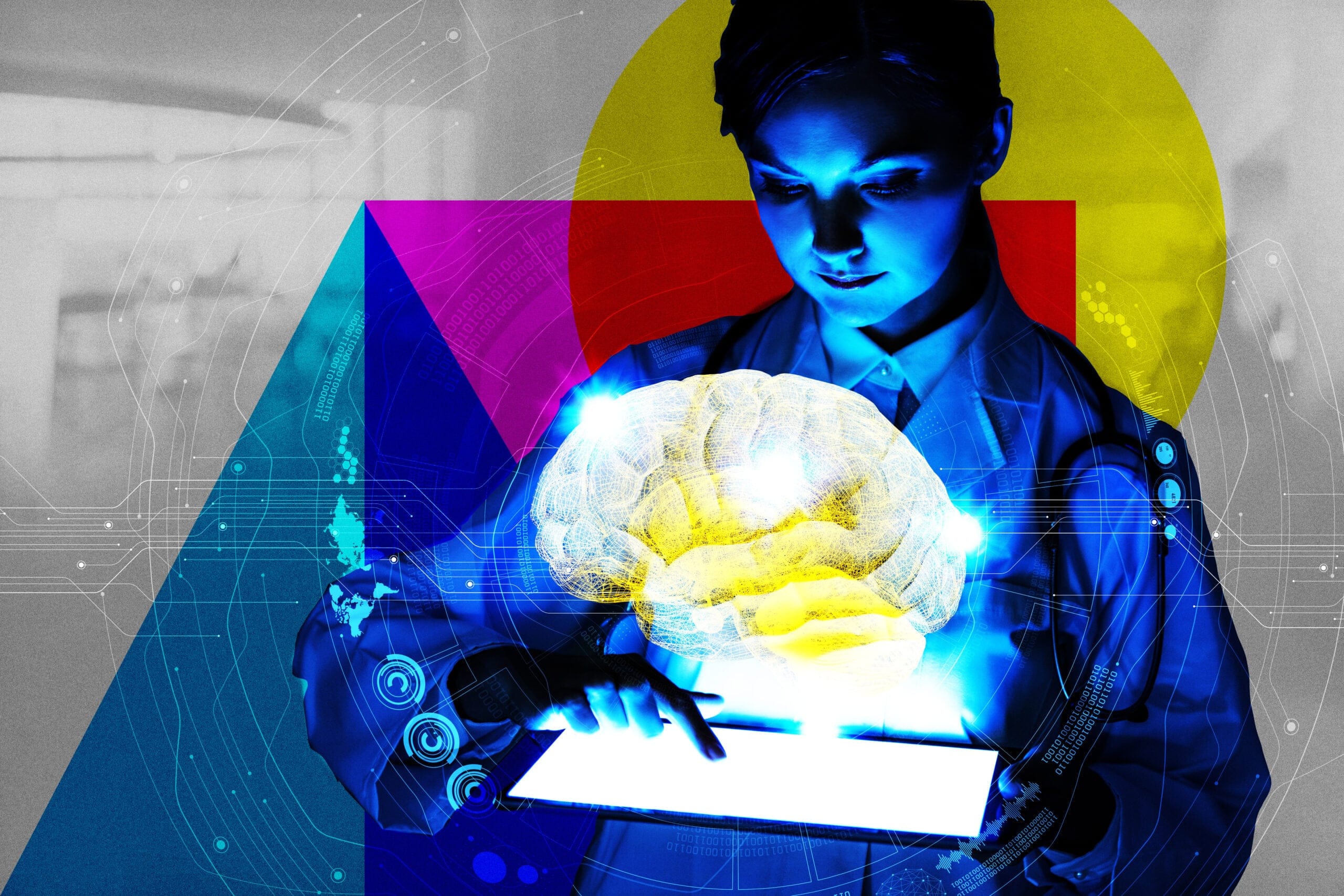
But technology was evolving around us—including early AI systems. By 2017, I was a staff physician at St. Michael’s Hospital in Toronto. There, I teamed up with clinicians, computer scientists and administrative leaders to build CHARTWatch, an AI tool that tracks more than 100 health metrics stored in digital records, like heart rate, blood pressure and lab tests. By looking at these data points and comparing them to data from previously admitted patients, it predicts which patients are most likely to deteriorate, then sends alerts to doctors’ and nurses’ mobile devices. The alerts don’t indicate why the patient was flagged, but they do bring the patients to clinicians’ attention.
We launched CHARTwatch in 2020. It was the one of the first tools of its kind in Canada and it started making a difference immediately, reducing unexpected deaths by 26 per cent. In one instance during its first few months in use, CHARTwatch flagged a patient late at night. Alerted to the potential for a negative outcome, a doctor and a nurse thoroughly assessed them. They didn’t find any immediate issues—but two hours later, the patient developed difficulty breathing. Because they’d already been assessed, a doctor was able to quickly call an ICU team and get the patient stabilized. More recently, CHARTwatch alerted us to a patient who was developing a fever. We ran a blood test that revealed bacteria in their bloodstream—an infection that could have caused serious illness if not caught early.
Special Holiday Offer
Get one year of Maclean’s magazine delivered to your door for just $39.99 and receive a free calendar featuring iconic vintage Maclean’s covers. And for the holidays, add a gift subscription for just $24.99.
CLAIM THE OFFER


This is just the beginning of what AI can, and will, do in health care. A 2023 Swedish trial following 80,000 women demonstrated that AI imaging dramatically reduced radiologists’ workloads when diagnosing breast cancer—without reducing accuracy. Several studies have shown that colonoscopies involving AI-powered video processing, where computers use machine learning to identify polyps and other anomalies, improved the detection rate of colon cancer.
Here in Canada, applications are proliferating quickly; by the end of 2025, many doctors will use AI in some way. One common tool is scribe technology: apps that capture interactions between doctors and patients to produce clinical notes, reducing the documentation burden and allowing physicians to focus their full attention on the conversation. St. Michael’s has several more projects under way, including one to more efficiently assign emergency department nurses to specific posts. Another tool, created at St. Michael’s MS clinic, synthesizes years’ worth of medical records to produce individualized patient histories. Countless companies are offering AI programs to help diagnose and treat diseases or improve the efficiency of care. Of course, we need to carefully test these tools to ensure they work well, while still creating space for innovation.
Related Posts
Making Friends With Rec Sports
Concert Tickets Are a Luxury Item. That Could Change Soon.
Some people may be concerned that AI and robotics could one day replace doctors and nurses—that an intelligent robot could listen to your chest, prescribe medication or perform surgery. These things may come to pass one day. But AI isn’t yet capable of handling the complex physical and mental tasks that health-care workers perform. CHARTWatch can’t tell doctors and nurses why it makes predictions; it is up to the medical professionals to use their expertise to interpret the system’s alerts and decide how to act. The applications we’re working with today aren’t designed to replace humans—they’re designed to help them to deliver better care for their patients.
Right now, our focus should be on understanding what AI can do, what it can’t do and how it can be safely integrated into health care, helping clinicians to do their jobs better. In 2025, we can begin building a system that starts to harness the power of AI, to give Canada’s overworked medical system some much-needed breathing room.
Amol Verma is a physician at Unity Health Toronto and a professor of AI research and education in medicine at the University of Toronto.
This story appears as part of our Year Ahead 2025 package in the upcoming January/February 2025 issue of Maclean’s. You can subscribe to the magazine here or send a gift subscription here.
Related Posts


The Condo Crash is Spreading

Canada’s China Policy Will Be Decided in Washington

AI Is About to Outthink Humans
Get the Best of Maclean’s straight to your inbox.
Sign up for news, commentary and analysis. Join 60,000+ Canadian readers.