Making Friends With Rec Sports
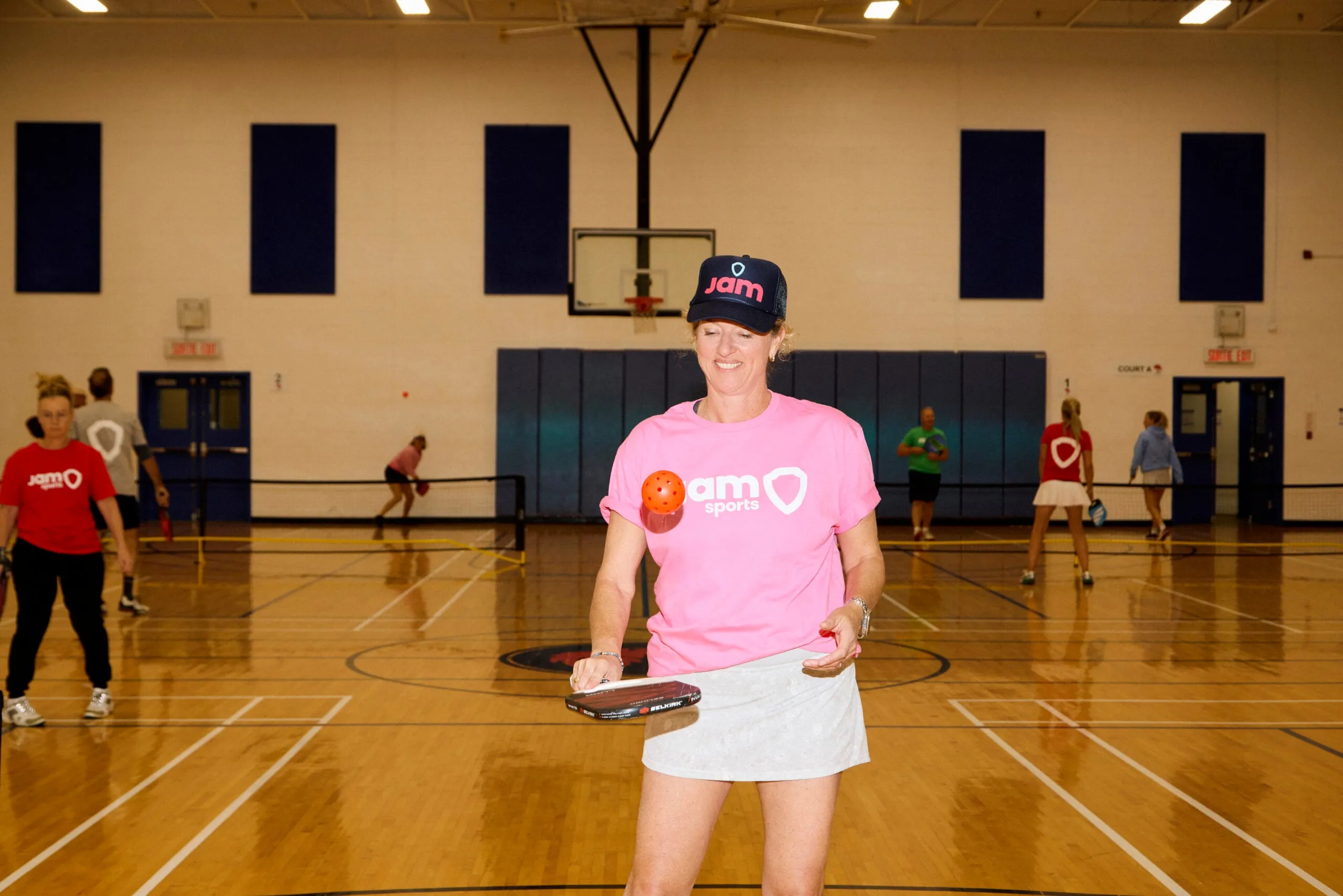
After I graduated from Queen’s University in 1993, I moved to Toronto. I couldn’t believe how hard it was to meet new people as an adult. My initial plan was to join a soccer team, but all I could find were super-competitive leagues, and I hadn’t played since I was eight. Then I heard about casual recreational leagues for adults in other cities, like Chicago and San Francisco. That inspired me to build my own. JAM Sports was born out of my basement apartment nearly 30 years ago—a multi-sport league accessible to former varsity athletes and total newbies alike.
The first sport I joined was co-ed ultimate frisbee. It changed everything. Initially, my teammates were just nacho-and-beer buddies. Over time, they became concert and weekend-getaway buddies and, eventually, some of my closest friends. In JAM’s first year, we had 250 teams; today, there are 15,000 across 25 cities. Even with the pandemic shutdown, we’ve experienced a 25 per cent jump in members since 2019. Interestingly, Gen Zs are the fastest-growing demographic across all of our leagues.
Related: You’re Wrong About Gen Z
When I started JAM, social media didn’t even exist. I recruited players by calling my entire address book and having my then-boyfriend—a semi-professional cyclist—deliver newsletters on his bike. Friends stuffed registration envelopes in exchange for pizza. Now we don’t need to do much marketing. People are practically chasing screen-free hours, which might explain why more than a quarter of Canadian adults played a sport last year. In the U.S., the number of adults playing team sports has jumped by almost 73 per cent since 2020.
Even with our smartphones, we’re feeling more disconnected than ever: one in three young adults now reports feeling lonely daily, which, research shows, has the same negative health effect as smoking 15 cigarettes a day. Team sports, on the other hand, contribute to higher rates of social connectedness, regardless of the amount of physical activity. Just an hour a week spent running around a basketball court can make a huge difference.
I’ve seen this firsthand. Gen Zs in JAM are realizing in-person activity can be a lot more fun than doomscrolling on your couch. Countless players have told me team sports have opened the often-heavy door to making friends in early adulthood. One woman shared that our league actually saved her life. She was super-depressed after a move to Toronto but, after joining our volleyball league, she opened back up. The games gave her something to look forward to. Another player with MS does four different sports a week, as their body allows. When they can’t, they cheer from the sidelines and go out with their team afterwards to socialize. Rec sports aren’t a cure-all, but they offer a solid community.
They also provide a reprieve from online-dating fatigue. In the last few years, there’s been a mass exodus of young people from apps—all of them. A joint study by Axios and Generation Lab from 2023 found that as many as 79 per cent of the post-secondary students surveyed were giving up on online dating entirely. Around JAM, we see love stories all the time. Prospective players have phoned me directly to ask which sport they should join to meet someone. My answer: beach volleyball for romance, flag football for friendship.
Related: We Fell in Love at a Running Club
We have an entire wall at JAM HQ devoted to stories and photos of the couples who came out of our leagues. My business partner, Rob Davies, met his wife (who he first called “the girl with the yellow socks”) playing soccer. Freshbooks co-founder Levi Cooperman met his wife playing ultimate frisbee. JAM once gave two of our participants an air-hockey table as a wedding gift. It’s no exaggeration to say thousands of Canadian babies exist because of our leagues.
The recent demand has been amazing to see, but it’s also highlighted a long-standing issue: the shortage of available fields and gyms in Canada’s cities. That squeeze has forced us to get creative. In 2023, JAM set up volleyball courts at Rendezviews, an outdoor bar in downtown Toronto. We get an extra place to play, and Rendezviews generates more revenue from post-game drinks. Win-win.
This past summer, we also launched a corporate league. Colleagues who play sports together outside of office hours—and don’t just bond during happy hour—are more engaged at work. In the past, teams from companies like Publicis, Google and PwC have signed up for JAM, but this new league offers extra perks. Businesses that enrol players get special branded jerseys (not the standard-issue JAM T-shirts), as well as professional photos and highlight reels from games.
Our ultimate goal is to one day have a million players signed up every year. Rec leagues like ours tend to run in cycles: players get older, start families and end up with less free time to throw a football around on a Monday night. But, at some point—usually after they ship their children off to school—they trickle back in. Some athletes from JAM’s early days now play on teams with their own kids. I’ve even started playing again—this time pickleball.
In 2024, I enjoyed a game of tennis with a 97-year-old man named Ed in Costa Rica, where I snowbird during the winter. If JAM’s current crop of Gen Zs keep it up, they’ll end up just like him, gamely crushing tennis balls well into their nineties.

This story appears in the January/February 2026 issue of Maclean’s. You can buy the issue here, subscribe to the magazine here or send a gift subscription here.
Related Posts

Canada’s China Policy Will Be Decided in Washington

AI Is About to Outthink Humans

Concert Tickets Are a Luxury Item. That Could Change Soon.

Get the Best of Maclean’s straight to your inbox.
Sign up for news, commentary and analysis. Join 60,000+ Canadian readers.