
The Year Ahead: Food
1. Fewer People Will Go Out to Eat—and Restaurants Will Suffer
As restaurants roll out all-you-can-eat specials, shift their focus from dinner to brunch and flood inboxes with more coupons than ever, diners might see a bargain bonanza. But this kind of desperate courting strategy signals a less mimosa-worthy truth: restaurants are in trouble. Once-packed hot spots now have empty tables, and Restaurants Canada reported that three in four Canadians are dining out less. Nearly half of full-service restaurants are either losing money or just breaking even, thanks to slowed demand and double-digit spikes in operating costs. The picture is even bleaker among under-30s, who are drinking less and opting for experiential adventures over good, old-fashioned group dinners.
2. We’ll All Scream for (Canadian!) Ice Cream
Chapman’s started developing its butter tart ice cream—the most Canadian flavour yet—right before the trade war. The timing was perfect. The Markdale, Ontario–based creamery leveraged its national pride, made record profits and launched a $200-million expansion plan. With a third plant on the way, Chapman’s will become North America’s largest single-site ice cream producer, adding 200 jobs and three new production lines for more frozen innovation.
3. Canadian Winemakers Will Toast to Tariff Turmoil
Trump’s tariffs have wreaked havoc on a long list of local economies, but when it comes to our wine industry, the glass is half full. With American bottles losing shelf space, domestic wine sales have surged— 58 per cent in Quebec, 78 per cent in Ontario—spurring greater investment, employment and tourism. Next up, provinces and territories are set to ratify an agreement removing interprovincial trade barriers, which means more Canadian bottles on wine lists across the country—and more oenophiles waxing poetic about full-bodied Okanagan reds or crisp Tidal Bays from Nova Scotia.
4. Your Coffee Habit Will Get Even More Expensive
The numbers are as hard to swallow as a day-old dark roast: coffee prices have spiked around 30 per cent year over year at Canadian grocery stores, and there’s more javaflation on the horizon. Even Tim Hortons raised prices in October. The problem is twofold, with tariffs on one side (much of Canada’s roasted bean supply comes through the U.S.) and climate change on the other: recent droughts in Brazil decimated this summer’s harvest.
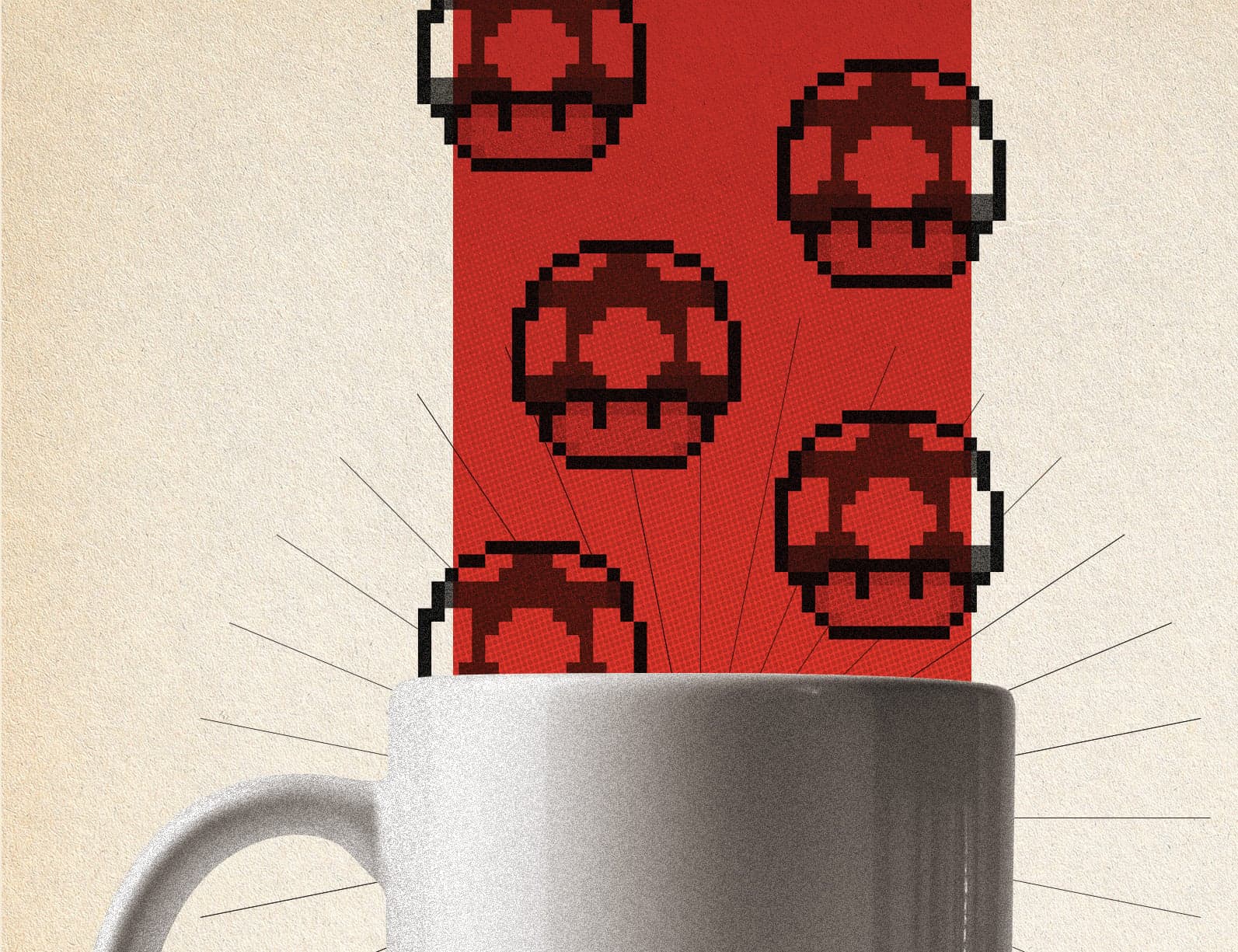
5. Mushroom Coffee Will Be the Buzziest Buzz
Step aside, celery juice—Gwyneth Paltrow wannabes have a new liquid fix. Mushroom coffee combines regular beans with functional fungi like powdered lion’s mane, reishi, cordyceps and turkey tail for a brew that’s slightly less jittery (and a lot earthier) than standard coffee. Its loftier benefits—increased focus, stronger immunity—currently lack robust scientific support, but the same was once said for green juice, and that didn’t stop it from becoming a multi-billion-dollar business. According to food-trend tracker Tastewise, interest in mushroom coffee has gone up by 50 per cent in the last year, while Brantford-based Shyne says sales are up 150 per cent, led by its popular lion’s mane brew.
Related Posts

Canada’s China Policy Will Be Decided in Washington

The Condo Crash is Spreading
6. The Produce Section Will Be the New Chip Aisle
More than one million Canadians now use GLP-1 drugs to manage diabetes and weight control—and that number is expected to triple over the next five years. It’s not just waistlines that are reshaping. Restaurant portions, grocery budgets and even the chip aisle are all downsizing as Ozempic and Wegovy kill cravings-based consumer habits. A study from Dalhousie University shows that around 30 per cent of users already spend less on baked goods and salty snacks. Junk-food behemoths like PepsiCo and Nestlé are scrambling to adjust, while sales of lean proteins, yogurt and high-fibre veggies have all gone up. Expect a boom in GLP-1-friendly labels and restaurant menus catering to the new palate.
7. Frozen Food Will Get a Glow-Up
Say goodbye to sad TV dinners and last-minute lasagnas—the freezer aisle will soon burst with gastronomically great food. Think sourdough pizza, curries, ramen and pho that are as good as takeout and ready in 10. The froze-aissance that kicked off during the pandemic (when going out wasn’t an option and grocery-store trips were a military operation) has continued based on convenience, cost-effectiveness and the adoption of premium ingredients. For instance, frozen-food retailer M&M Food Market recently rolled out frozen pork osso buco, pad see ew and salted caramel Portuguese-style custard tarts.
8. Indigenous Cuisine Will Get the Recognition It Deserves
Ojibwa Chef Zach Keeshig has a packed waitlist for his 12-course tasting menu at Naagan, in Owen Sound, Ontario. After stints at the province’s hautest kitchens—Canoe, Restaurant Pearl Morissette, Langdon Hall—Keeshig set out to bring North America’s native cuisine to fine dining. Now he’s serving up bison tartare and smoked pigeon to salivating foodies while shamelessly courting the Michelin Guide (which has yet to anoint an Indigenous restaurant in Canada). And he’s got backup. At the newly launched Bernadette’s in Edmonton, Chef Scott Iserhoff offers a menu that is “seasonal, traditional and political” (per the restaurant’s website), playing up the tension between pre- and post-colonial cuisine with spam-fried olives and Saskatoon berry brisket on bannock.
9. We’ll Eat Canadian Strawberries All Winter
Strawberries only grow year-round in warm climates, which is why Canadian grocery stores rely on California fruit for most of the year. But that system is being upended, both by the ravages of climate change (droughts and frost) and mass investments in greenhouse technology. In Ontario, grower Paul Mastronardi has partnered with Heritable Agriculture, a company born out of Alphabet’s moonshot lab Google X, on a tech-driven quest to create the perfect indoor-growing strawberry, using AI that combs through millions of data points. The country’s greenhouse boom coincides with a push for food sovereignty and, finally, winter berries that don’t taste like cardboard.
10. More Plastic Bottles Will Be Banned
The journey to cut Canada’s annual consumption of 2.4 billion plastic water bottles starts in one surf town. On Earth Day 2026, Tofino will become the first municipality in the country to ban single-use bottles one litre and less—another salvo in its years-long campaign against waste, which has already wiped out plastic bags, straws and foam containers. Mayor Dan Law wants the feds to follow suit with tougher national rules. Until then, he’s inspiring copycats: Nanaimo city council has already debated its own bottle ban.
Related Posts

AI Is About to Outthink Humans

Concert Tickets Are a Luxury Item. That Could Change Soon.

Making Friends With Rec Sports

Get the Best of Maclean’s straight to your inbox.
Sign up for news, commentary and analysis. Join 60,000+ Canadian readers.