The Year Ahead: Climate
1. Canadians Will Build a Nuclear Reactor for the Moon
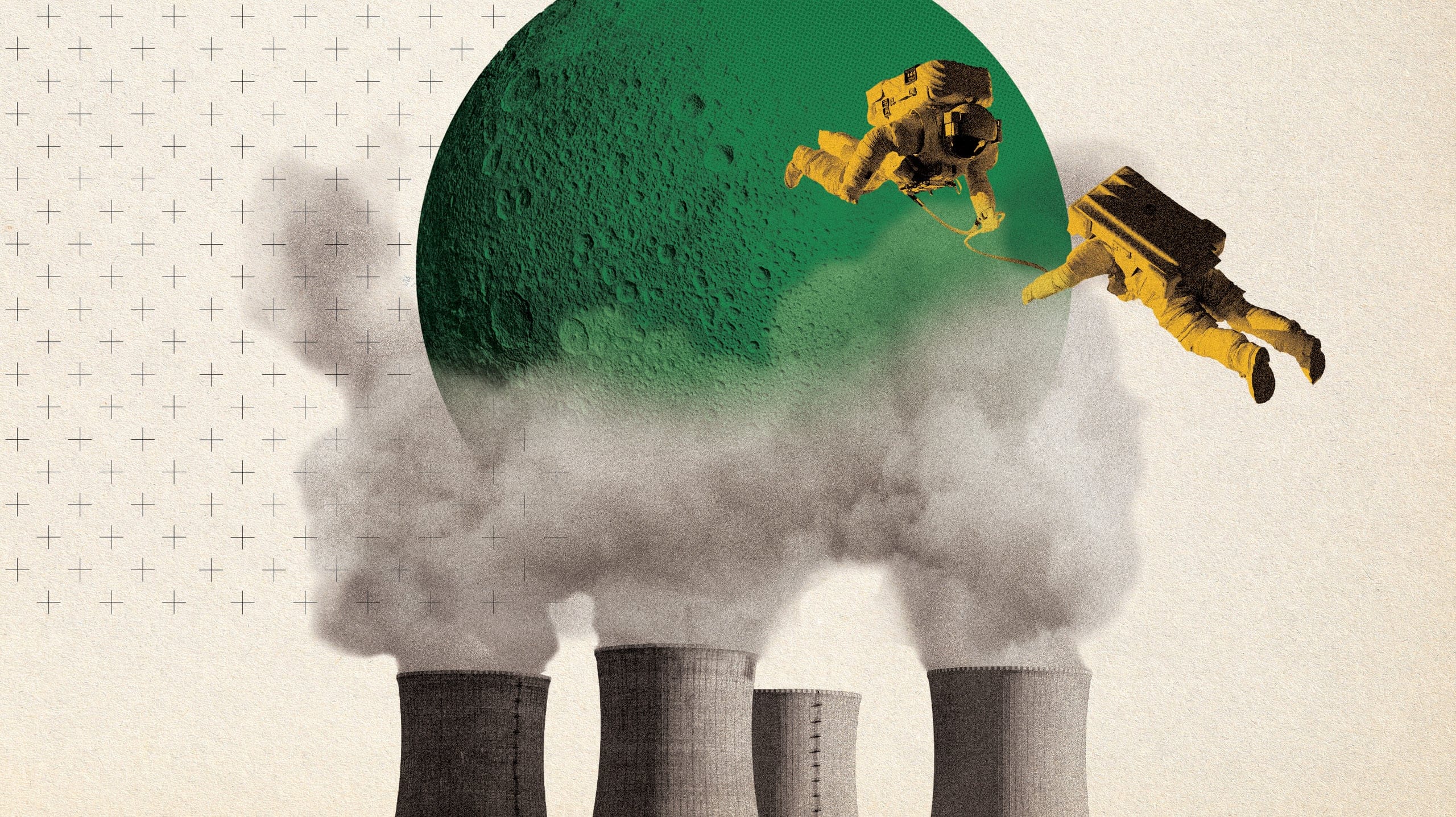
The Canadian Space Mining Corporation, a Toronto-based startup, has secured a $1-million grant from the Canadian Space Agency to develop LEUNR, a low-enriched uranium microreactor designed to power lunar operations and sustain human presence on the moon. The goal is to get the reactor up and running by 2029— a year before the target for NASA’s lunar reactor and five years ahead of Russia and China. Even if Canada doesn’t beat the superpowers, its efforts won’t be wasted: the same reactor technology is slated for Earthly use, powering remote communities with round-the-clock clean electricity.
2. Carney Will Hit the Brakes on Electric Vehicles…
Mark Carney’s government has paused the Trudeau-era policy that would have required 20 per cent of new cars sold this year to be zero-emission vehicles, with a long-term eye on 100 per cent by 2035. The strategy, designed to speed EV adoption and lower prices, was predicated on a zero-emissions future. But then came reality: Trump’s tariffs on Canadian steel, aluminum and auto parts hit car manufacturers hard, and lobbyists lined up to demand relief. Slow consumer uptake made matters worse. Experts insist the EV transition isn’t dead—it’s just deferred. The 2035 target will likely survive, but 2026 will be a lost year for EV ambitions.
3. …and Swap the Climate Fight for Nation-Building
Canada just wrapped up its second-worst wildfire season on record, with nearly nine million hectares burned and smoky skies hanging over major cities. But the climate agenda is losing ground: Canada is already on track to miss its 2030 emissions-reduction targets. Recent drops in building emissions are being offset by ballooning oil and gas output, which is driven by growing global demand for Canadian oil. The latest federal budget, meanwhile, proposes reducing spending at Environment and Climate Change Canada by $1.3 billion over the next several years.
4. Deep Sky Will Collect Carbon From the Air
To counter Canada’s emissions, the feds are investing in direct air capture, which uses chemicals and filters to remove CO₂ from the atmosphere. Montreal’s audacious climate-tech builder Deep Sky unveiled a bold carbon-capture plan: a $500-million megafactory in southwestern Manitoba. The plant aims to yank 500,000 tonnes of CO₂ from the sky each year—the annual emissions from about 100,000 mid‑sized cars—with construction kicking off in 2026. As the Trump administration veers away from green incentives, Deep Sky hopes its prairie gamble will attract business partners from across the border and create a new green-tech job boom.

5. Bill Gates Will Become Canada’s Iron Man
In 2026, Canada is set to get a $910-million jolt to its industrial future: a clean-iron plant from Colorado-based Electra, backed by Bill Gates, Amazon and mining giants Rio Tinto and BHP. Electra’s low-heat process uses renewable electricity to produce iron while cutting emissions by up to 80 per cent. The plant promises to feed Canadian steelmakers, battery factories and automakers, shoring up domestic supply chains and staking Canada’s claim as a green-steel leader. Plus, with Canada exporting about 40 million tonnes of iron ore yearly, the model has potential to scale. The location is still under wraps, but Quebec and Ontario are both in the running.
Related Posts
Canada’s China Policy Will Be Decided in Washington

Concert Tickets Are a Luxury Item. That Could Change Soon.
6. The Government Will Retrofit Homes for Free
Ottawa is back with a second swing at helping Canadians shrink their energy bills. The newly rebadged Canada Greener Homes Affordability Program promises no-cost retrofits, covering the big-ticket upgrades that actually move the needle: insulation, heat pumps and even solar panels. The program will start in Manitoba, where Ottawa and the province are each tossing in nearly $30 million. If the feds get this right, it could cut energy use, reduce bills and make home upgrades feel more like a right than a luxury.
7. Climate Migration Will Ramp Up
The memories of Fort McMurray’s wildfire exodus in 2016 and Lytton’s near-erasure in 2021 are no longer outliers: they’re previews. This summer alone, thousands fled their homes in Newfoundland and Labrador, while 15,000 people were evacuated from northern Manitoba. As droughts, floods and smoke events stack up, Canada is quietly entering an era of internal climate migration. To complicate things, the communities set to absorb these displaced families are often already strained. Rural regions, home to 18 per cent of Canadians, are short on housing, health care, schools and basic services.
8. Canada Will Pour Cash Into Critical Minerals
Canada is no longer content to cheer from the sidelines of the global resource race. Ottawa’s latest budget plants a flag with a $2-billion Critical Minerals Sovereign Fund, giving the federal government the power to take ownership stakes in the country’s most prolific mines and extract more from our resource-rich lands. The goal: to jump-start production of minerals that power EV batteries, semiconductors, clean tech and defence systems. Ottawa is also expanding exploration tax credits to include minerals such as tin, tungsten and chromium. By signing on to the G7’s critical minerals alliance, Canada is stepping into a geopolitical cage match with China, the Goliath of the global mining market.
9. Winter Sports Will Go on the Endangered List
Canada owes its dominance at the Winter Olympics to its frigid weather—but climate change puts our advantage on thin ice. A University of Waterloo survey found 95 per cent of elite winter athletes say climate change is already hurting their sports. Shorter, warmer winters will force cancellations, compressed seasons and spiralling costs for resorts and ski-town economies as they invest in snow-making infrastructure and even indoor skiing.
10. Carney’s Nation-Building Plans Will Hit Roadblocks
Canada’s latest nation-building push is colliding head-on with some of the very nations it wants to partner with. Bill C-5, the government’s fast-track infrastructure legislation, hands Ottawa the power to green-light megaprojects deemed in the national interest—even when First Nations say no. At the First Nations Major Projects Summit this summer, leaders from across the country called out the move as a rollback of consultation dressed up as efficiency. Grand Chief Stewart Phillip said the summit’s real purpose was to warn communities that resistance won’t slow shovels. Exhibit A: Ontario’s Ring of Fire, where the province is charging ahead on mineral extraction without consent. Canada says this is an economic necessity. Some First Nations call it subjugation with better branding.
Related Posts

Making Friends With Rec Sports

AI Is About to Outthink Humans

Inside the Maclean’s 2026 Ideas Summit: The Year Ahead

Get the Best of Maclean’s straight to your inbox.
Sign up for news, commentary and analysis. Join 60,000+ Canadian readers.