The Year Ahead: Education
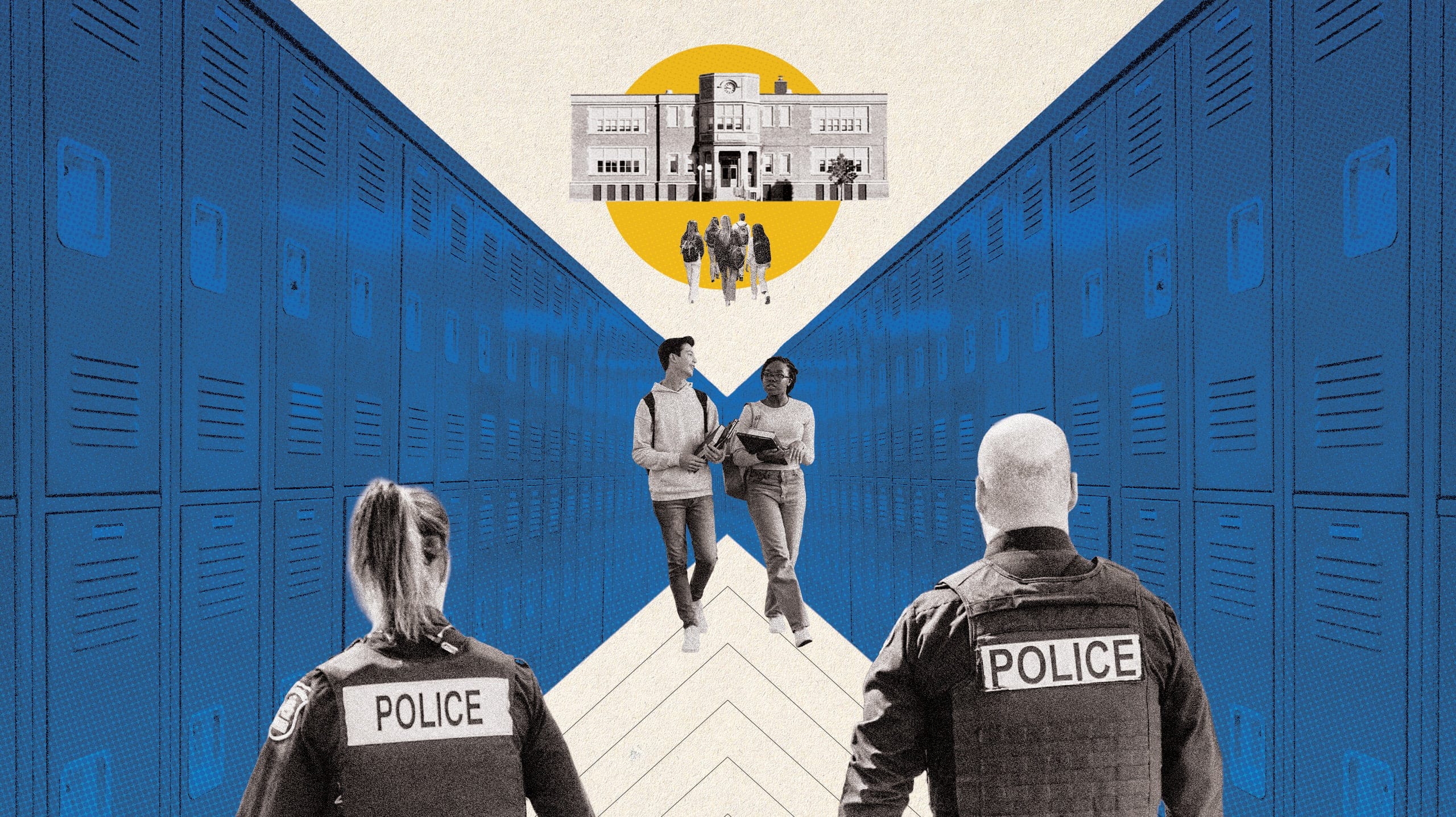
1. Police Officers Will Return to Schools
School resource officer programs, which stationed uniformed police in public schools, were largely phased out in the 2010s due to budget cuts and reports that police made kids feel unsafe. But violent incidents have been rising in schools nationwide, prompting calls to bring cops back to class. In Victoria, officers were barred from schools in 2023 but returned in 2025. Police have come back to Edmonton schools after four years away. And Ontario’s Bill 33, if passed, will require boards to bring officers onto campuses. Some students and parents feel police make schools safer; others feel they create an atmosphere of surveillance and distrust.
2. Political Feuds Will Proliferate on Campus
Universities have long been hubs of activism. People demonstrated against the Vietnam War in the ’60s, apartheid in the ’80s and, most recently, Israel’s military actions in Gaza. But in 2026, protests will target universities themselves. At Toronto Metropolitan University, law students filed a defamation suit against the school for saying an open letter supporting Palestine contained “sentiments of anti-Semitism.” Students at Ontario’s Lakehead University have rallied against its involvement with RBC due to the bank’s fossil-fuel investments. And this March, Nova Scotia universities will confront a province-wide student strike protesting high tuition, fossil-fuel investments and harms against Indigenous people.
3. International-Student Numbers Will Keep Plummeting…
The rapid influx of international students in recent years was a boon for post-secondary schools’ coffers, but a major squeeze on housing markets. So, after issuing a record-breaking 680,000 study permits in 2023, the federal government has dramatically scaled back. In 2024, 360,000 permits were issued; in 2025, 306,000. This year it will plunge to only 155,000 and then drop slightly lower in 2027 and 2028. The change will affect campus demographics; at the peak, international students represented more than 30 per cent of enrolment at some universities. And because the government has also reduced its number of post-graduate work permits, many international students who’d planned their futures here will be forced to leave when their studies wrap. But the policy pivot may already be working: a report by housing platform Rentals.ca last October found that rental costs in student-heavy neighbourhoods nationwide were dropping.
4. …and Colleges Will Shutter Programs in Response
Foreign students paid over $3 billion in college fees in Ontario last year—more than three quarters of the total. The loss of that revenue is now a fiscal emergency. Toronto’s Centennial College has cancelled enrolment for 49 courses. At Loyalist College in Belleville, where international students recently made up more than 80 per cent of enrolment in business programs, 24 programs have been cut. And George Brown College in Toronto will suspend enrolment in one-third of the programs at its celebrated culinary school. Closures are also piling up. Loyalist’s Toronto campus shuttered last December and, in B.C., Selkirk College will close one of three campuses.
5. Universities Will Seek New Revenue Streams
Universities have been financially squeezed for years by stagnating provincial funding and tuition freezes. That means a focus on new revenue sources in 2026. Some will generate cash by commercializing more research. Last year, for example, the feds provided $32 million for Lab2Market, a national program founded by Dalhousie and Toronto Metropolitan universities to scale up on-campus entrepreneurship in health ventures. Others will offload real estate: Laurentian University, which filed for insolvency in 2021, sold $53.5 million worth of property to the Ontario government last year. And here’s hoping the bull market continues: in 2023–24, universities earned $4.2 billion from investments.
Related Posts

Concert Tickets Are a Luxury Item. That Could Change Soon.

Canada’s China Policy Will Be Decided in Washington

6. Alberta Will Start Banning Books in Schools
Last May, Alberta’s government sparked a national outcry when it introduced plans to ban books containing sexually explicit passages from school libraries. After Edmonton’s public school board listed 226 books to pull, including The Color Purple, Jaws and The Handmaid’s Tale, Margaret Atwood posted a story on social media depicting Premier Danielle Smith subjugated in a Gilead-like dystopia. In response to criticism—and mockery—the government announced last September that it would only ban books with explicit images. Schools must comply by January.
7. Schools Will Poach U.S. Talent
Donald Trump has been waging war on America’s universities, prompting big-league academics to flee. So far, the University of Toronto has been Canada’s big beneficiary. Last spring, Yale professors (and fascism experts) Timothy Snyder and Jason Stanley accepted positions there, along with Yale history professor Marci Shore. The university has since announced three more American hires and put together a $24-million plan to target international scholars. Expect announcements from more universities in 2026—the recent federal budget dedicated $1.7 billion to attracting international researchers.
8. Schools Will Hunt for Teachers
The number of public-school teachers nationwide has barely grown since 2019. In Ontario, the number has dropped, and in Alberta and the Maritimes, modest increases haven’t kept pace with surging school-aged populations. Most worrying? The number of teachers under 40 is falling, while the number over 50 soars. That’s making recruitment job number one. Some regions are offering cash incentives for teachers. Alberta is trying to create a fast-tracked teacher-training program, and Ontario and New Brunswick are adding more spaces to teachers’ colleges.
9. Canadian Researchers Will Wrestle With U.S. Funding Cuts
Canadian academics have become collateral damage in Donald Trump’s war on knowledge. Last year, researchers at 22 Canadian institutions lost funding for collaborations funded by the U.S. National Institutes of Health, affecting research on neurological diseases, HIV treatment and diabetes. Now the University of Toronto, where researchers receive $20 million annually from U.S. agencies, is creating an emergency support fund providing up to one year of relief for affected faculty.
10. Affordable Daycare Will Expand (But Not Enough)
The deadline for $10 childcare is in March, and the feds get partial credit: more than one million children are now enrolled. But fees remain higher than $10 in B.C., Ontario, Nova Scotia, New Brunswick and Alberta. Long waitlists are still a problem, and the program is a source of political friction: Alberta and Saskatchewan are still negotiating terms before signing a five-year extension, and Ontario signed on for only one year.
Related Posts

AI Is About to Outthink Humans

The Condo Crash is Spreading


Making Friends With Rec Sports
Get the Best of Maclean’s straight to your inbox.
Sign up for news, commentary and analysis. Join 60,000+ Canadian readers.