Carney Wants to Diversify Trade. India Is a Good Place to Start.
For too long, Canada has been comfortable with the convenience of living next door to the world’s largest economy. But no country should depend on one partner for roughly 80 per cent of its trade, with a negligible dependence in return. Canada is learning that lesson the hard way. We’ve been tariffed to oblivion by the Trump administration, our economy is teetering toward a recession and our dollar has fallen to a paltry 70 U.S. cents. If Canada wants to double exports to markets beyond the U.S. over the next decade, then it will need to cast a much wider net. India is a natural place to start.
I say this as someone with close ties to all three countries. I was born in India and spent the first 23 years of my life there. I earned my Ph.D. in the U.S. and worked for over a decade at NYU and Columbia. In 2010, I moved again, this time to Canada, to join the University of Toronto’s Rotman School of Management, where I am now a chaired professor and vice-dean. I understand the promise of the Canada-India relationship, but also why it’s been so difficult.
India and Canada should be natural partners. Both countries are members of the Commonwealth, inheriting parliamentary systems and legal traditions rooted in English common law. English is widely used in Indian business, government and legal institutions, which makes India far easier for Canadian companies to navigate than many other countries where language barriers present a challenge.
Yet the trade relationship remains remarkably underdeveloped. Two-way trade between Canada and India is approximately $30 billion. By comparison, Canada’s two-way trade with the U.S. is about $1.3 trillion. This is largely the result of past disputes. Canada supported much of India’s early nuclear infrastructure, but that relationship chilled after India developed a nuclear weapon in the ’70s using technology Canada had provided for peaceful purposes.
Another point of contention is Sikh separatism: activists in the Sikh-majority Punjab region calling for independence from India. Many Punjabi Sikhs left for Canada amid the violence surrounding the separatist movement, which became a persistent source of tension between Ottawa and New Delhi. There were flashpoints, like the Air India Flight 182 bombing in 1985, which was carried out by Sikh separatists and killed 329 people, most of them Canadian citizens of Indian origin. Most recently, in 2024, Justin Trudeau’s government accused Indian officials of targeting Sikh activists on Canadian soil. India denied the allegations and accused Trudeau of pandering to Sikh voters. Both countries subsequently expelled several of each other’s diplomats.
Related Posts

Alberta Treaty Law Could Decide the Arctic

How to Win the Space Race
For more than half a century, the Canada-India relationship has been held hostage by these political and historical tensions. The result is that two countries with enormous potential as partners have never built the relationship they should have. India is an attractive export market for Canada for several reasons. It’s now the most populous country in the world, with a rapidly growing middle class—the group that drives demand for goods and services.
In the short run, Indian markets can be volatile, as they have been over the past year. But if you look over a 10- or 15-year horizon, India is one of the strongest bets for growth, because of its rising consumption needs and demand for the infrastructure, energy, technology and services that Canada can provide. Investors are betting on the long game: CPP Investments has already deployed around $30 billion in India as of March of 2025, and overall has roughly tripled their India portfolio over the past five years.
India is also motivated to diversify. And while it isn’t as dependent on America as Canada is, the U.S. is still India’s largest export market. For a time, India believed that Prime Minister Narendra Modi’s warm relationship with Trump would protect it from the worst of American protectionism. But in the summer of 2025, India was hit with steep U.S. tariffs after a series of economic and political disputes. As a major importer of oil and other petrochemical products, it’s also suffered from the recent instability stemming from the Strait of Hormuz blockade.
Canada, by contrast, offers political stability. We’re also at the forefront of areas that matter enormously to India’s future: green technology, AI, critical minerals, agricultural products and higher education. For India, a closer relationship with Canada will provide access to the expertise and talent it will need as its economy continues to expand.
India can offer Canada plenty in return. It’s a major producer of pharmaceuticals, including generic drugs, which keep health-care costs down. It has a large and sophisticated manufacturing base that produces automobile components, electronics, textiles and other consumer goods. India is also a major agricultural producer, with exports such as rice, spices, tea and processed foods that serve both Canada’s growing South Asian population and the wider consumer market. And it’s a global leader in IT and business services, sectors where Canadian companies could benefit from deeper partnerships.
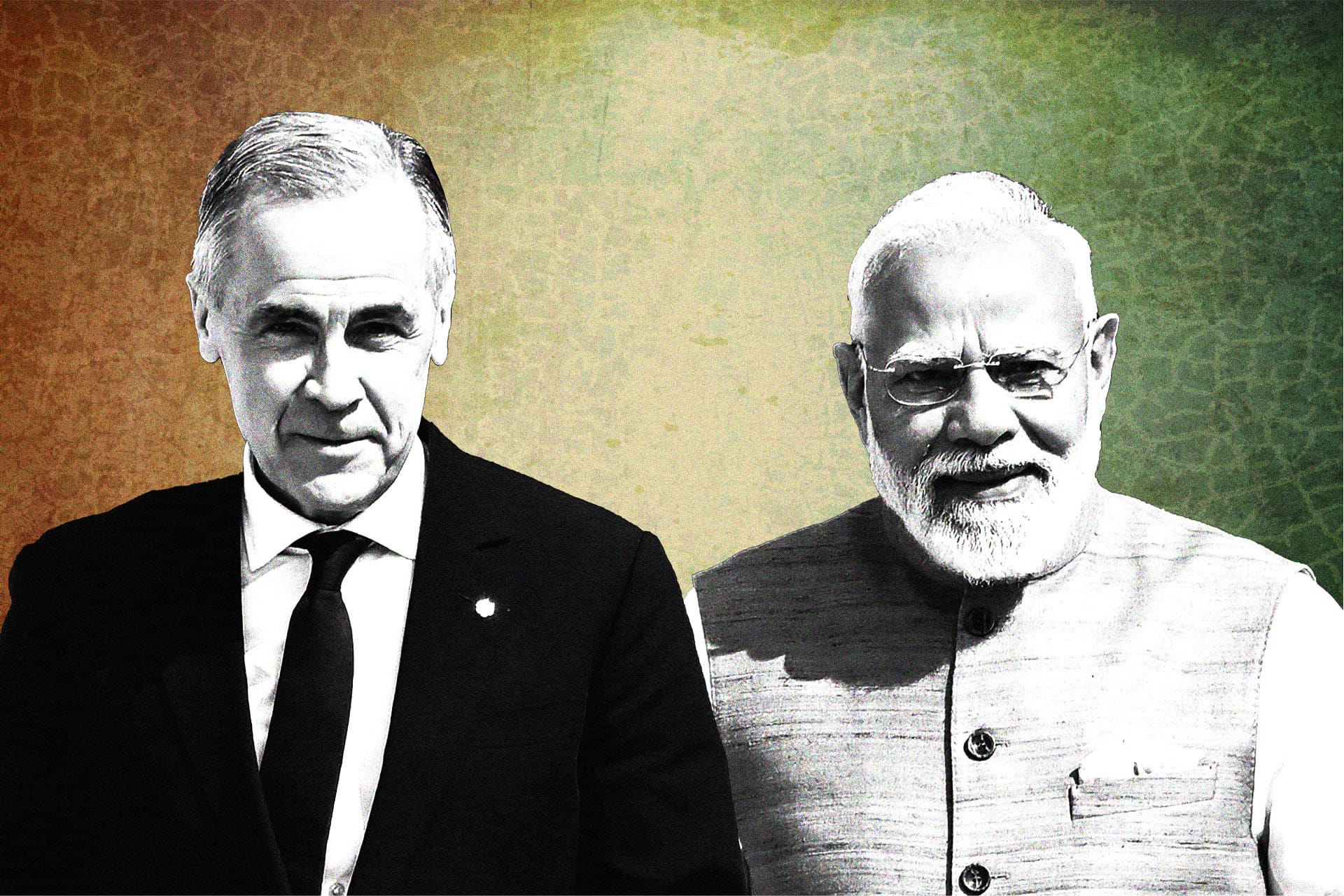
I’ve been impressed by how Mark Carney has approached rebuilding Canada-India relations. During his visit to India in March, he met with Modi, and the two leaders agreed on the importance of reliable supply chains, especially regarding energy and food security. That is exactly the kind of practical, interest-based diplomacy Canada needs. The momentum continued in May, when Piyush Goyal, India’s minister of commerce and industry, led the largest-ever trade delegation from India to Canada. The two countries have already completed two rounds of negotiations for the Canada-India Comprehensive Economic Partnership Agreement, known as CEPA, which is expected to reduce tariffs, clarify investment rules and remove barriers to market access, with negotiations set to conclude by the end of this year.
Canada now aims to double its trade with India to $70 billion annually by 2030. That will not transform Canada’s trade dependence on the U.S. But it would be a major step toward a more resilient trade strategy, especially if Ottawa takes similar steps toward other trade partners across the world.
There are, of course, serious objections to a closer relationship with India. Canadian companies may hesitate to invest there, given India’s backsliding on human rights, press freedom and secularism since 2014, when Modi’s far-right Bharatiya Janata Party came to power. India is not a perfect democracy, and Canada should not pretend that it is. But India is not a closed autocracy. It still has opposition parties, competitive elections and independent institutions. In the most recent national election in 2024, the BJP’s power was reduced significantly—they lost over 60 seats, forcing Modi to govern in a coalition. This shows that India’s democratic system, while under strain, still contains mechanisms of accountability.
For Canada, the question is whether economic engagement with India amounts to an endorsement of everything the Indian government does. I do not believe it does. Building a deeper relationship with Indian institutions does not mean abandoning Canadian values. In fact, disengagement gives Canada less influence, not more.
The U.S. has shown us how vulnerable we are when we rely too heavily on one partner. India is not a perfect alternative; no country is. But it is a democratic, fast-growing, strategically important country with deep ties to Canada and enormous long-term potential. If Canada is serious about diversifying its economy and strengthening its resilience as a middle power, then India is one of the most important relationships we can build.
Partha Mohanram is the John H. Watson Chair in value investing and vice-dean of research, resources and interdivisional programs at the University of Toronto’s Rotman School of Management.
What did you think of this story? Send a comment for publication to letters@macleans.ca, and supply your name and address. Comments should be fewer than 200 words, and may be edited for length and clarity.
Related Posts

Canada’s Defence Firms Are Ready to Boom
Carney Is the Crisis Manager Canada Needs

My Adventures in Greenland

Carney’s Biggest National Project is Mythmaking
Get the Best of Maclean’s straight to your inbox.
Sign up for news, commentary and analysis. Join 60,000+ Canadian readers.