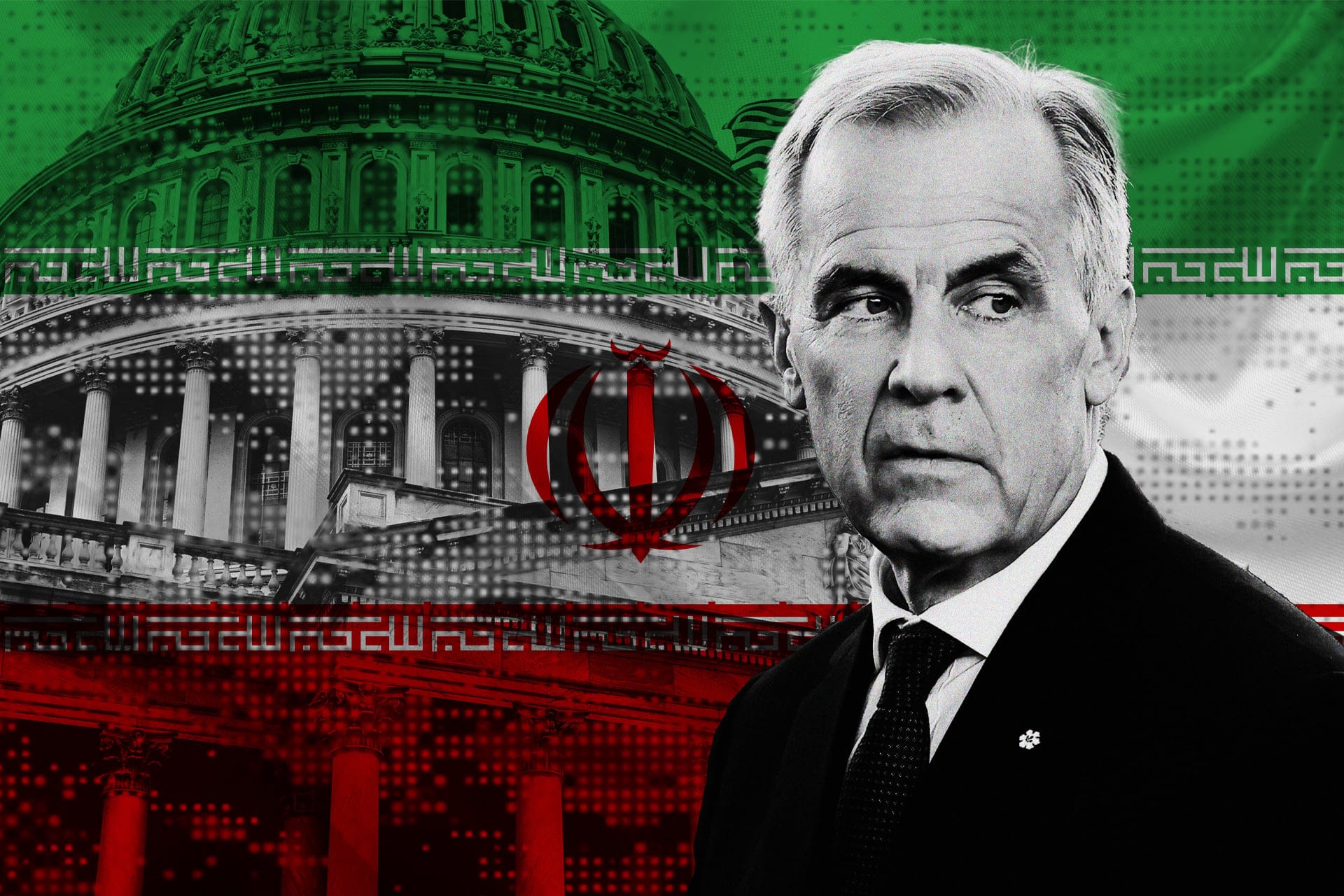
Carney’s Hesitation on Iran Is Smart Strategy
In the days following the American strikes on Iran, Canadians started wondering: does Prime Minister Mark Carney have a position on Iran?
At first glance, his stance was difficult to pin down. He supported preventing Iran from acquiring a nuclear weapon, yet stopped short of endorsing the war itself or committing Canada’s direct participation. Later, he said Canada supported the U.S. strikes “with regret,” casting the attacks as a consequence of a wider breakdown in the international order. To critics, this all looked like hesitation. When the United States invaded Iraq in 2003, Canada took a clear and public stand against the war. A similar crisis is unfolding today, so why isn’t Ottawa doing the same thing?
It’s a valid question, but it presumes the world of 2026 still operates under the geopolitical conditions of 2003. It does not. Canada operates inside a complex network of alliances and partnerships that did not exist two decades ago. Ottawa is trying to deepen relationships with Europe, expand its strategic presence in the Indo-Pacific and maintain ties across a volatile Middle East. In that environment, a Canadian position on Iran is no longer filtered only through the lens of Washington. It is also read by European allies, Indo-Pacific partners and regional states directly exposed to the consequences of escalation.
Seen from that perspective, Carney’s initial response looks less like hesitation and more like caution. Rather than rushing to define Canada’s role before the situation settles, he’s leaving room for the country to move with its partners as the crisis unfolds, especially since those partners have not been moving in lockstep.
Related: Mark Carney Is a Very Demanding Boss
At first, for example, European governments mostly condemned Iran and urged de-escalation. But within days of the initial strikes, their positions began to change. France expanded its regional presence after an Iranian strike hit one of its bases in the United Arab Emirates. After initially refusing, Britain agreed to a U.S. request to use British bases for defensive operations, while a U.S. B-1 Lancer bomber landed in the U.K. Germany signalled that its forces were prepared to take defensive measures against Iran if necessary, even as Chancellor Friedrich Merz warned against being drawn into “endless wars.” None of these moves amounted to a declaration of war. But they revealed that even Europe hasn’t settled on a single, rigid position.
Last Monday, French President Emmanuel Macron travelled to the aircraft carrier Charles de Gaulle in the Mediterranean and announced that France and its partners were preparing a naval mission to help reopen the Strait of Hormuz after the most intense phase of the conflict subsided. The proposal did not amount to Europe joining the war but instead showed how one of Canada’s closest allies is beginning to define a more active but still carefully bounded role: protecting shipping, stabilizing energy flows and responding to regional disruption without directly entering the conflict.
This is often how wars pull countries in. Measures initially framed as defensive—protecting bases, partners or shipping lanes—can quickly create new pressures for retaliation in an environment saturated with missiles and drones. That’s part of the problem facing Ottawa. If European allies were still calibrating their response, and if the line between deterrence and deeper involvement could shift quickly, then it would be too risky for Carney to lock Canada into a fixed position.
Related: Time Is Ticking for Mark Carney
The debates around Canada’s position are often overlooking what Carney actually said when the conflict began. Speaking to reporters in Mumbai, he framed Canada’s stance in carefully chosen terms. “Canada supports the United States acting to prevent Iran from obtaining a nuclear weapon and to prevent its regime from further threatening international peace and security,” he said. “The Canadian government urges the protection of all civilians in this conflict.” Carney expressed support for the objective of preventing Iran from acquiring a nuclear weapon—a goal shared by most Western governments—without committing Canada to any particular method of achieving it.
Stopping a nuclear program can be attempted in several ways. It can be pursued through negotiations, sanctions, diplomatic pressure or military action. By supporting the objective of preventing Iran from acquiring a nuclear weapon, Canada is still aligned with the broader Western coalition without endorsing the war itself. That positioning opens up the possibility of steering the conflict toward a more limited objective. It also created a possible off-ramp. If that objective were achieved, the coalition could de-escalate while still preventing Iran from acquiring a nuclear weapon.
The second part of the statement was just as deliberate. By emphasizing the protection of civilians, Carney signaled that Canada’s concern extended beyond the immediate battlefield to the wider region, where any escalation could quickly endanger populations across the Middle East.
That combination created a narrow but important space, retaining the flexibility to adjust its position as the crisis—and the responses of its allies—evolved. Strategic ambiguity in this case was not a way of avoiding a decision. It was a way of timing it correctly. What initially looked like hesitation now appears closer to strategic patience.
Shankar Narayan is a Germany-based geopolitical analyst. This article was edited and republished from his Substack, Concis Canada, where it originally appeared in two parts: “Carney Outsmarted Allies on Canada’s Iran Stance” and “Does Carney Have a Position on Iran?”
Related Posts

Carney’s Biggest National Project is Mythmaking
Alberta Treaty Law Could Decide the Arctic
Carney Is the Crisis Manager Canada Needs
My Adventures in Greenland
Get the Best of Maclean’s straight to your inbox.
Sign up for news, commentary and analysis. Join 60,000+ Canadian readers.