Time Is Ticking for Mark Carney
Mark Carney knew things were different the moment he took office last March. Instead of heading to Washington like most new Canadian leaders do, Carney flew to Paris. He understood that, in an increasingly unstable world, Canada needed to strengthen its diplomatic ties. So he met with French President Emmanuel Macron at the Élysée Palace, where the two discussed ways to fortify the partnership between Canada and France. After that, Carney travelled to London for conversations with King Charles and Prime Minister Keir Starmer. That pragmatic opening move was revealing. It demonstrated a willingness to break with the past, which has become a theme of Carney’s leadership.
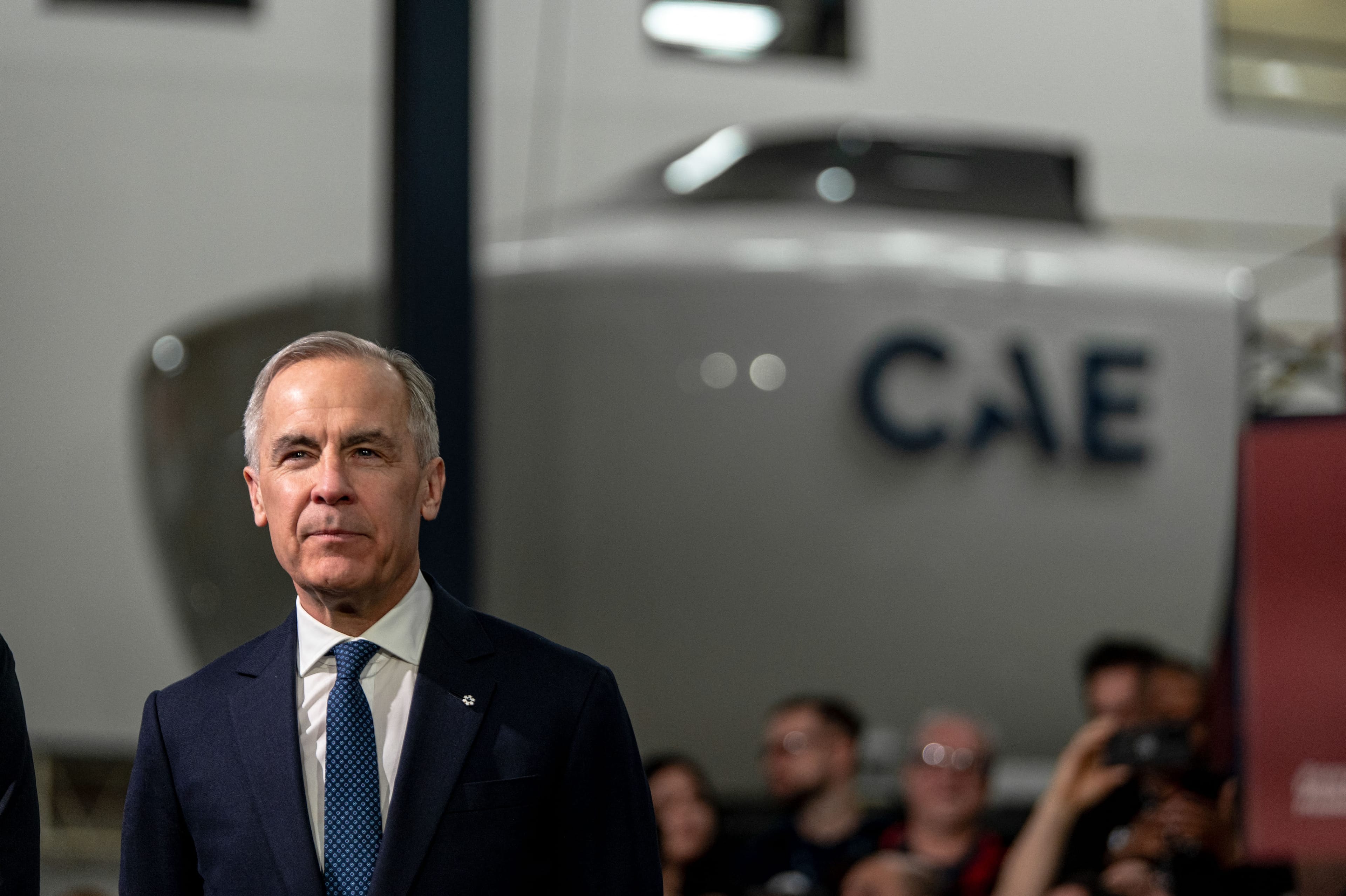
Since that initial overseas trip, Carney has left behind the vestiges of his predecessor. He knew Canadians were tired of Trudeau and wanted a new approach to governing. Almost immediately after taking office, Carney dropped the unpopular carbon tax, which Trudeau’s government introduced in 2019. He ended the electric vehicle sales mandate and scrapped the proposed increase to the tax on capital gains over $250,000. Carney also changed the tone in the PMO. Trudeau only wore a suit jacket occasionally—more often, he kept his shirt sleeves rolled up and his tie askew. He liked to draw attention to himself with his colourful socks. Meanwhile, Carney only wears dark bespoke suits, white shirts and conservative ties. His socks are as classic and understated as Don Draper’s. Brown shoes are out. Black ones are in. He exudes competence and purpose. A seriousness has returned to the office of prime minister.
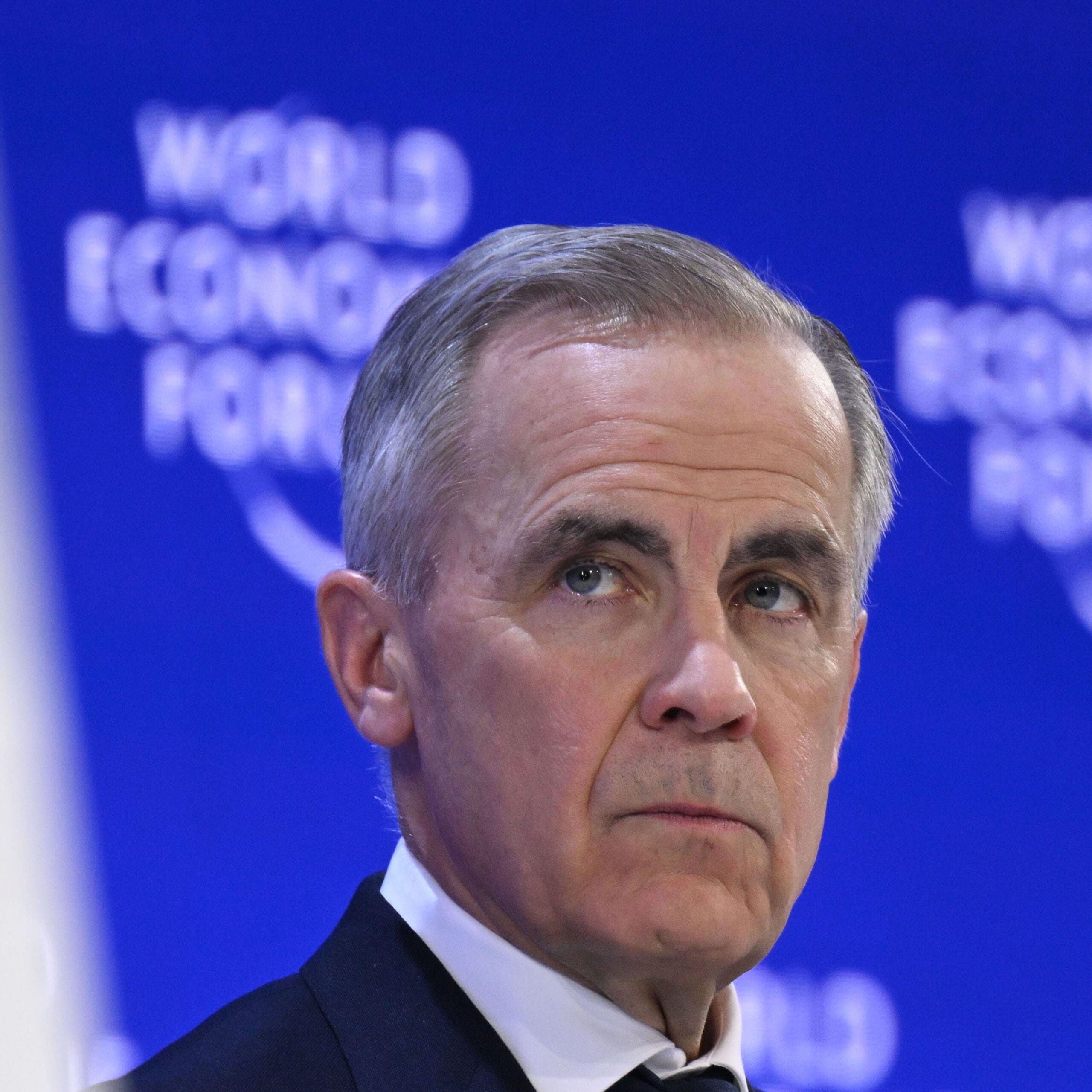
Carney took the keys to Rideau Cottage during one of the most challenging moments in Canadian history. Now he’s been in office for a year, and he’s struck most of the right chords. He’s received praise from the international community—including standing ovations after his blockbuster speech at Davos in January and at the Australian House of Commons in early March. (In Australia, the public and press galleries also rose to their feet.) Premiers feel like Carney is listening to them, and his business-like approach has earned him respect from across the political spectrum. Much to the chagrin of the Conservatives, three Tory MPs have even crossed the floor to join the Liberals, as has an NDP MP.
Related: Mark Carney Is a Very Demanding Boss
Make no mistake. Timing and circumstances are a huge part of success in politics. Carney was always going to benefit simply from not being Justin Trudeau. But the Prime Minister has been able to earn even more credit because he gives the impression that there is an adult in the room.
Carney’s trip across the Atlantic spoke volumes about his international strategy. As a former governor of both the Bank of Canada and the Bank of England, Carney has been playing to his strengths by harnessing his global connections. At the same time, he’s pivoting away from the United States. Every prime minister has understood that Canada’s most important relationship is the one with its southern neighbour. “The problem of Canada-United States relations is always with us,” Lester B. Pearson wrote in his memoirs. But no one could have anticipated that a PM would have to deal with someone as mercurial, mendacious and untrustworthy as Donald Trump. Carney was tasked with navigating these most difficult waters, and right away, he understood that Canada’s old relationship with the United States—one of intertwined economies and close military co-operation—was over.
On the surface, Carney has remained diplomatic. When he first visited the White House last May, he called Trump a “transformational president” and disarmed the American leader with a sense of humour—one of the PM’s most significant and underrated traits. But there is no doubt that, behind closed doors, Carney must be incredulous at what he is dealing with. He’s had no choice but to thread this very small needle and make the Canada-U.S. relationship work as best he can. It is a geographical, historical and economic necessity.
Related: Why America Can’t Conquer Canada
At the same time, he’s spent the last year diversifying Canadian trade, with a goal of doubling non-U.S. exports to $300 billion by 2035. After his talks with France and the U.K, he thawed relations with China, forging a trade deal to cut tariffs on canola, lobsters, and peas and import 49,000 Chinese electric vehicles. To support that deal, he dropped the 100 per cent tariff on those vehicles to just six per cent. Trips in the first quarter of this year to the U.A.E., Qatar, India, Australia and Japan underscored his trade diversification efforts—proof of his pragmatism in action. Successful prime ministers know the value of pragmatism; Carney is living in “the world as it is and not as we wish it to be,” as he put it when he announced the China deal.
The thinking behind this strategy crystallized in Carney’s much-acclaimed Davos speech, when he told the assembled elites that the world was mid-rupture. “The old order is not coming back. We should not mourn it. Nostalgia is not a strategy,” he said. There’s never been another occasion when a Canadian prime minister’s address gained so much international recognition. Carney put Canada back on the global chessboard. Later, when history books are written about the Carney years, this speech will play a prominent role in analysis of his foreign policy. Paul Taylor, a senior fellow at the European Policy Centre, wrote in the Guardian that EU leaders could learn something from Carney’s message that “contrasts with dithering among European leaders, many of whom still seem to believe they can flatter, bribe or appease Trump into taking their interests into account.”
Related: Carney Is the Crisis Manager Canada Needs
Canadians really don’t mind when their prime minister has to pluck at the eagle’s tailfeathers. The trick is to pull the right ones at the right time, and a strong majority of Canadians have liked what they’ve seen. Sixty-four per cent agree that Carney has done “a good or great job” at handling Canada-U.S. relations, according to a February poll conducted by Angus Reid.
Still, Carney’s strong international strategy hasn’t protected him from domestic blunders. Every prime minister knows that their most important job is maintaining national unity, and Carney is facing rough waters both in Quebec and Alberta, where separatism threats exist. His January speech at Quebec City’s Citadel invoked the Battle of the Plains of Abraham—in which the British defeated the French—as a starting point for the Canadian project. Wading into such territory is fraught with risk in a province that has “Je me souviens” inscribed on its licence plates.
The remarks did not go over well. Bloc Québécois leader Yves-François Blanchet ridiculed the PM: “We now see that Mark Carney is completely ignorant of Quebec and its history.” The province is an area where the prime minister is vulnerable. He does not have a natural feel for it, perhaps a result of having spent little time visiting—or even thinking about—it. Planning a Cabinet retreat in Quebec City was an excellent idea. He’ll need to spend more time in the province in 2026 and beyond.
Overall, though, Carney has made the hard parts of the job a priority. His 2025 memorandum of understanding with Alberta, which laid out conditions for a new pipeline, involved tough negotiations and the essential ingredient of compromise. The government is also set to purchase new submarines as part of a massive investment in military spending. There is a sense that the prime minister sees deals as more important than values. If we have learned anything from Mark Carney’s first year in office, it is that he is not there to pontificate or moralize. He is there to protect Canada’s economy and manage the considerable threats from south of the border and around the world.
Lester B. Pearson offered this observation as his time in the PMO was coming to a close: “A leader is expected by the image maker to be a combination of Abraham Lincoln and Batman, to perform instant miracles,” he said. “Then, when the poor, honest, decent chap can’t live up to the image, the process of demolition begins so that another superman can be erected onto the ruins.”
Carney seems like a decent chap. He has spent a year laying out a “principled and pragmatic” path, as he said in Davos. Those words may resonate on the global stage, but the prime minister must remember that Canadians expect tangible domestic achievements. Homes and infrastructure still need to be built, productivity needs to be enhanced, and there is a rather large deficit that someone needs to be thinking about.
Of course, the problem of the United States is not going away, either. It will likely only get worse. Donald Trump is still president, and the Canada-United States-Mexico Agreement must be revisited. Konrad Yakabuski, writing in the Globe and Mail, wondered if the “standing ovation Mark Carney received in Davos will have proved worth it” when negotiations begin.
So, in the coming months, the prime minister has a lot to deliver. No one ever won an election because of a speech. In an age of short attention spans and solipsism, voters still want to see those instant miracles.
J.D.M. Stewart is the author of The Prime Ministers: Canada’s Leaders and the Nation They Shaped, published by Sutherland House.
Related Posts
Alberta Treaty Law Could Decide the Arctic
My Adventures in Greenland
Carney’s Biggest National Project is Mythmaking
Carney Is the Crisis Manager Canada Needs
Get the Best of Maclean’s straight to your inbox.
Sign up for news, commentary and analysis. Join 60,000+ Canadian readers.