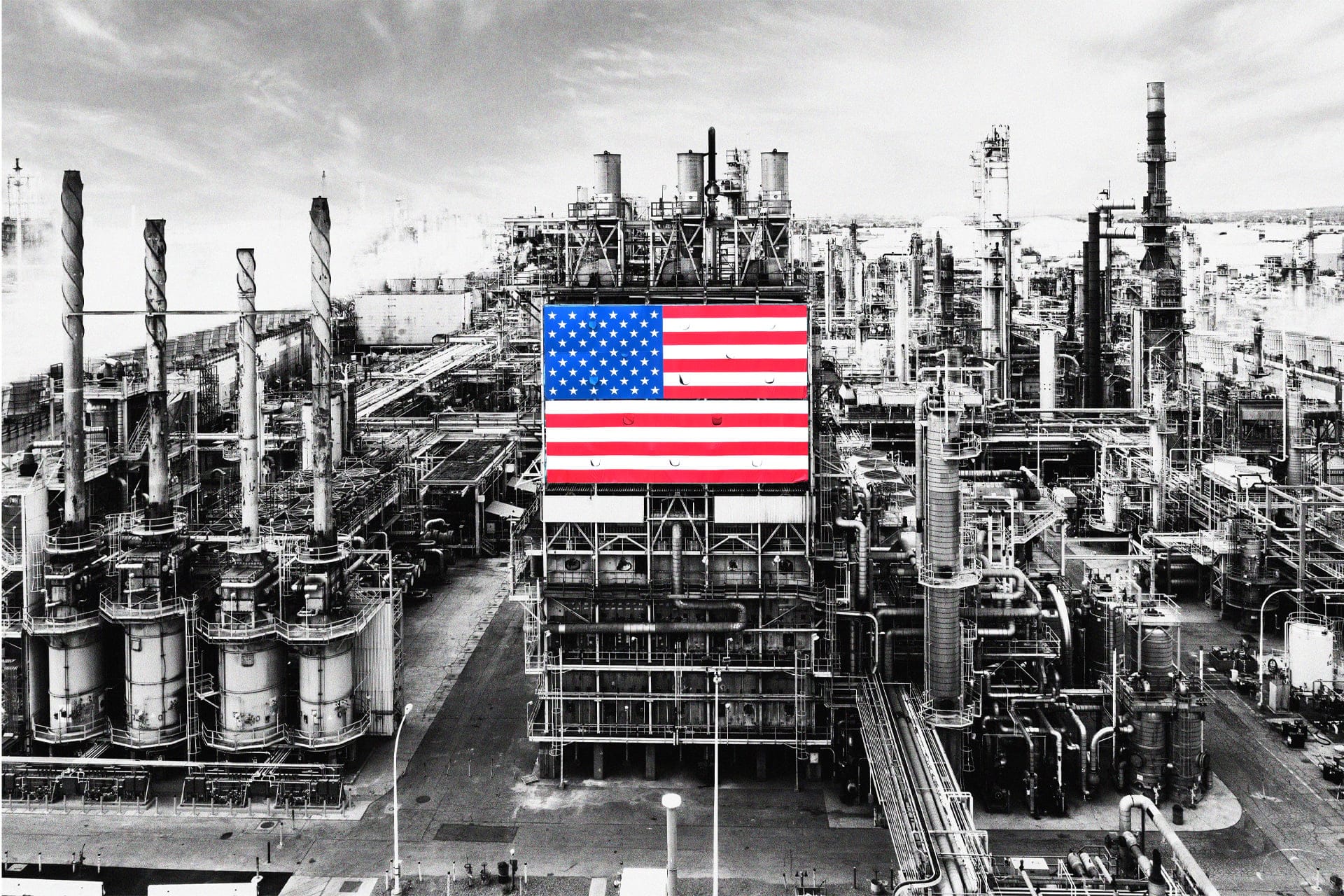
Is Canada Already the 51st State?
Canadians have had two main reactions to President Trump’s trade wars and 51st-state threats. Collectively, we’ve responded to them like a declaration of war, as though it demanded nothing less than the mobilization of our entire society to confront the threat of a hostile foreign power. We watch Doug Ford dump a bottle of Crown Royal onto the ground, like the Boston Tea Party in reverse. We commit to spending hundreds of billions to renovate our military capabilities, wary that rhetorical threats of annexation might one day become real. Individually, we’ve experienced this moment more like a divorce. We throw out their things, cancel our vacations. We vow to buy only from ourselves, the economic equivalent of belatedly opening our own bank account. We create an entire movement around the idea of developing sharper elbows. We elect a prime minister who we hope will be the antithesis of Donald Trump: intelligent and boring. With our prudent, even-tempered financial mastermind at the helm, we tell ourselves that everything will be okay.
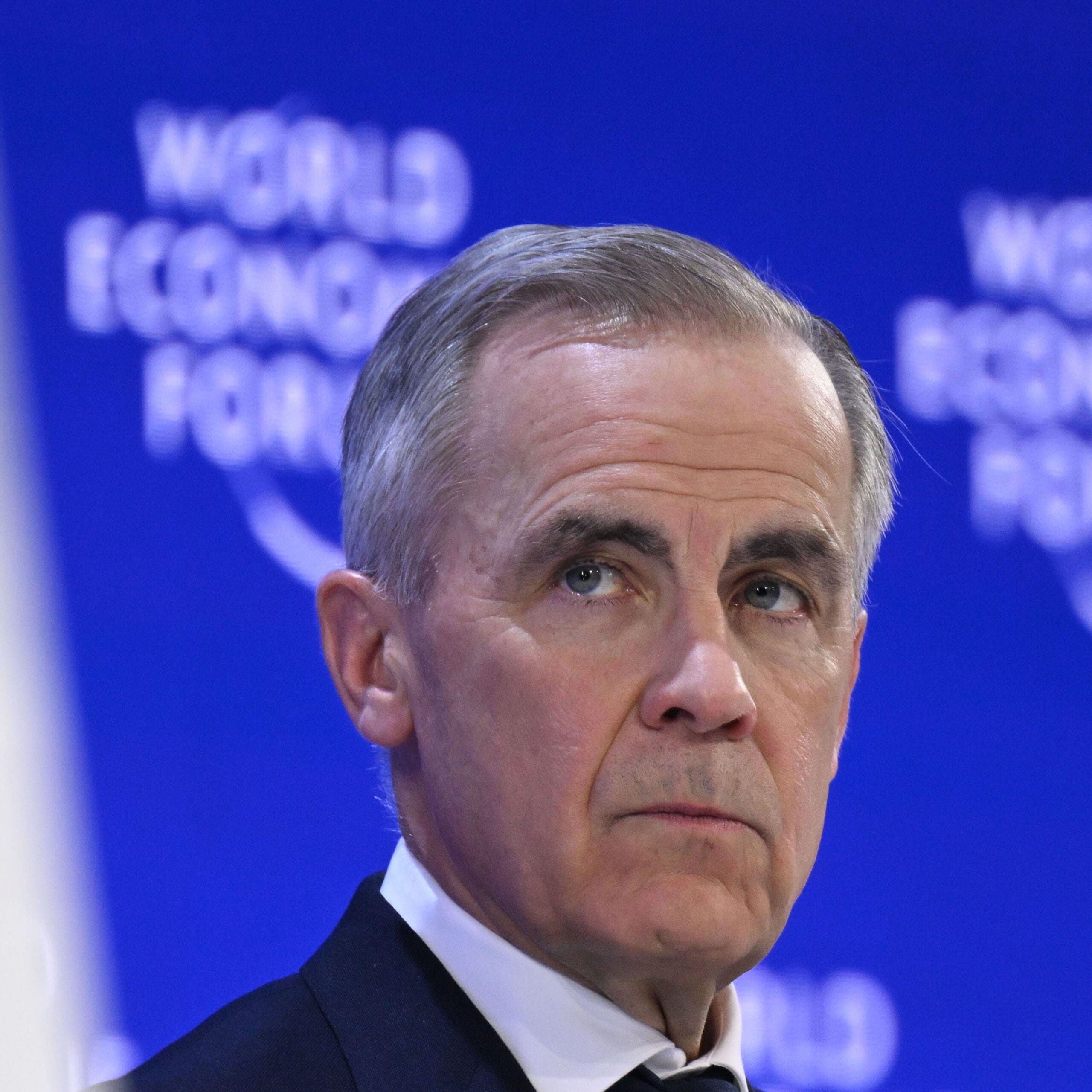
As relieved as I am that Canadians have finally become clear-eyed about the danger of our subordination to the United States, I can’t help but find all of this rather naive. The prevailing sentiment is that we must simply wait for the political tides to shift and pray for a different president to one day restore a rules-based liberal world order. But we mustn’t kid ourselves: this world isn’t just gone. It never existed in the first place. This was the principal insight from Mark Carney’s now-infamous Davos speech. Trump’s aggressive actions did not come out of nowhere. They are entirely consistent with the fact that the United States is an empire—a system built on projecting military and economic might in order to facilitate the flow of wealth and resources toward the imperial centre. When Trump calls us the 51st state, he is just saying the quiet part out loud. This is how the U.S. has always seen us.
For many of us, it’s easier to blame Trump than to look in the mirror. He shattered the illusions we were living under, and perhaps we may even thank him for it one day. The fact is that Canada would not be in this position of strategic and economic weakness were it not for the misguided policy of Canada-U.S. integration—one might call it assimilation—that our political leaders tirelessly pursued over the last five decades. The end result of this effective merger and acquisition has been the gradual erosion of Canadian sovereignty, a situation almost tailor-made for a demagogue to exploit.
I co-wrote the new documentary How to Buy a Country to show Canadians how our country was slowly pulled into the orbit of the United States and what the consequences have been. The moment we are living through right now feels a lot like the world of the early 1970s: war in the Middle East, oil price spikes, stagnant growth and rising inflation. There was also a surge of Canadian nationalist sentiment back then, just like today, which profoundly influenced the policies of then-prime minister Pierre Elliott Trudeau. These surges of Canadian nationalism do not happen at random, but rather coincide with crises of American power: moments when the United States reorganizes its global dominance. The announcement of Donald Trump’s global trade war, on his self-styled “Liberation Day” of April 2, 2025, represents another one of these moments.
As global integration unravels, it’s a valuable exercise to examine how American power was consolidated in the postwar era and then restructured in the ’70s. American global hegemony was not always inevitable. At the 1944 Bretton Woods conference, when the postwar economic system was devised, the British economist John Maynard Keynes proposed creating a new international currency that no single country would control. But the U.S. fought hard against this proposal—and won. The American dollar became the global reserve currency, with its value backed by gold. Through its control of international financial institutions like the World Bank and the International Monetary Fund, the U.S. became the creditor to the world, creating what was hoped to be a permanent balance of payments surplus through the increasing indebtedness of foreign governments to the United States. As American planners looked to shape the future, they wrote about the need to limit the sovereignty of any nation that might threaten the economic prosperity of the U.S.
Related Posts
Carney’s Biggest National Project is Mythmaking
Alberta Treaty Law Could Decide the Arctic
But during the late 1960s, this whole system began breaking down. Two critical things happened. One, the costs of the Vietnam War contributed to a massive U.S. balance of payments deficit, which threw the whole Bretton Woods system into jeopardy. Second, after American crude oil production peaked in 1970, Saudi Arabia became the producer that determined world oil prices, giving other oil-rich nations newfound leverage. It was a moment of structural weakness for America, and other nations responded accordingly. A wave of countries moved to nationalize their resources, particularly OPEC nations.
Canada was part of this global wave. Throughout the 1970s, Pierre Trudeau attempted to reduce foreign ownership, phase out oil exports to the U.S. and even nationalize oil production. These policies were influenced by the left-wing Waffle movement, which pushed Trudeau to “Canadianize” the economy. A book came out titled The New Romans, which featured writing from Margaret Atwood, Farley Mowat and other prominent Canadians concerned about U.S. influence. We now know that the CIA was concerned about Canadian economic nationalism at this time, writing cautionary briefs that went right up to the president.
With its power under threat, the U.S. needed a solution that would maintain its position as the global economic hegemon while still allowing it to run endless deficits. During the Nixon administration, a secret agreement was brokered with Saudi Arabia and other oil producers to recycle profits back into the U.S. in exchange for military protection. Over time, the world’s central banks moved to finance the American balance of payments deficit by recycling their surplus dollars back into U.S. debt, a system that helped preserve the position of the greenback as the global reserve currency. This arrangement formed the economic plumbing of the system we now call “globalization,” which was really just the Americanization of the world economy. Through the intervention of U.S.-controlled institutions, the “Washington Consensus” was imposed on the world: a suite of economic policies like free trade, deregulation, privatization and austerity designed to keep the world open to U.S. capital.
In 1988, the Washington Consensus arrived in Canada when Brian Mulroney adopted a free-trade agreement with the United States. Our country has never been the same since. Free trade dramatically increased Canada’s economic dependence on the United States, creating one of the largest bilateral trade relationships in the world. It redirected the axis of the Canadian economy from east-west to north-south. Between 1989 and 2000, exports to the U.S. grew from 26 to 46 per cent of Canada’s GDP; 75 per cent of our exports are sent there today. Our provinces trade more with the U.S. than they do with each other.
Particularly important is the role of oil and gas. During that era, we sent 97 per cent of our crude oil to the U.S. because of an incredible clause in the free trade agreement that stipulated that Canada can never reduce its energy exports to the U.S.—even in a crisis. This clause, unprecedented in the history of trade agreements, locked Canada into supplying the U.S. market. When free trade was expanded to NAFTA in 1994, Mexico refused to agree to this clause on the grounds that it infringed on its sovereignty. In 1993, Jean Chretien tried to renegotiate this clause, but Bill Clinton vetoed these attempts. The implication was clear: the U.S. calls the shots, Canada obeys.
Contrary to what its evangelists promised, free trade did not improve the relative efficiency of Canadian manufacturing. Over time, Canada has become even more economically dependent on the extraction and export of unprocessed raw materials—a textbook case of what economists call the “resource curse.” Between 1988 and 1995, nearly one in five manufacturing plants in Canada disappeared. According to some estimates, free trade cost the Canadian economy nearly 300,000 jobs by 1997. This only worsened throughout the 2000s: as the value of the Canadian dollar increased with the price of oil, our manufacturing simultaneously became less competitive. Between 2000 and 2010, nearly 600,000 manufacturing jobs were lost nationwide. During this period, Canada signed the Security and Prosperity Partnership with the U.S., expanding military co-operation between our two countries and including an aspiration to increase oil sands production five-fold in order to supply U.S. markets. Tom d’Aquino, founder of the Business Council of Canada and an influential voice for U.S.-Canada integration, cautioned Canadian leaders at this time to not “allow outdated concerns about sovereignty to cloud their vision.”
Integration did more than just transform the composition of the Canadian economy. It also changed the very philosophy by which we govern our society. The policies of the Washington Consensus came with one goal: to reduce the size of government and give rein to free markets. Through this bitter pill of austerity and privatization, citizens across the industrialized world were promised unprecedented growth and prosperity that never materialized, instead ushering in a period during which wages lagged far behind productivity. Meanwhile, the postwar social safety net was dismantled in a death by a thousand cuts as Canada increasingly adopted austerity politics, coupling free trade with Reagan-style reforms to social policy. Since that time, no Liberal or Conservative leader has meaningfully challenged this system.
While Mark Carney presents himself as a bulwark against Trump, he has done nothing to challenge the fundamental logic of the Washington Consensus. His idea of economic sovereignty entails doubling down on the economic equivalent of a sugar rush: cuts to public spending combined with massive omnibus bills meant to eliminate red tape, scrapping whole swaths of public-interest legislation in order to make it easier for companies to dig up wealth from the ground and export it abroad. Carney, a former private equity magnate, seems to be most concerned with courting Wall Street firms like Blackstone or Apollo to buy up Canadian infrastructure projects. These firms are the principal financiers of the Ksi Lisims liquefied natural gas terminal, which appears on Carney’s list of “projects of national interest” but is American-owned. In addition, Canada’s four largest oil companies are already 60 per cent American-owned. Could this be why President Trump sees us as the 51st state in all but name?
These days, Carney talks about Canada’s role in helping to “make America great again,” which is a far cry from last year’s elbows-up rhetoric. His idea of nation-building is hosting a major summit to invite major global asset managers—many of which are U.S.-owned, such as BlackRock and Vanguard—to increase their ownership stake in the Canadian economy. There’s a strong argument that this will simply speed up the privatization of infrastructure while raising costs across the economy, in the same way that Carney’s so-called Canada Strong Fund will likely just result in the sale of airports, roads and other public assets.
There’s a lot more that Carney could be doing to shore up Canadian economic sovereignty. He could build a nationwide clean electricity grid to deliver cheaper, more secure energy to all Canadians, rather than pouring taxpayer dollars into yet another unprofitable, foreign-owned pipeline to export resources overseas. He could break up oligopolies and improve financing conditions for small businesses, or create real publicly owned banks that could invest in Canadian businesses at more affordable rates. But none of this is on the agenda.
What’s at stake here is more than just the future of Canada’s economy. Our solution to this crisis must include more than reciprocal tariffs or new industrial strategies. We are living through a moment of national reckoning of a kind that only comes around once in a generation. We risk squandering it by losing ourselves in nostalgia for a bygone era rather than learning from our past mistakes. We must not be content with stop-gaps and half-measures in order to buy ourselves time. At some point the bill will come due—if it hasn’t already.
Gareth Gransaull is the executive producer and lead writer of How to Buy a Country.
What did you think of this story? Send a comment for publication to letters@macleans.ca, and supply your name and address. Comments should be fewer than 200 words, and may be edited for length and clarity.
Related Posts
Canada’s Defence Firms Are Ready to Boom
How to Win the Space Race
My Adventures in Greenland
Carney Is the Crisis Manager Canada Needs
Get the Best of Maclean’s straight to your inbox.
Sign up for news, commentary and analysis. Join 60,000+ Canadian readers.