Biohacking Isn’t Just For Billionaires
Depending on how broadly you define it, the global wellness industry may be worth as much as $6 trillion. That’s even more than big pharma. The industry’s runaway success isn’t surprising; there’s always more we can do to restore and enhance our bodies and minds. If I’m tired or feeling low, I can take melatonin or ashwagandha. Even if they work, there will always be another supplement or product promising to make me well again. The idea of wellness has no ceiling.
In fact, there is only one limitation on the market: gender. By and large, women have been the primary targets of wellness products and services. But selling self-care and comfort to men is not just a matter of slapping whiskered faces on packaging and forest-scented products on shelves. To capture the male market, wellness needs a masculine rebrand.
Enter biohacking. The idea has been around for decades in Silicon Valley, where the culture of life optimization focuses on the systematic improvement of every aspect of our lives and bodies. In its early days, biohacking was reserved for cloistered tech types and wealthy eccentrics—people like venture capitalist Bryan Johnson, who has spent millions of dollars trying to extend his life, ideally forever, with a slew of supplements, gadgets and algorithms. In his effort to defy death, Johnson has even infused himself with his teenage son’s plasma.
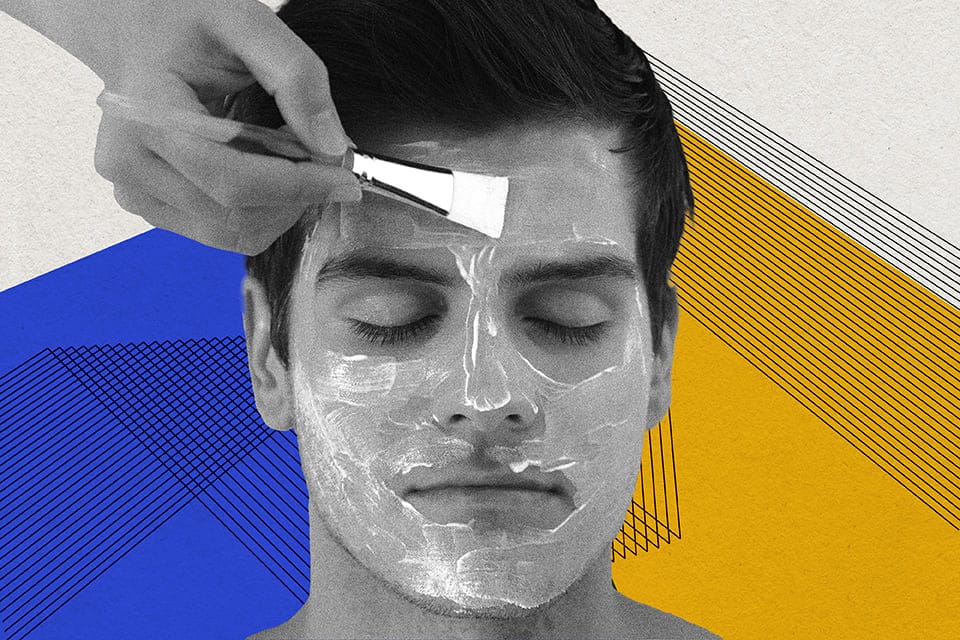
Now a less extreme concept of biohacking-as-wellness is taking root for everyday men. It’s wellness for the manosphere, a counterpoint to what has, until now, been an almost entirely feminine-inflected industry. In Canada, naturopaths, integrative health clinics and specialty biohacking centres offer all kinds of services aimed at optimizing physical, spiritual and even professional health. They include things like blood, stool and genetic analysis, as well as machines that heat, cool, vibrate, magnetize and compress users’ bodies. By rebranding supplement regimens as “stacks” and aesthetic treatments as “looksmaxxing,” biohacking capitalizes on men’s vulnerabilities about falling behind in professional prestige, physical strength and sexual prowess. Businesses, gurus and grifters are swooping in to profit.
Related: Longevity Expert Peter Attia Can Help You Cheat Death—for a While
Much of the biohacking industry focuses on dubious methods of boosting virility. Canadian guru Will Blunderfield, who calls himself a “sexual kung fu coach,” hosts rewilding retreats where men slap their testicles to release testosterone. (There is no medical evidence that this works.) Another outlandish example is influencer and former model Troy Casey, who claims that drinking his own urine keeps him youthful and strong (something about stem cells). This kind of thing may seem bizarre, and it is, but it’s setting the tone for men’s wellness. Biohacking increasingly looks like wellness for the manosphere, and its influencers make money via monetized posts, subscription services and books selling hypermasculine visions of health. Although testicle-slapping may not sweep Canada, more mundane expressions of masculine virility will. Blood tests and supplements purported to optimize testosterone will become more common, alongside those that target conventional markers of masculinity, such as hair and muscle growth.
Related Posts

AI Could Save Canada’s Health-Care System

Canada’s Flu Seasons Are About to Get a Lot Worse
Another biohack that’s already going mainstream is psychedelic drugs, which are touted by commentators like Joe Rogan as ways to enhance productivity and creativity at low doses, and to prompt life-changing insight at high doses. In practice, office workers will microdose LSD to be sharper at work. Recently, my neighbour casually told me about his mushroom journey in Muskoka with the boys—which he made sure to explain was about introspection, not giggling while playing Mario Kart. (This really happened.) We may even see corporate retreats for ayahuasca ceremonies to help leaders realize their full potential. More ordinary wellness practices are also being recoded in masculine terms. For example, the Toronto-based fitness hub Sweat and Tonic includes, under the “biohacking” tab on its website, standard spa services such as saunas, cold-plunge pools and meditation.
On its surface, the rebranding of wellness for men appears to even out a previously unbalanced industry. In reality, it’s opening an untapped market to make money off people who want to find a bit more ease, energy or sense of purpose in their lives. But the wellness industry’s fixation on masculinity and virility will create a sense of obligation that will reshape how we think of men’s bodies and manliness, which is almost always framed in terms of productivity, strength and dominance. Will it improve anyone’s health? That’s harder to predict.
Colleen Derkatch is the author of Why Wellness Sells: Natural Health in a Pharmaceutical Culture.

This story appears in the January/February 2026 issue of Maclean’s. You can buy the issue here, subscribe to the magazine here or send a gift subscription here.
Related Posts

The Secret Weapon in Canada’s Sewers

The Smart Case for Private Health Care

A Doctor’s Plea for Civil Discourse
Canada Needs a National Vaccination Registry
Get the Best of Maclean’s straight to your inbox.
Sign up for news, commentary and analysis. Join 60,000+ Canadian readers.