
The Year Ahead: Business
1. Workers Will Return to the Office (Under Duress)
The work-from-home honeymoon is over. Canadian bosses will drag workers back to the office—four days a week, for the most part. TD, BMO, RBC, Scotiabank, Rogers and several branches of the Canadian government have all issued near-identical memos, calling employees back in and citing the need for collaboration and culture-building. Some workers, who were hired remotely, will argue that mandatory office returns breach their contracts. Unions, meanwhile, will push back hard: the one that represents Ontario public servants says the provincial government doesn’t even have enough space for returning employees.
2. Door-to-Door Mail Delivery Will End
In 2026, Canadians will check their PO boxes, not their front porch. In September, Canada Post received approval to end home delivery for the four million remaining addresses that still receive it, bringing them in line with the rest of the country. Instead, residents will rely on community, apartment or rural mailboxes, with most conversions phased in over the next three to four years. The move sparked a national Canada Post walkout in the fall, but the financial case is compelling: the change is projected to save $400 million annually, with an additional $20 million from relaxed delivery standards.
3. Tetra Will Launch a Canadian Stablecoin
Calgary-based Tetra Digital Group has raised $10 million to launch a Canadian-dollar-backed digital token in 2026, with financing from Shopify, Wealthsimple and National Bank. Unlike cryptocurrencies, stablecoins are pegged one-to-one to a real-world asset—in this case, the Canadian dollar—significantly reducing the risk of a crash while offering all the upsides of digital money. Perks abound: it could make cross-border payments smoother and cheaper, attract foreign investment and position Canada as a player in the global digital currency race.
4. The Entry-Level Job Will Die a Slow Death
In 2026, companies will have the technology, and the licence, to cut employees to save money. Anthropic CEO Dario Amodei has warned that up to half of entry-level positions in sectors like finance, law and consulting could vanish within five years as automation threatens roles. In the last year, Microsoft laid off 15,000 workers globally, Amazon laid off 1,700 in Quebec and IBM announced cuts that would affect thousands. For young professionals, the landscape is stark: university degrees are no longer automatic tickets to employment, and analytical and clerical roles are being automated faster than new ones are created.
5. Tariffs Will Keep Coming
Thanks to Trump’s utterly idiotic trade war, Canada is facing escalating costs, shaky supply chains and job losses in key export sectors. Tariffs on steel and aluminum will reduce export volumes, raise costs, dampen investment and eventually cripple the construction and machinery industries that rely on it. The automotive industry, which ships most of its vehicles and parts to the U.S., will hemorrhage jobs. At its worst, Trump’s trade moves could shave a full two per cent off Canada’s GDP. Much of the fallout will depend on the Canadian–United States—Mexico Agreement, which is up for review this year. For now, the government is deploying $5 billion over two years to help exporters adjust to tariff shocks, and Ontario has committed about $11 billion in relief for employers and workers.
Related Posts

Robots in the Classroom

AI Is About to Outthink Humans
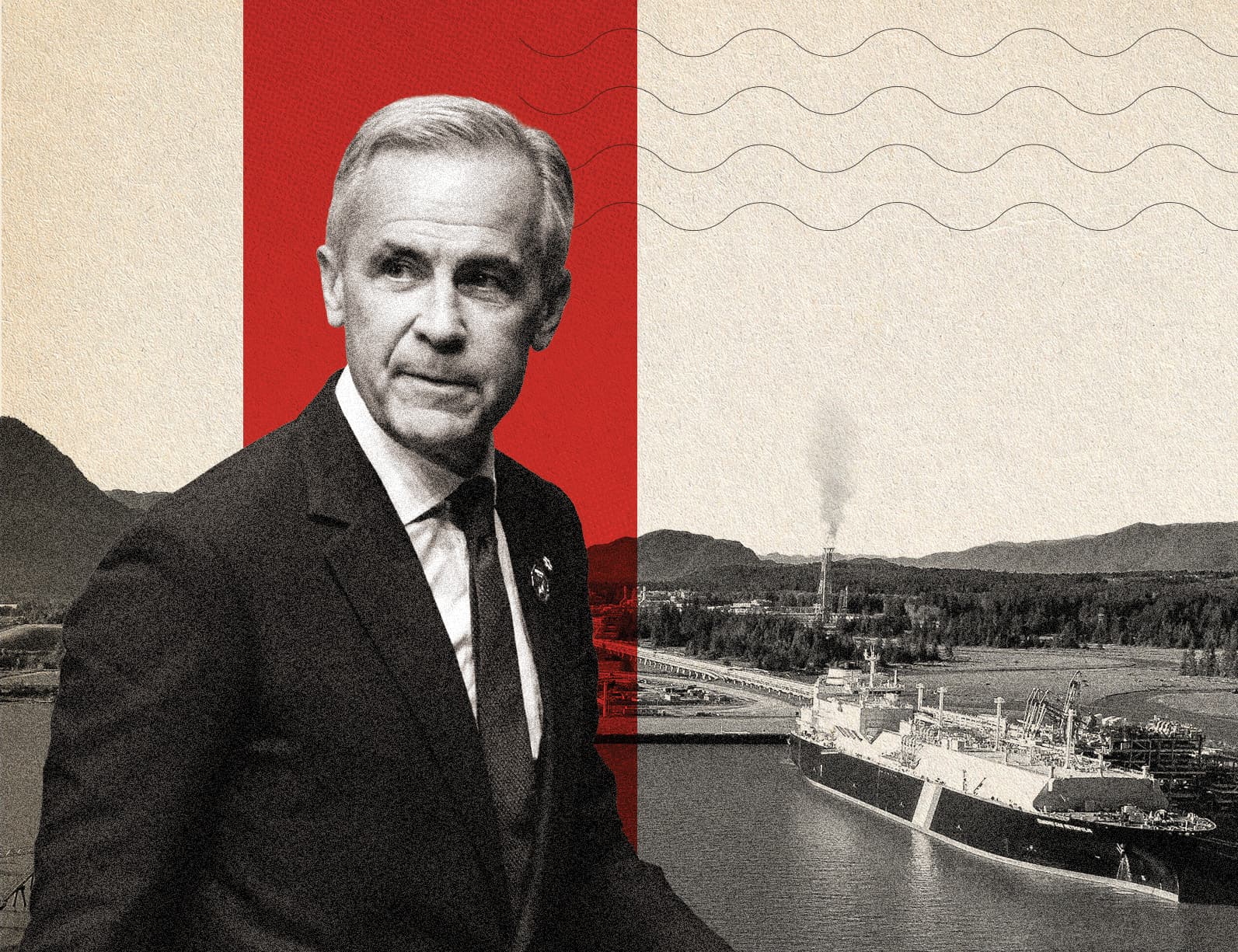
6. Carney Will Gamble on LNG
The PM has placed a liquefied natural gas expansion at the top of his government’s nation-building list, promising it will transform Canada into an energy superpower. The $40-billion LNG Canada plant in Kitimat, B.C., will pipe gas from B.C.’s northeast to Asian markets, adding an estimated 0.4 per cent to the country’s GDP. The move is controversial: energy markets are fickle, and critics warn that Canadian LNG development is expensive at US$24 million per billion cubic feet, well above the global average. LNG expansion is also getting mixed reception from First Nations whose territories are affected; two nations in B.C. have already begun court action over a planned facility near Prince Rupert.
7. Companies Will Cave to Trump’s Threats
As tariff tensions flare, Canada’s manufacturing base is looking south. Companies once proudly based in Canada are quietly scouting new zip codes to dodge the crossfire of 2026’s trade wars. Stellantis has already shifted EV-component production stateside. GM, too, has expanded U.S. operations in Fort Wayne while scaling back in Oshawa. Trump’s protectionist agenda is too powerful to deny: for firms squeezed by rising tariffs and policy whiplash, doing business north of the border feels more like a liability than a badge of pride.
8. Self-Driving Trucks Will Deliver Groceries
Loblaw is hitting the gas on its autonomous-truck ambitions. In September of 2025, it inked a five-year deal with autonomous-trucking company Gatik to expand its driverless fleet across the Greater Toronto Area. Fifty AI-powered, medium-duty trucks will roam Canada’s largest city by the end of 2026, serving more than 300 Loblaws stores.They’ll initially have safety drivers onboard and later shift to fully driverless, freight-only operations. The expansion rides on Ontario’s new Automated Commercial Motor Vehicle Pilot Program, which rolled out in August of 2025, to allow autonomous trucks on highways and surface streets.
9. Canada’s North Will Become a Trade Powerhouse
The Port of Churchill in northern Manitoba is Canada’s only deepwater Arctic port reachable by rail. After decades of neglect, it will reopen for business. Ottawa is sinking $175 million into its redevelopment, with another $36.4 million from Manitoba to revive the Hudson Bay Railway and upgrade infrastructure. Prime Minister Carney has big ambitions for the site: shorter routes to Europe through the Arctic Bridge, a path for critical minerals like zinc and potash, and a new lifeline of connectivity and jobs for the northern and Indigenous communities that co-own the port.
10. Bay Street Will Face a DEI Backlash
After years of diversity pledges, anti-racism workshops and newly minted DEI officers, many firms are quietly scaling back their commitments in search of less ideologically charged paths to inclusivity. What began as a moral awakening is now viewed by some as a corporate liability: in the last year, Molson Coors dropped its DEI policies and specific representation goals, Shopify shed its program for Indigenous entrepreneurs and the Alberta Investment Management Corporation canned its DEI program lead. Law firms warn that scaling back such programs could tank employee morale and trigger human‑rights complaints.
Related Posts

Concert Tickets Are a Luxury Item. That Could Change Soon.

The Condo Crash is Spreading

Making Friends With Rec Sports
Canada’s China Policy Will Be Decided in Washington
Get the Best of Maclean’s straight to your inbox.
Sign up for news, commentary and analysis. Join 60,000+ Canadian readers.