The Welcome Return of Boring Politics
I remember exactly where I was when the numbers stopped making sense. It was a Tuesday night in February of 2025, and I was doing what pollsters do in quiet hours: scrolling through fresh tracking data on my laptop, looking for movement. For years, the mood of the country had been negative, support for the Trudeau government was low, and the desire for change was high. The Conservatives had a lead that seemed almost impossible to overcome: 27 points ahead of the Liberals at the start of the year and the largest gap I’d ever measured. Pierre Poilievre and his party had been riding a populist wave that fed on grievance, promised to speak for “the people” against a corrupt or out-of-touch elite and relied on disruption as proof that the system is broken.
My firm, Abacus Data, has been surveying Canadians for more than 15 years. I know what normal drift looks like. I know what noise looks like. And I know what a real shift looks like. That night, there was a real shift. The movement toward the Liberals was unmistakable: those saying they would vote Liberal were up eight points in one month. This is because populism loses steam when voters believe the larger danger comes from outside the country, rather than inside it.
Related: Mark Carney Is a Very Demanding Boss
For much of the past decade, scarcity shaped Canadian politics. It’s personal and immediate. It’s rent, groceries, health care and the feeling that a middle-class life is slipping out of reach. It creates blame, anger and a readiness to fire whoever is in power. In that environment, populism thrives. The dominant political question becomes internal: who made life harder? Who let housing break, groceries rise, health care fray and institutions stop working for ordinary people? That question powered insurgents, punished incumbents and helped populism flourish in many democracies for a long time.
That dynamic is not unique to Canada. In November of 2024, the Financial Times, drawing on an electoral database stretching back to 1905, noted something remarkable: in developed countries, every ruling party that was up for re-election that year lost voters. Every single one. It was, as the paper put it, “a graveyard for incumbents.”
It didn’t matter whether a government was centre-left or centre-right. What mattered was that it was in power when voters felt their lives became less affordable, less easy and less predictable. That anger was the political engine behind Pierre Poilievre’s rise, who sang from the same populist handbook as others around the world by tapping into frustrations about inflation, political correctness and immigration. He laid blame squarely on the shoulders of decisions made by the government and the influence of “gatekeepers” and corporate Canada. The same anti-incumbent mood helped return Trump to office and strengthened hard-right parties across Europe and in Australia.
But in the last year, scarcity has been joined by something broader: precarity. This is the fear that the systems beneath daily life are themselves becoming unstable. It’s not just whether groceries cost too much anymore. It’s whether trade relationships, national sovereignty, geopolitical alliances and democratic institutions can still be counted on. Scarcity asks whether I can manage this month. Precarity asks whether the ground under the country is becoming less secure.
After his election in November of 2024, especially in the days following his inauguration, Donald Trump changed the political weather in Canada. His “51st state” comments challenged our sovereignty, and his tariff threats jeopardized economic security at home. And his confrontational approach to allies unsettled a world order Canadians had long taken for granted.
In the data, I could see what that shift did politically: when people feel the main threat is internal, they’re willing to gamble on the kind of disruption Poilievre offered. But when the threat feels external, large and harder to control, they become more interested in protection, order and competence. Their frustration doesn’t disappear. They simply rank their fears differently. This is why so many recent elections are easy to misread. The wrong conclusion is that voters have moved on from populism. The better conclusion is that, in a more volatile world, many voters are simply temporarily bracketing it. Across democracies in the past year, the contest was often not between left and right, but between populism and stability.
Related: The Rise of Conservative Youth
That pattern I saw in Canada was visible in Norway and Denmark, where mainstream parties stayed in power even as the populist right expanded. In Germany, the centre kept the AfD out of power even as the party achieved its strongest national result. In Australia, incumbent Anthony Albanese benefitted when the election stopped being mainly about household frustration and became more about risk, temperament and whether voters wanted an Australian version of Trump in a more volatile world (they didn’t).
Hungary is the clearest new test of this argument. Viktor Orbán was one of Europe’s most successful populists precisely because he built his message around division and internal conflict. For years, he cast politics as a struggle between the “real” Hungarian nation and a series of enemies: Brussels, migrants, liberals, foreign-backed NGOs and domestic critics he portrayed as working against the country. Even in his latest campaign, he tried to shift attention to external dangers, especially the war in Ukraine and the risks of an unstable world. But once a populist leader is no longer seen as a protector and instead seen as a source of instability, that formula weakens. That’s what appears to have happened in Hungary, where Orbán was defeated by Péter Magyar after a race shaped by public anger over corruption, inflation, decaying services and Hungary’s growing isolation from Europe.
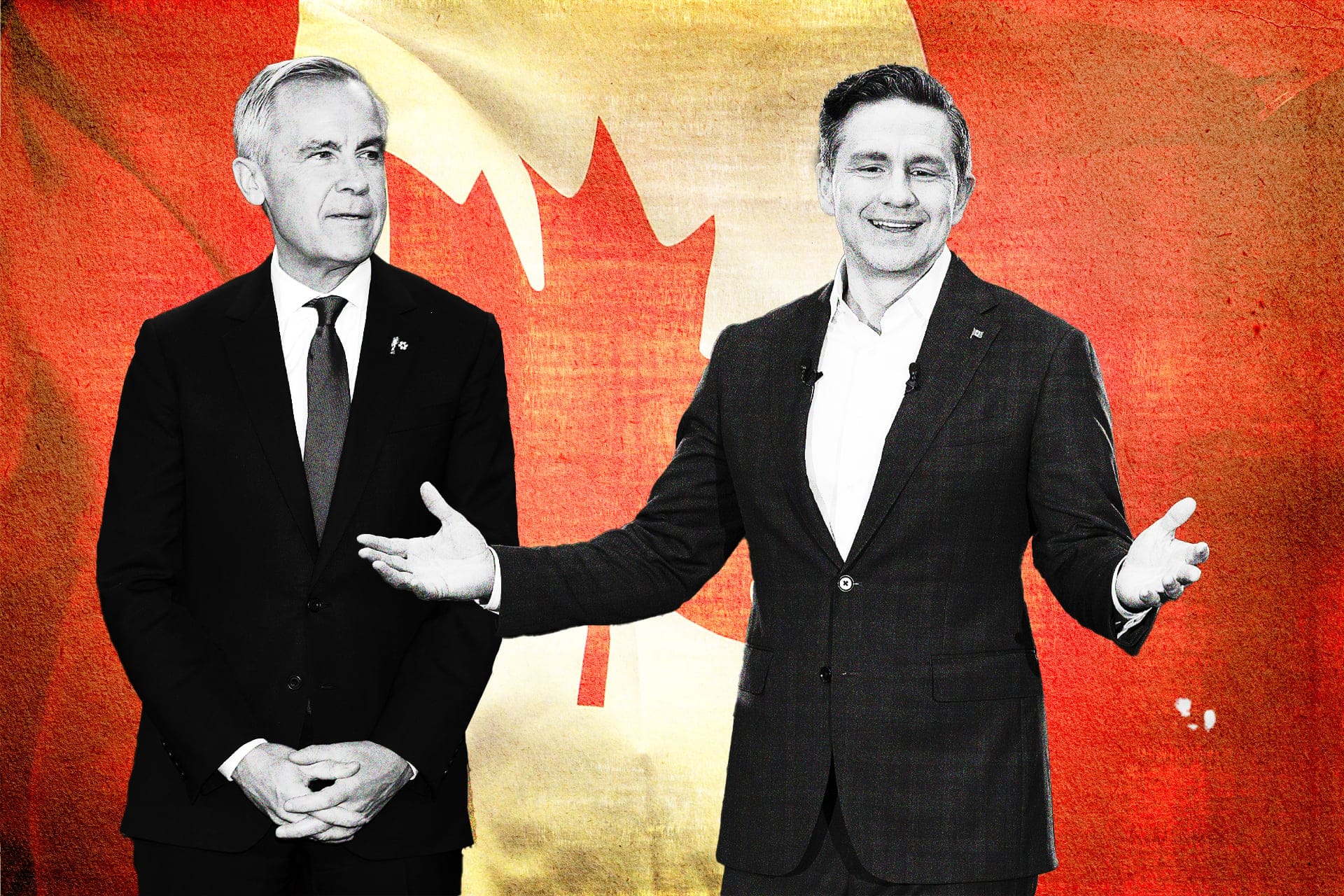
In Canada, the anger that fuelled Poilievre’s rise has not disappeared. There’s still housing pressure, affordability crisis, distrust in institutions and the sense that the system no longer works for ordinary people. They were overtaken by a larger fear: that Donald Trump’s tariffs, annexation rhetoric and direct challenge to Canadian sovereignty posed a more immediate threat than the government’s domestic failures. Once Justin Trudeau stepped aside, the Liberals led by Mark Carney capitalized on this new context.
Carney’s Liberals became the stability option because Carney presented himself not as an agent of rupture, but as a serious, institutional, reassuring figure to help protect people from the rupture itself. He offered Canadians someone who could manage external risk without adding to the chaos. At a moment when Canadians felt the larger threat was coming from outside the country, that mattered.
But I don’t think Carney’s current popularity is a permanent repudiation of populism. It’s more of a temporary reordering of threat perception. Our own polling points in the same direction. When we ask Canadians to rank threats, Trump now sits above most domestic concerns, which is especially true among older voters. Younger voters are more fragmented, and Conservatives will likely continue blaming government overspending, immigration and domestic elites. The threat voters fear most may now be one of the clearest predictors of how they vote.
Related: How to Fight Back
The United Kingdom offers the clearest contrast. Labour won in 2024 as a mainstream alternative to exhausted Conservative rule. But where no single external threat reorganized politics, and where daily frustrations continued to mount, Reform UK quickly found room to grow followed by a surge in support for the Green Party. Change without felt improvement does not suppress populism for long.
That’s why victories for stability-minded parties should not be mistaken for realignments. Most of the time, they are reprieves. They are pauses in the populist story, not the end of it. External threat can constrain populism, but it doesn’t cure the conditions that produce it.
Stability versus populism may be the defining political tension of the years ahead. If governments that benefit from a stability moment fail to reduce the strain people feel in daily life, on housing, affordability, health care and trust, then the grievances that feed populism will only accumulate. And when the external threat recedes, or simply becomes normalized, those grievances rush back to the centre.
David Coletto is the founder and CEO of Abacus Data, a national polling firm with offices in Ottawa, Toronto and Halifax.
What did you think of this story? Send a comment for publication to letters@macleans.ca, and supply your name and address. Comments should be fewer than 200 words, and may be edited for length and clarity.
Related Posts
Carney Is the Crisis Manager Canada Needs

Alberta Treaty Law Could Decide the Arctic
Carney’s Biggest National Project is Mythmaking
My Adventures in Greenland
Get the Best of Maclean’s straight to your inbox.
Sign up for news, commentary and analysis. Join 60,000+ Canadian readers.