Canada’s New Arms Race
This March, days after the U.S. and Israel began bombing Iran, French President Emmanuel Macron delivered a speech at France’s Île Longue naval base. Standing in front of a nuclear-armed submarine, he announced that his country would extend the protection of its nuclear umbrella to European NATO allies. Traditionally, the U.S. had provided this protection—but after Donald Trump threatened to seize Greenland and withdraw from NATO, American beneficence seemed less certain.
The next day, Macron appeared on French television with another statement guaranteed to irk the U.S. president: he declared American strikes on Iran “outside of international law.” Compare this with Prime Minister Mark Carney’s statement on the same day that the bombs started to fall. That afternoon, his office issued a news release offering support to Israel and the U.S. This was surprising, since the war did, as Macron said, appear to be illegal.
Carney took a more circumspect tone a few days later, saying his support came “with regret,” since the U.S. and Israel had acted without the support of their allies or the UN. Still, contrasted with Macron’s defiant tone, his statements seemed like signs of weakness from a Prime Minister whose success depends on managing, not provoking, the president. That weakness is unusual for a country as big and rich as Canada—and it is not Carney’s alone. It is the result of decisions made by Canadians and their governments over decades.
When I was born, in 1965, Canada was a major military power, spending more than 2.6 per cent of its GDP on defence and maintaining 107,000 people in uniform. I spent the first year of my life in France because my father was in the Royal Canadian Air Force, stationed at 1 Air Division in the city of Metz, the headquarters of Canadian CF-104 Starfighters—cutting-edge, nuclear-armed jets. At the time, the RCAF was the sharp end of NATO’s European spear, part of its “tripwire” system, meant to deter an invasion from the other side of the Iron Curtain.
Then, in 1966, French president Charles de Gaulle—who had clashed with the U.S. over the Vietnam War and the Suez Canal—announced that France would withdraw from NATO’s military command. He expelled foreign military personnel and their children, like me, from French bases. He and his successors then spent years pouring money into the military-industrial complex: research and manufacturing, plus building jets, tanks, submarines, satellites and even a nuclear deterrent. The result is that today, France can respond with a Gallic shrug to the kind of American pressure that loosens the guts of the leaders of other NATO countries—and none more than those in Canada. Ever since the time of de Gaulle, Canada saw security in integration, allowing its armed forces to wither, believing that the best way to keep our country safe was to hide behind Uncle Sam’s tailcoat.
Related Posts
Alberta Treaty Law Could Decide the Arctic

Carney’s Biggest National Project is Mythmaking
Today, our military is a shadow of what it was. We have just one operational submarine, part of a fleet of four that we bought secondhand from the Brits. (It is chiefly useful as a “clockwork mouse,” a target in training exercises.) We haven’t had an aircraft carrier since 1970. Our CF-18 fighter jets are 1980s antiques. We are the only G7 nation that cannot launch a rocket into space from its own soil. We rank 28th globally for military strength, according to the Global Firepower Index, one spot below Algeria. And we have only about 71,000 soldiers in uniform—fewer than when we did when my father was stationed in Metz and Canada’s population was half its current size.
Unlike France, which intentionally carved its own path, we’ve spent decades on a course of ever-closer military and economic integration with the U.S. After all, if Washington was protecting the northern hemisphere, why should Canada waste money on the same? We’ve prided ourselves on peacekeeping, Lester Pearson’s great innovation, but our contributions to UN peacekeeping missions have declined dramatically in recent years.
Over many years writing on Canadian politics, I’ve often heard arguments from military types and lobbyists to increase defence spending. For the most part, voters never bought into them. After all, who would we be defending ourselves from? Partisan Liberals and Conservatives have been happy to blame each other for the sorry state of our military but, in reality, Canadians are responsible. In election after election, we have voted for health care, economic growth and social programs—but not for national defence.
The world has changed. Donald Trump’s second term has revealed our trade and defence relationship with the U.S. as profoundly unstable, a situation that may persist long past Trump’s presidency. The Americans have turned on their allies, poodled up to the Russians and treated NATO like an Atlantic City protection racket.
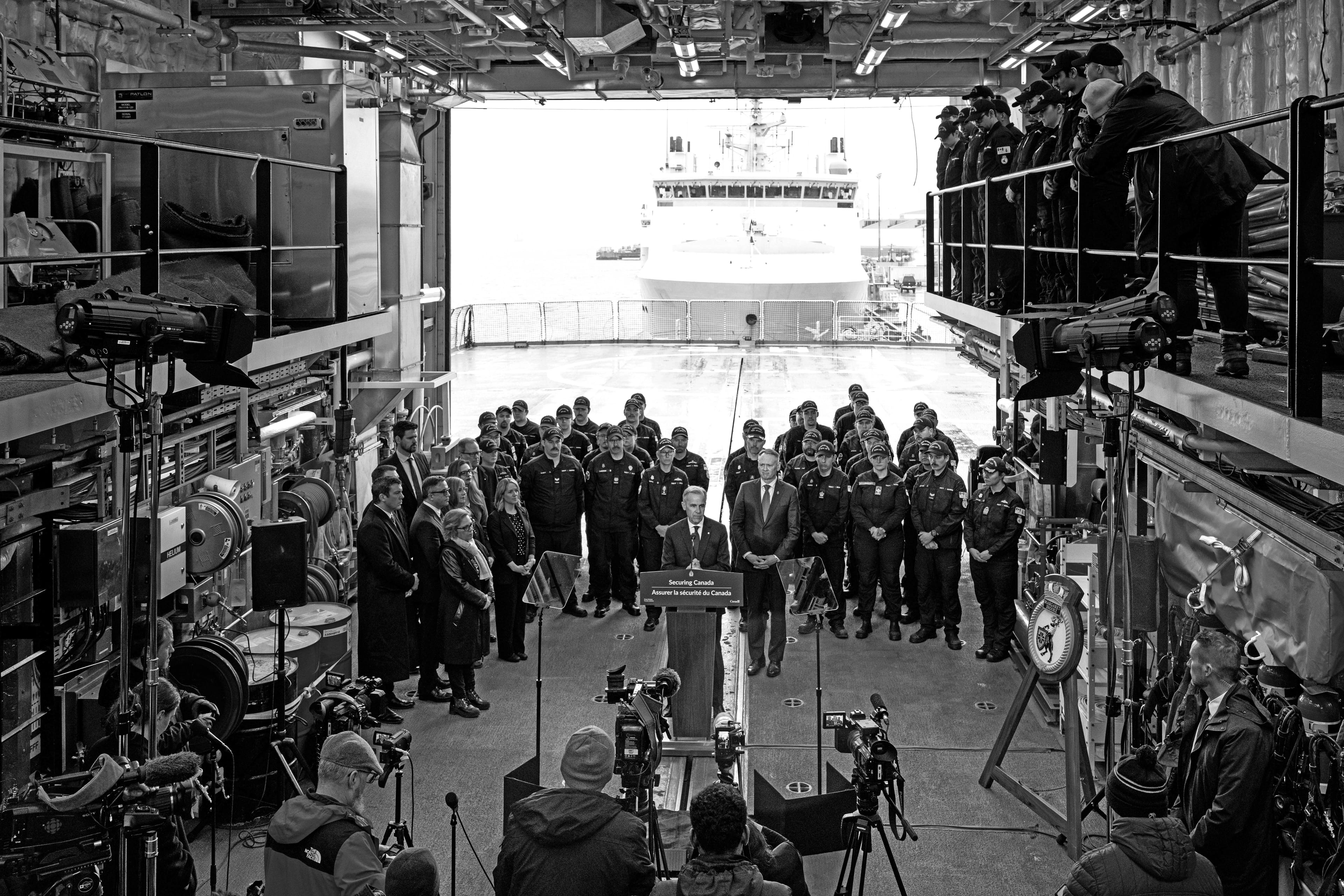
Mark Carney won the 2025 election in part by promising to stand up to Trump. His government has launched a defence industrial strategy that will be worth more than half a trillion dollars over the next decade, to give Canada a credible military for the first time in generations. Carney has already increased defence spending to NATO’s two per cent of GDP target level, boosted pay and recruitment, planned new bases in the North and planned to order a fleet of submarines and fighter jets. To get the money out the door more quickly, he has established a new Defence Investment Agency, which resembles France’s Direction générale de l’armement.
But it will be tremendously challenging to transform a military long accustomed to thinking of itself as America’s little pal. We’ll need to sustain public interest and institutional effort not for months, but for years. That means working against our natural inclination to keep to ourselves, safe in the knowledge that we’re protected by three oceans and our friendly neighbours to the south. Eugene Lang is a Queen’s University professor who served as chief of staff to two Liberal defence ministers. He summed it up to me bluntly: “There’s nobody alive today, in government or industry, that’s done this kind of thing.”
Carney’s military makeover will require a lot of money—but money alone won’t be enough. If you speak to anyone who’s spent their career working in the Canadian Armed Forces, it quickly becomes apparent that many of its problems are cultural: an overreliance on American systems and support, institutional risk-aversion and a grinding bureaucracy.
In 2022, for example, Justin Trudeau announced that Canada would send 460 additional troops to a base in Latvia as part of a NATO effort to deter Russian aggression in Ukraine. As Putin’s invasion turned into a bloody stalemate, Russia attacked Ukraine with swarms of Iranian Shahed drones. Wayne Eyre, then Canada’s chief of defence staff, wanted to get shoulder-fired missiles for the Canadian troops in Latvia, who were powerless to stop Shaheds. Eyre directed an Urgent Operational Requirement, or UOR, the fastest way to kick the otherwise glacially slow procurement process into gear. But this process, too, dragged on. Anita Anand, then Canada’s defence minister, didn’t announce the plan until March of 2023. It was nearly a year before the next defence minister, Bill Blair, signed a contract with Saab for the missiles. Units didn’t arrive in Latvia until May of 2025—years after they were first needed. “I was frustrated with the lack of ‘U’ in the UOR process,” Eyre told me. There are so many boxes to check, so many processes designed to protect the treasury, that the bureaucracy privileges caution over getting anything done.
Eric Sauvé, a former CAF intelligence officer, is more withering: “Institutionally, we avoid risk completely,” he told me. “People are afraid of making mistakes, afraid of being in the Globe and Mail, afraid for their career. So they walk on eggshells.” Due to this risk-aversion, and because it is easier to announce things than to build them, the CAF’s recent history is littered with incomplete and unfulfilled commitments. Project timelines are longer than political mandates, newly elected governments can undo the announcements of their predecessors and one government’s priority is not necessarily important to the next.
For example, in 2007, Conservative prime minister Stephen Harper announced a new deep-water port in Nanisivik, on the northern end of Baffin Island, near the eastern gateway to the Northwest Passage. It was to be a year-round airbase and port for six Arctic and offshore patrol ships, which were to be built at Irving’s Halifax shipyard. “We either use it or lose it,” he said of Arctic sovereignty. But 18 years and tens of millions of dollars later, Nanisivik is just a summer-only maritime gas station, not a robust all-season base. This May, the government announced it was abandoning further plans for the site completely, partly due to high costs.
The Canadian military’s dependence on the U.S. has also spawned a branch-plant mentality, which has stood in the way of building our own domestic military-industrial complex. “The default setting in the CAF is, ‘Let’s buy some American stuff,’ ” says Sauvé. “Why should we build a LAV when we can buy a Bradley or a Warrior from the U.S. or the U.K.?”
Even our country’s biggest military procurement in a generation—the $27.7-billion purchase of F-35 stealth strike fighters from U.S. company Lockheed Martin—could still force us to rely on the Americans for software updates to keep our most expensive equipment operational. Mark Carney has ordered a review of that purchase, giving him a crucial card to play in trade talks with the Americans. But the RCAF wants the F-35s delivered yesterday, while others want Carney to cancel the unfulfilled part of the F-35 contract and buy Swedish Gripen jets instead.
“We put all our eggs in the same basket, and then Trump decided to trample on those eggs,” says Sauvé. “But we should not have put ourselves in a situation like this.”
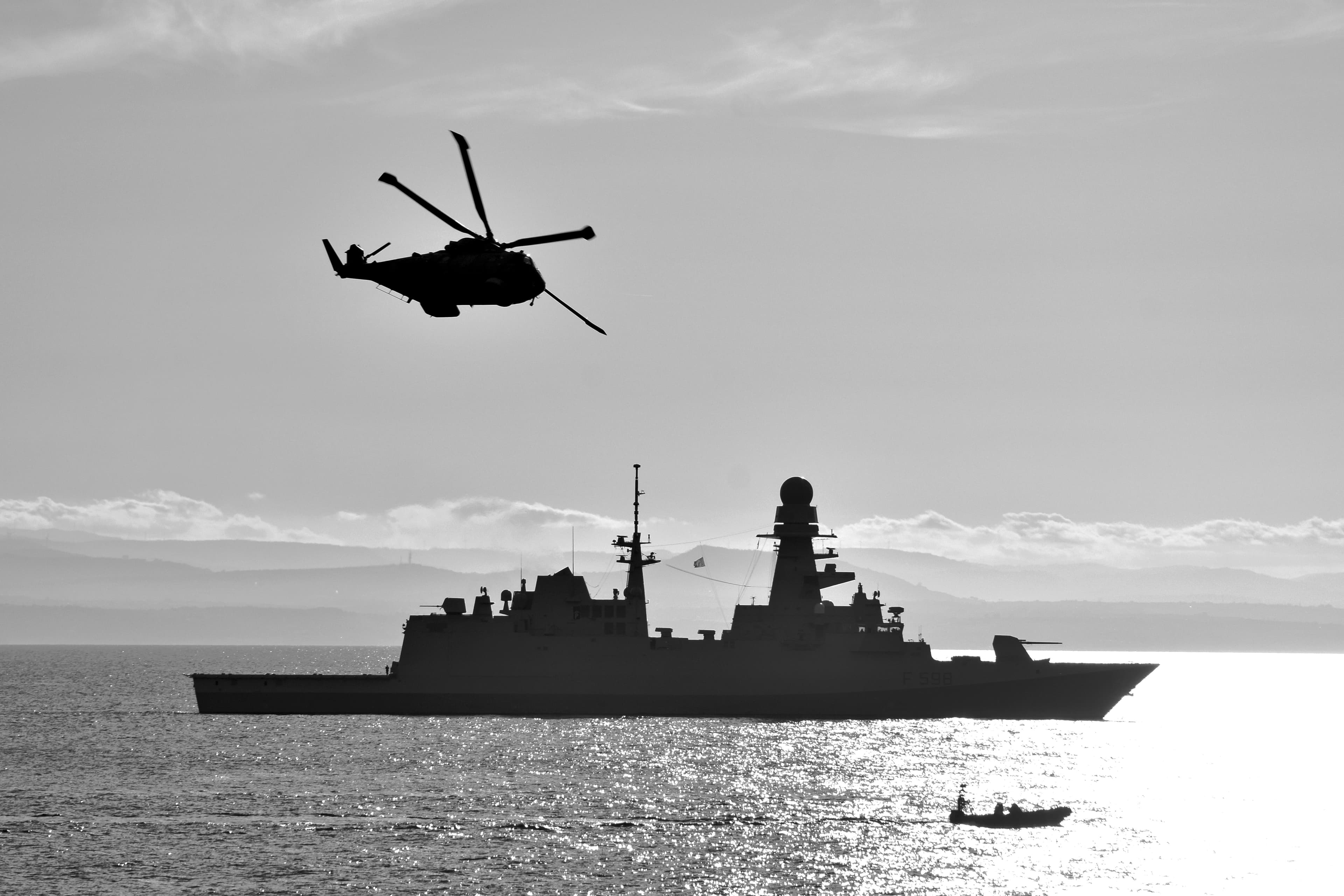
In April, Carney promised that Canada’s branch-plant era was at an end. The government would stop spending 70 cents of every defence dollar on U.S. equipment, instead devoting the lion’s share of its defence investment spree at home.
The result is a knife fight in Ottawa over who will get their hands on all that cash. The scale of the increased spending is without recent precedent—and while massive American defence companies will pocket some of that money, there is no doubt that innovative Canadian enterprises will also emerge victorious. The infusion of funds into the defence economy is spurring a host of new startups, and it promises to be a boon to existing companies that see a chance to take advantage.
Some examples can be found right above our heads. Access to space is critical for modern militaries—in Canada’s case, to provide surveillance and communications across our vast Arctic. But we’ve always relied on other countries for this core modern military capability. Many Canadian payloads are launched on SpaceX vehicles from Florida’s Cape Canaveral.
Unsurprisingly, this makes it harder to get into space. In 1998, when the Canadian Space Agency was preparing RADARSAT-2, an Earth-observation satellite, NASA refused to launch it—apparently in part because its imaging resolution was so good the Americans were worried it could be a threat to their own security. (It was eventually launched from the Baikonur Cosmodrome in Kazakhstan.)
In March, the government announced that it would provide three Canadian rocket companies with $8.3 million each to develop orbital launch capability, ideally before the end of this decade, in the hope that Canada eventually won’t have to ask permission to put satellites in space. The following month, I visited a facility in Longueuil, on the south shore of Montreal, where one of those companies, Reaction Dynamics, is working on prototype rockets they hope will be ready by 2028. In the concrete-floored workshop downstairs, young technicians used 3D printers to build the precisely machined engine components. The company’s CEO and CTO, Bachar Elzein, who grew up in Lebanon and Montreal, has been rocket-mad since childhood. In 2012, as an engineering student at École Polytechnique, he designed a solid-fuel propulsion system that won a prestigious international competition.
He speaks with a sense of mission. The war in Ukraine has demonstrated that militaries need satellite coverage to be effective, and Canada can’t currently put them into space. “Sovereignty means optionality,” he says. “It means being able to decide to do what is best for your interest, irrespective of other partnerships or alliances.”
If all goes to plan, Reaction’s made-in-Canada rockets will launch at a made-in-Canada spaceport being developed by another company, Maritime Launch Services, in Canso, Nova Scotia. The firm will receive $200 million over 10 years from the federal government. Canso is remote—a three-and-a-half-hour drive northeast of Halifax, at the end of a windswept granite peninsula jutting into the North Atlantic Ocean. But this kind of location is ideal for launching rockets.
The founder and CEO of Maritime Launch Services, Stephen Matier, is a mechanical engineer and former NASA contractor who worked at the White Sands rocket-testing facility in New Mexico. He learned about Canso’s potential as a launch site in 2016 while working with the State Space Agency of Ukraine, which was looking for a North American facility for its rockets. The Russian invasion killed that plan, but Matier stuck with the site and moved to Nova Scotia in 2018.
The federal money was a game changer for Matier. And, like Elzein, he says Canada needs the capacity. He points to Elon Musk’s decision in 2022 to shut down Starlink coverage over Ukraine, which stalled a Ukrainian counteroffensive. “That sent a message to countries around the globe that we need to depend on ourselves for that kind of stuff,” he says, “and not have somebody else turning the switch off.”
Nonetheless, critics were quick to pounce. The government was accused of paying $200 million for a concrete pad in the middle of nowhere, pointing out that one of the lobbyists employed to advance the file was a former Liberal staffer. “The Liberals are experts at paying a lot for nothing,” said Conservative MP Dan Albas in the House of Commons. Pierre Poilievre ridiculed the project on Twitter, saying Carney “is spending $200 million of your money to turn a gravel pit into a money pit for Liberal insiders.” The backlash seemed to be an example of Poilievre responding to ill-informed online outrage. Matier is no Liberal insider, and Sarah McLean, his vice-president, is a former Conservative staffer. Conservatives, meanwhile, had no complaints this spring when Carney’s government gave almost twice as much money to General Dynamics—a subsidiary of an American corporation—to build an ammunition factory in Quebec.
It’s true that neither Maritime Launch Services nor Reaction Dynamics are guaranteed to succeed. What they’re trying to do is difficult and expensive. But it’s also true that we have to try—even if it means trying to turn a gravel pad into a spaceport, and even if our inclination in the past has been to let others do that kind of thing.
This is how Canada rolls. In 1959, John Diefenbaker cancelled the Avro Arrow fighter jet, which led to an exodus of top Canadian aerospace engineers to NASA. And, unlike France, which had a long, bloody history of armed struggle when it created a military-industrial complex, Canada went directly from being a colony of the British Empire to a de facto protectorate of the American empire. We are a soft target: a regionally divided, resource-rich country with no tradition of self-reliance and little experience making risky investments. The Russian invasion of Ukraine ought to have alerted us to our vulnerability; instead, we wasted time.
But now we’ve started, at least. Voters may yet lose interest when Trump is replaced. They might prefer more spending on health care, education or anything else. But unlike 1960s France, which chose military independence, Canada has had independence thrust upon it. Mark Carney is a narrow-shouldered ex-banker who doesn’t much resemble Charles de Gaulle, an imperious six-foot-five war hero. It remains to be seen whether he will weather the criticisms and stick to his pledges. But one thing is certain: we will be foolish if we ever again count on anyone else to protect us.
This story appears in the July 2026 issue of Maclean’s. Elsewhere in that issue, we spoke to leaders at five companies jockeying for a place in the new Canadian defence firmament. Some are veterans in the industry; others are just breaking in. All are hopeful that a new era of defence spending will mean new opportunities for them—and all warn of the consequences if we don’t get this right.
You can subscribe to the magazine here or send a gift subscription here.
What did you think of this story? Send a comment for publication to letters@macleans.ca, and supply your name and address. Comments should be fewer than 200 words, and may be edited for length and clarity.

Stephen Maher is a veteran award-winning political journalist, the author of three novels and The Prince: The Turbulent Reign of Justin Trudeau.
Related Posts
My Adventures in Greenland
Canada’s Defence Firms Are Ready to Boom
Carney Is the Crisis Manager Canada Needs
How to Win the Space Race
Get the Best of Maclean’s straight to your inbox.
Sign up for news, commentary and analysis. Join 60,000+ Canadian readers.